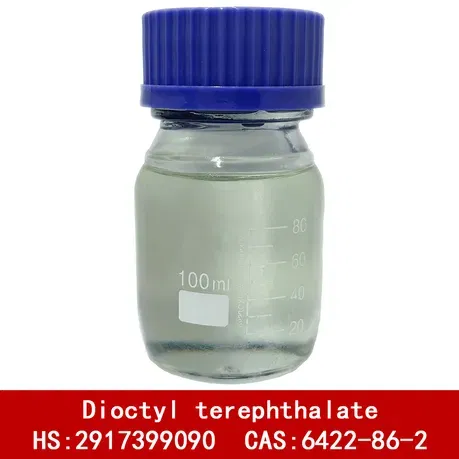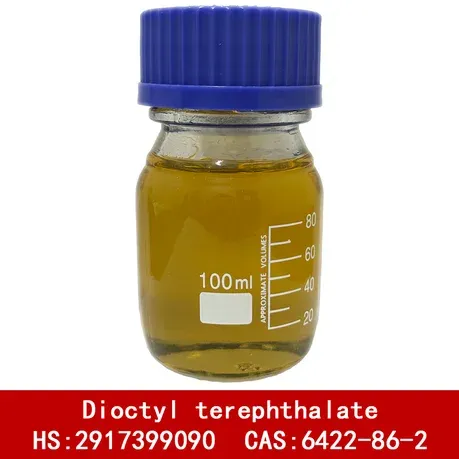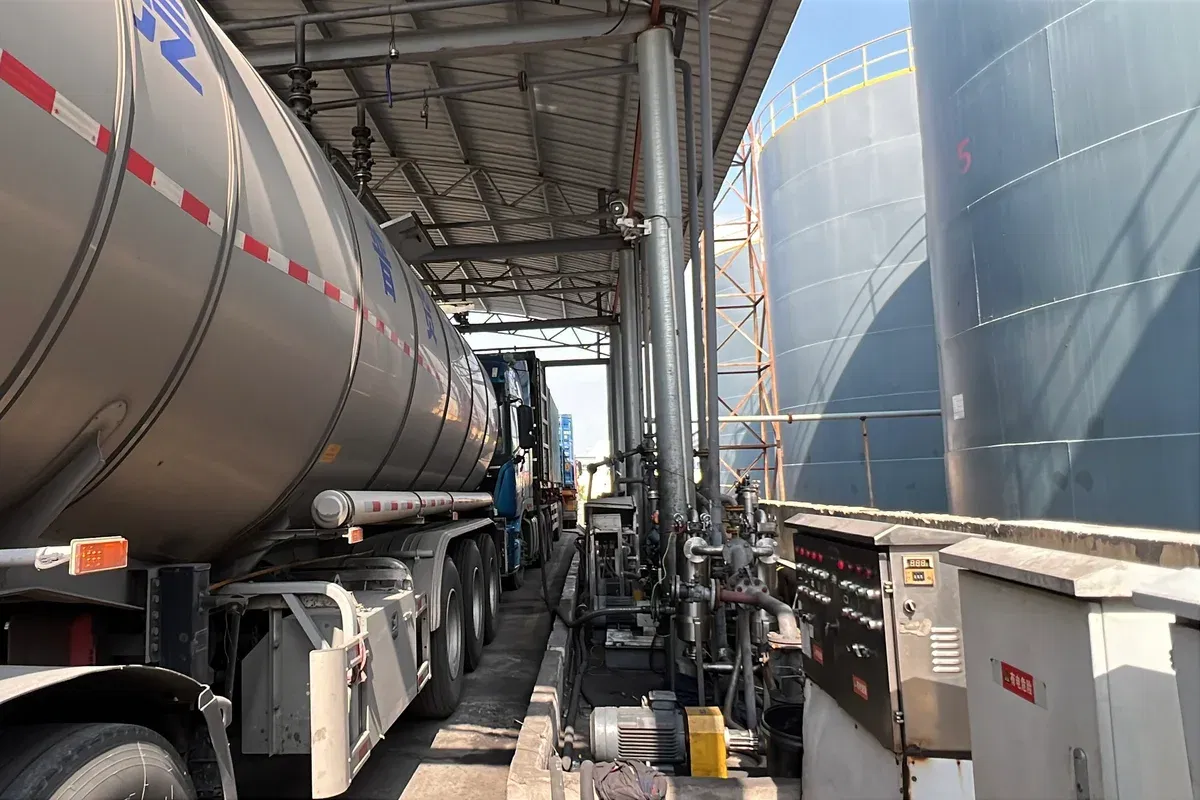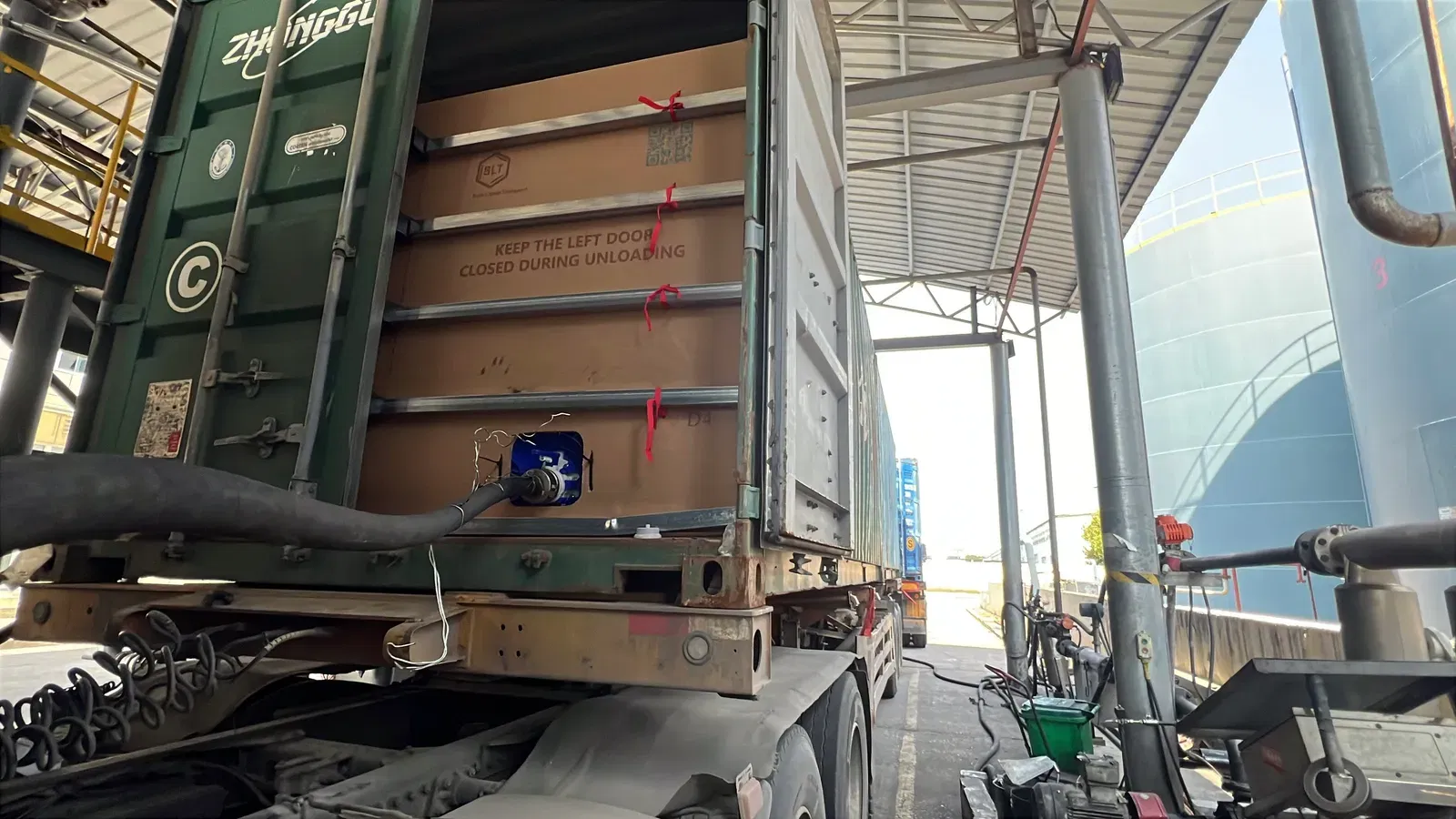

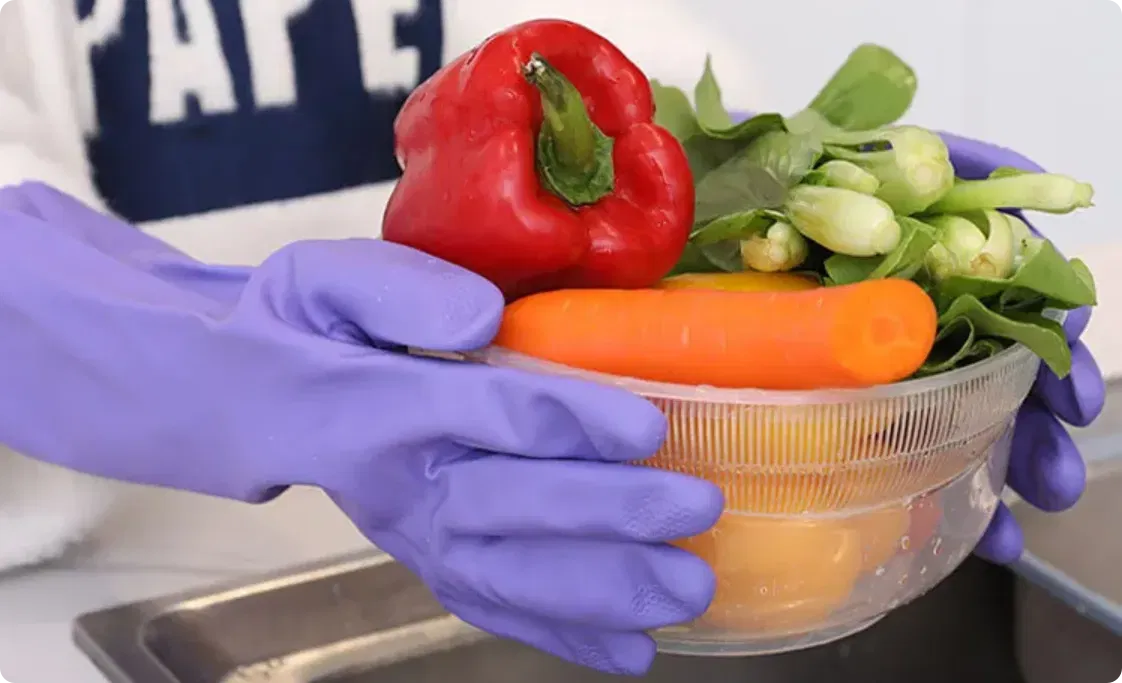
DOTP for household gloves has become the standard non-phthalate plasticizer for flexible PVC (vinyl) gloves used in cleaning, dishwashing, and food handling. DOTP (Dioctyl Terephthalate, CAS 6422-86-2) is a terephthalate ester, not an ortho-phthalate, so it avoids the REACH restrictions that apply to DEHP, DBP, BBP, and DIBP in articles that touch skin. This guide explains why DOTP is chosen for PVC gloves, how it compares with DOP, the formulation ranges compounders use, and the compliance documents glove makers should request. For the underlying physical data, see our DOTP technical properties guide.
Key Takeaways
- DOTP is a non-phthalate terephthalate plasticizer and is not among the ortho-phthalates restricted to 0.1% under EU REACH Annex XVII, the rule that governs gloves as skin-contact articles.
- DOTP suits PVC (vinyl) gloves, not latex or nitrile gloves. Latex and nitrile are rubbers and are not plasticized with DOTP.
- Typical DOTP loading in PVC glove plastisol is 45 to 70 phr, delivering softness, clarity, and low migration that protects the wearer's skin.
- Shandong Changxing supplies glove-grade DOTP plasticizer with ISO 9001/14001/45001/50001 certification and SGS testing for 17 restricted phthalates (zero detection).
What Household Gloves Are Made Of
Household gloves are made from three main materials, and the choice decides whether a plasticizer is needed at all. PVC (vinyl) gloves are a plastisol of PVC paste resin plus a plasticizer, fused at 160 to 200°C. Latex gloves are natural rubber, and nitrile gloves are synthetic rubber. Neither rubber type uses DOTP as a plasticizer.
DOTP is therefore the relevant plasticizer for PVC (vinyl) household gloves. These gloves dominate the dishwashing and general-cleaning segment because they are low cost, chemical resistant to detergents, and easy to produce in clear or colored forms. The plasticizer is what converts rigid PVC powder into a soft, elastic film that fits the hand.
Why DOTP for PVC Gloves?
DOTP gives PVC gloves the softness and elasticity wearers expect while avoiding the regulatory and toxicological baggage of legacy ortho-phthalates, producing phthalate-free gloves that meet EU and US skin-contact rules. Three properties drive the switch from DOP (DEHP) to DOTP in DOTP PVC gloves and other vinyl glove plastisol.
- Low migration. In ISO 177 plasticizer migration testing (40°C, 72 hours), DOTP-plasticized PVC shows 0.5 to 1.5 mg/cm² loss versus 3.0 to 5.0 mg/cm² for DOP. These figures are representative ISO 177 lab results; confirm exact migration with your supplier's Certificate of Analysis. Lower migration means less plasticizer touches the wearer's skin.
- Softness and elasticity. DOTP yields a flexible film with good elongation at break, so gloves stretch without tearing during wet cleaning work.
- Low odor and clarity. DOTP has minimal odor and good light stability, supporting the clear, near-colorless gloves buyers prefer for kitchen and household use.
Is DOTP Safe for Skin Contact?
DOTP is considered suitable for skin-contact articles such as gloves because it is a terephthalate ester and is not restricted under EU REACH Annex XVII or classified as carcinogenic, mutagenic, or reprotoxic (CMR). The ortho-phthalates most used in legacy PVC, DEHP, DBP, BBP, and DIBP, are restricted to 0.1% by weight in all consumer articles under REACH Annex XVII (entry 51). DOTP is not on that restricted list (see the ECHA restricted substances list).
In the United States, children's gloves fall under the Consumer Product Safety Improvement Act (CPSIA), which limits eight ortho-phthalates to 0.1% in children's products. DOTP is not among the restricted eight, so it passes CPSIA screening. Glove makers moving away from DEHP apply the same logic described in our guide on DOTP as a DEHP replacement.
DOTP vs DOP (DEHP) in Gloves
The table compares DOTP with the ortho-phthalate it replaces in PVC glove plastisol. The comparison shows why a non-phthalate plasticizer removes the regulatory exposure that legacy phthalates carry in skin-contact articles.
| Criterion | DOTP | DOP (DEHP) |
|---|---|---|
| Chemical class | Terephthalate (non-phthalate) | Ortho-phthalate |
| REACH Annex XVII (skin-contact articles) | Not restricted | Restricted to 0.1% |
| US CPSIA (children's gloves) | Not restricted | Restricted to 0.1% |
| CMR classification | Not classified | Cat. 1B CMR |
| Measured migration (ISO 177) | 0.5–1.5 mg/cm² | 3.0–5.0 mg/cm² |
| Plasticizing efficiency | Slightly lower; add 2–5 phr for equal hardness | Baseline |
DOTP Glove Formulation Guide
A PVC glove plastisol is built around PVC paste resin, DOTP plasticizer, heat stabilizer, and minor additives. DOTP loading sets the final softness and determines whether the glove meets performance and compliance targets.
| Glove type | DOTP loading (phr) | Notes |
|---|---|---|
| Light household / dishwashing | 45–55 phr | Soft feel, good clarity, low plasticizer cost |
| Heavy-duty household | 55–65 phr | Higher elasticity for repeated stretching |
| Industrial / chemical-protective | 60–70 phr | Max flexibility; pair with chemical-resistant stabilizers |
Because DOTP has slightly lower plasticizing efficiency than DOP, increase loading by 2 to 5 phr for the same hardness. Fuse the coated form at 160 to 200°C and confirm gelation, clarity, and tensile strength in a lab trial before full production. A small pre-production batch avoids surprises in elongation at break and surface tack.
Global Compliance for Gloves
Glove compliance depends on the market and the glove's intended use. The table summarises the frameworks that matter for DOTP-plasticized PVC gloves and where a non-phthalate terephthalate stands under each.
| Market / use | Framework | DOTP status |
|---|---|---|
| EU general gloves | REACH Annex XVII (entry 51); PPE Regulation 2016/425; EN 420 general requirements | Not an ortho-phthalate of concern; request supplier DoC |
| EU chemical-protective gloves | EN 374 (chemical protection) under PPE 2016/425 | Non-phthalate; verify breakthrough time for target agents |
| US children's gloves | CPSIA phthalate limits (0.1%) | Not among the eight restricted phthalates |
| US food-handling gloves | FDA 21 CFR 178.3740 (food-contact polymers) | Non-phthalate; confirm clearance for the specific polymer and use |
DOTP in Glove Applications
DOTP-plasticized PVC appears across the DOTP vinyl gloves range where softness, clarity, and low skin exposure matter. Each application sets its own loading and testing profile.
- Household cleaning and dishwashing gloves: DOTP at 45 to 60 phr for a soft, detergent-resistant film.
- Food-handling gloves: DOTP at 50 to 65 phr with a food-contact DoC for gloves that touch food.
- Examination (vinyl) gloves: DOTP at 55 to 70 phr for the elasticity and low particle release that clinical vinyl gloves need.
- Industrial and chemical-protective gloves: DOTP at 60 to 70 phr combined with chemical-resistant stabilizers for EN 374 performance.
How to Qualify DOTP for Gloves
Buyers should request the following documents before specifying DOTP in PVC gloves. This checklist converts a vague "phthalate free" claim into verifiable evidence.
- Declaration of Compliance (DoC) naming the regulation (REACH Annex XVII, CPSIA, FDA, or EU 10/2011 for food gloves) and the intended use.
- Phthalate test report confirming the eight CPSIA ortho-phthalates and the REACH four are below 0.1%.
- Plasticizer migration data (ISO 177 or equivalent) showing low extractables for skin contact.
- Certificate of Analysis (CoA) with ester content, acid value, color, and moisture.
- GHS-classified Safety Data Sheet (SDS) and REACH registration documentation.
Working with a REACH-compliant plasticizer supplier shortens this qualification and reduces audit risk for export-oriented glove makers.
Why Choose Shandong Changxing's DOTP for Gloves
Shandong Changxing Plastic Additives Co., Ltd. supplies DOTP to global PVC glove and flexible-PVC manufacturers with documented quality and capacity.
Four ISO Certifications
ISO 9001 (Quality), ISO 14001 (Environmental), ISO 45001 (Health & Safety), and ISO 50001 (Energy) ensure consistent quality that meets the audit requirements of global glove brands and retailers.
SGS-Certified Compliance
Our DOTP has passed SGS testing for all 17 restricted phthalates (zero detection), EN 71-3 element migration (19 elements, zero migration), and PFAS total fluorine screening (ND, below 20 mg/kg), the documentation glove dossiers require.
300,000-Ton Annual Capacity
Current annual DOTP production capacity of 300,000 tons ensures stable, long-term supply for high-volume glove producers who cannot afford production disruptions.
National Little Giant Enterprise
Recognized as a national "Little Giant" (专精特新) enterprise and Shandong Gazelle Enterprise, credentials that demonstrate technological leadership valued by procurement teams at major glove converters.
Our premium-grade DOTP achieves ester content ≥99%, volume resistivity ≥2×10¹² Ω·cm, and color (Pt-Co) ≤50, specifications that consistently meet the requirements of PVC glove and other sensitive flexible-PVC applications.
Frequently Asked Questions
Is DOTP safe for skin contact in gloves?
Yes. DOTP is a terephthalate ester, not an ortho-phthalate, and is not restricted under EU REACH Annex XVII or classified as CMR. DEHP, DBP, BBP, and DIBP are restricted to 0.1% in consumer articles such as gloves, while DOTP is excluded. Safety still requires a supplier Declaration of Compliance and phthalate test reports for the exact glove type.
Can DOTP be used in nitrile or latex gloves?
No. DOTP is a plasticizer for PVC (vinyl) gloves only. Nitrile and latex gloves are rubbers that are cured, not plasticized, so DOTP plays no role in them. If a product is marketed as nitrile or latex, the relevant compliance question is the accelerator and protein content, not the plasticizer.
Can DOTP replace DEHP in PVC gloves?
Yes. DOTP can replace DEHP or DINP in PVC glove plastisol, typically at 45 to 70 phr depending on the target softness. Because DOTP has slightly lower plasticizing efficiency, increase loading by 2 to 5 phr for equivalent hardness. A lab trial is recommended before full production to confirm gelation, clarity, and elongation at break.
What DOTP loading should I use for household gloves?
Light household and dishwashing gloves use 45 to 55 phr DOTP, heavy-duty household gloves 55 to 65 phr, and industrial or chemical-protective gloves 60 to 70 phr. Raise loading for more softness and elasticity, and pair higher loadings with chemical-resistant stabilizers for EN 374 performance.
What documents prove DOTP gloves are compliant?
Request five documents: a Declaration of Compliance naming the regulation and use, a phthalate test report for the CPSIA eight and REACH four, plasticizer migration data (ISO 177), a Certificate of Analysis, and a GHS-classified SDS with REACH registration. Shandong Changxing provides all five, including SGS reports for 17 phthalates and PFAS screening.
Sources: ECHA list of substances restricted under REACH (Annex XVII); US CPSC Consumer Product Safety Improvement Act; US FDA 21 CFR 178.3740 (eCFR); ISO 177 (plasticizer migration test method).
Ready to Source Glove-Grade DOTP?
Shandong Changxing Plastic Additives Co., Ltd. is an ISO 9001 certified manufacturer with 300,000 tons annual capacity. We supply DOTP, DCP, and 2-octanol to PVC glove and flexible-PVC product manufacturers worldwide. Our DOTP has passed SGS testing for 17 restricted phthalates, EN 71-3, and PFAS, providing the compliance documentation your glove dossiers require.
Request a Free Quote