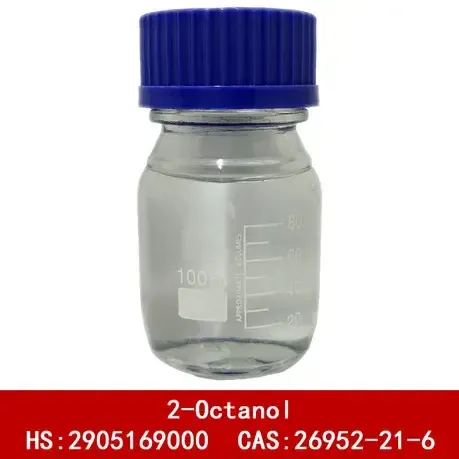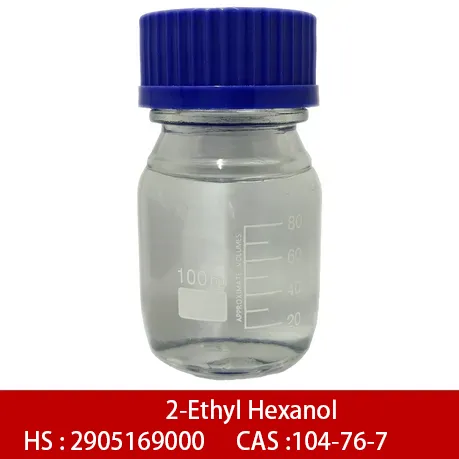

2-Octanol vs 2-ethylhexanol — two alcohols that share the same molecular formula (C₈H₁₈O) and molecular weight (130.23 g/mol) yet serve fundamentally different roles in the chemical industry. If you have ever wondered why DOTP plasticizer uses one alcohol while DCP plasticizer uses the other, the answer lies in their structural isomerism. This guide provides a clear, side-by-side comparison to help procurement managers, PVC compounders, and chemical engineers make informed sourcing decisions.
Key Takeaways
- 2-Octanol (CAS 123-96-6) is a straight-chain secondary alcohol produced primarily from castor oil; used to synthesize DCP plasticizer and fragrance intermediates.
- 2-Ethylhexanol (CAS 104-76-7) is a branched primary alcohol produced from petrochemical propylene; used to synthesize DOTP plasticizer and acrylate esters.
- Both share the molecular formula C₈H₁₈O but are structural isomers — different molecular architectures lead to different reactivity, properties, and end uses.
- They cannot be used interchangeably in plasticizer production: 2-octanol → DCP; 2-ethylhexanol → DOTP.
- Shandong Changxing Plastic Additives produces both alcohols as part of a vertically integrated supply chain across DOTP, DCP, and intermediates.
Structural Differences: Straight-Chain vs. Branched
The most fundamental difference between 2-octanol and 2-ethylhexanol lies in their molecular architecture. Both have eight carbon atoms and one hydroxyl group, but the arrangement of these atoms is entirely different.
2-Octanol: CH₃–CH(OH)–CH₂–CH₂–CH₂–CH₂–CH₂–CH₃ — A straight eight-carbon chain with the –OH group on carbon-2. This makes it a secondary alcohol (the carbon bearing the –OH is bonded to two other carbons).
2-Ethylhexanol: CH₃–CH₂–CH₂–CH₂–CH(C₂H₅)–CH₂–OH — A six-carbon chain with an ethyl branch (–C₂H₅) on carbon-2 and the –OH on the terminal carbon. This makes it a primary alcohol (the carbon bearing the –OH is bonded to only one other carbon).
This structural distinction has profound consequences. As a secondary alcohol, 2-octanol is less reactive in esterification reactions compared to the primary alcohol 2-ethylhexanol. The branched structure of 2-ethylhexanol gives it lower crystallinity and better low-temperature flow properties, while the linear chain of 2-octanol provides more uniform molecular packing in the resulting plasticizers.
Physical Properties Comparison
Despite sharing the same molecular weight, the structural differences produce measurable variations in physical properties that affect handling, storage, and processing.
| Property | 2-Octanol | 2-Ethylhexanol |
|---|---|---|
| CAS Number | 123-96-6 | 104-76-7 |
| Alcohol Type | Secondary (–OH on C-2) | Primary (–OH on C-1) |
| Chain Structure | Straight-chain (linear) | Branched (ethyl on C-2) |
| Boiling Point | 179 °C | 184 °C |
| Density (20 °C) | 0.819 g/cm³ | 0.833 g/cm³ |
| Flash Point | 71 °C (closed cup) | 76 °C (closed cup) |
| Refractive Index (20 °C) | 1.420 | 1.431 |
| Water Solubility | 1.12 g/L at 20 °C | 1.0 g/L at 20 °C |
| Viscosity (20 °C) | ~8.5 mPa·s | ~5.8 mPa·s |
| Odor | Mild, wine-like, slightly green | Mild, slightly sweet, faintly alcoholic |
Key comparison points: 2-ethylhexanol has a higher boiling point (184 vs. 179 °C) and higher density (0.833 vs. 0.819 g/cm³) because its branched structure packs more mass per unit volume. 2-Octanol has a significantly higher viscosity (~8.5 vs. ~5.8 mPa·s), which affects its pumping and metering in esterification reactors. Both have similar flash points and water solubility, and both are classified as combustible liquids rather than flammable liquids.
Production Routes: Castor Oil vs. Petrochemical
The production origins of these two isomers are as distinct as their structures — one partially bio-based, the other entirely petrochemical.
2-Octanol: Castor Oil Route
2-Octanol is produced industrially through the alkali fusion of castor oil. Castor oil contains approximately 90% ricinoleic acid (12-hydroxy-9-octadecenoic acid). When heated with concentrated sodium hydroxide at 250–300 °C, ricinoleic acid cleaves to produce 2-octanol and sebacic acid (or sodium sebacate) as a co-product. This route makes 2-octanol a partially bio-based product, since the feedstock is an agricultural commodity rather than a petrochemical.
Process: Castor oil → alkali fusion (NaOH, 250–300 °C) → 2-octanol + sebacic acid (co-product). The sebacic acid co-product is itself a valuable chemical used in nylon and specialty plasticizer production, making this dual-product process highly efficient.
2-Ethylhexanol: Petrochemical Propylene Route
2-Ethylhexanol is produced from propylene through a multi-step petrochemical process. Propylene undergoes hydroformylation (OXO process) with synthesis gas to produce n-butyraldehyde. Two molecules of n-butyraldehyde undergo aldol condensation, then dehydration to form 2-ethylhexenal, which is finally hydrogenated to 2-ethylhexanol. This is a mature, large-scale industrial process.
Process: Propylene + synthesis gas → hydroformylation → n-butyraldehyde → aldol condensation → 2-ethylhexenal → hydrogenation → 2-ethylhexanol. This process is energy-intensive but benefits from economies of scale and the abundant supply of propylene from steam cracking and FCC units.
| Dimension | 2-Octanol | 2-Ethylhexanol |
|---|---|---|
| Feedstock | Castor oil (agricultural) | Propylene (petrochemical) |
| Bio-based Content | Partially bio-based | 0% (fully petrochemical) |
| Co-product | Sebacic acid (high value) | Iso-butyraldehyde (by-product) |
| Supply Elasticity | Limited (castor crop dependent) | High (propylene abundant) |
Plasticizer Applications: DCP vs. DOTP
The most commercially significant difference between these two alcohols is their role in plasticizer production. Each alcohol feeds into a distinct plasticizer with different regulatory status, performance characteristics, and target markets.
2-Octanol → DCP
- Produces DCP (di-sec-octyl phthalate)
- CAS 131-15-7
- Ortho-phthalate ester (same class as DOP)
- Excellent viscosity stability in plastisol
- Cost-effective general-purpose plasticizer
- Used in: synthetic leather, floor mats, conveyor belts, cable compounds
2-Ethylhexanol → DOTP
- Produces DOTP (dioctyl terephthalate)
- CAS 6422-86-2
- Non-phthalate terephthalate ester
- REACH-compliant, RoHS-compliant
- Superior heat resistance and electrical insulation
- Used in: wire & cable, medical gloves, food packaging, toys
A critical point for formulators: these alcohols cannot be substituted for each other in plasticizer production. Using 2-octanol with terephthalic acid would not produce DOTP, and using 2-ethylhexanol with phthalic anhydride would produce DOP (DEHP), not DCP. The alcohol type determines which plasticizer is formed, and each plasticizer has its own regulatory and performance profile.
Other Industrial Uses
Beyond plasticizer production, each alcohol has distinct secondary applications that reflect its unique properties.
| Application Area | 2-Octanol | 2-Ethylhexanol |
|---|---|---|
| Fragrance & Flavor | Direct use as fragrance ingredient; precursor to 2-octanone | Limited direct use in fragrances |
| Solvent Applications | Specialty solvent for coatings, mining flotation | Solvent for nitrocellulose, rubber, lacquers |
| Acrylate Esters | Not typically used | 2-Ethylhexyl acrylate for adhesives and coatings |
| Mining | Froth flotation frother for mineral processing | Not typically used in mining |
Selection Guide: Which Alcohol Do You Need?
Choosing between 2-octanol and 2-ethylhexanol depends entirely on your end product and regulatory requirements. Use this decision framework:
Quick Selection Guide
- ▸ Producing DCP plasticizer? → You need 2-octanol (CAS 123-96-6)
- ▸ Producing DOTP plasticizer? → You need 2-ethylhexanol (CAS 104-76-7)
- ▸ Fragrance or flavor formulation? → Likely 2-octanol (for green, wine-like notes) or its derivative 2-octanone
- ▸ 2-Ethylhexyl acrylate production? → You need 2-ethylhexanol
- ▸ Mineral flotation frother? → Likely 2-octanol
- ▸ Need REACH-compliant plasticizer for export? → Choose DOTP (from 2-ethylhexanol), not DCP
Conclusion
2-Octanol and 2-ethylhexanol may share a molecular formula, but they are as different in practice as steel and aluminum — both structural materials, but each suited to its own applications. The straight-chain secondary alcohol 2-octanol feeds DCP production and fragrance chemistry, while the branched primary alcohol 2-ethylhexanol drives DOTP production and acrylate manufacturing. Understanding these differences is essential for correct formulation, regulatory compliance, and cost-effective sourcing.
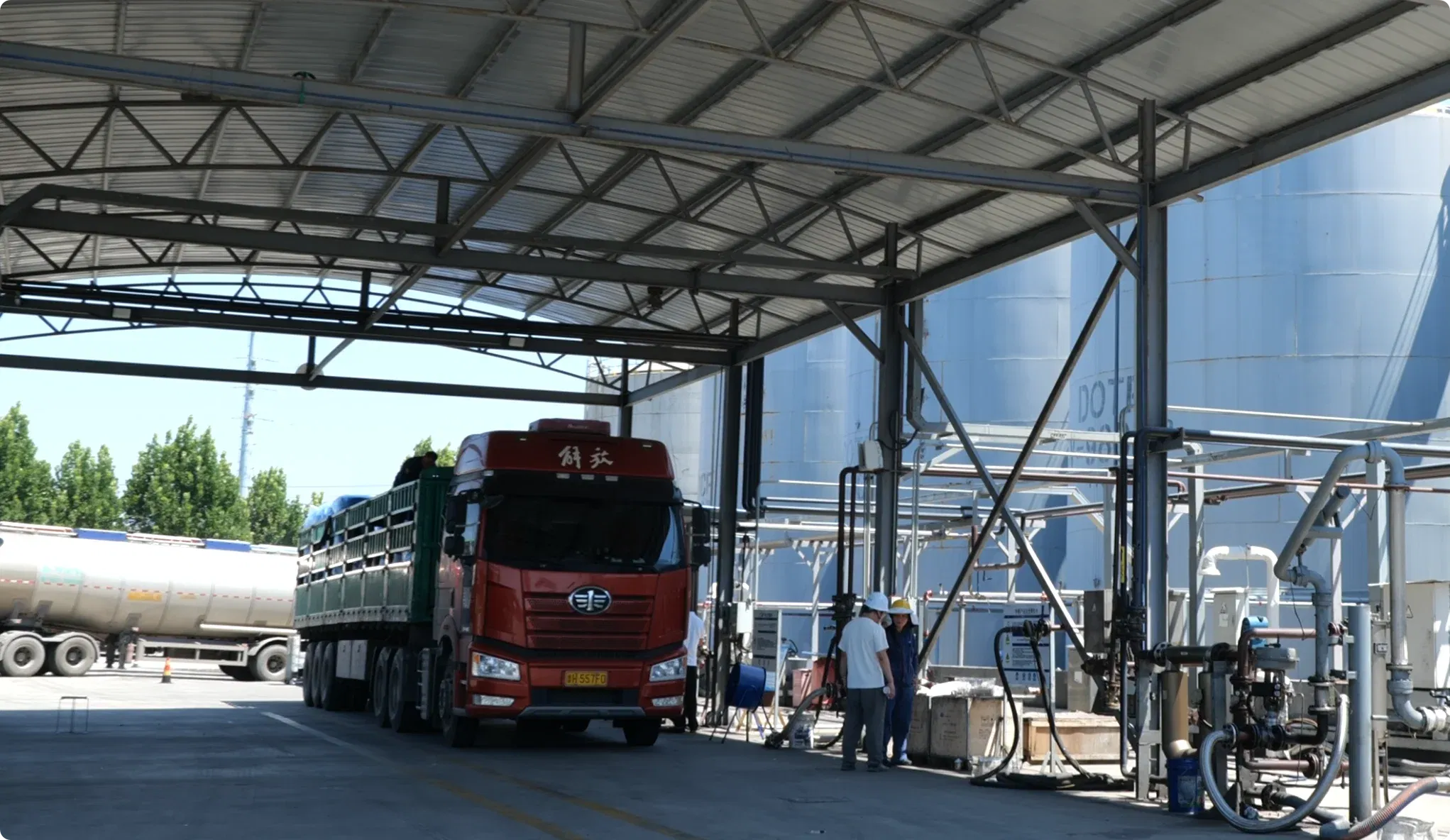
Shandong Changxing Plastic Additives produces both 2-octanol and 2-ethylhexanol as part of a vertically integrated supply chain across DOTP, DCP, and intermediates, with ISO 9001/14001/45001/50001 certifications, providing reliable supply and complete documentation (SDS, CoA, REACH) for global customers. Contact us for specifications, pricing, and sample requests.
Frequently Asked Questions
Is 2-octanol the same as 2-ethylhexanol?
No. Although both share the molecular formula C₈H₁₈O and molecular weight 130.23 g/mol, they are structural isomers with fundamentally different structures. 2-Octanol (CAS 123-96-6) is a straight-chain secondary alcohol with the hydroxyl group on carbon-2. 2-Ethylhexanol (CAS 104-76-7) is a branched primary alcohol with an ethyl branch on carbon-2. This structural difference leads to distinct reactivity, physical properties, and industrial applications.
Which alcohol is used to make DOTP plasticizer?
DOTP (dioctyl terephthalate) is produced from 2-ethylhexanol (CAS 104-76-7), not 2-octanol. 2-Ethylhexanol reacts with terephthalic acid or recycled PET through esterification or transesterification to form DOTP. In contrast, 2-octanol reacts with phthalic anhydride to produce DCP (di-sec-octyl phthalate). Using the wrong alcohol would produce a completely different plasticizer.
Which alcohol is used to make DCP plasticizer?
DCP (di-sec-octyl phthalate, CAS 131-15-7) is produced from 2-octanol (CAS 123-96-6). 2-Octanol, a straight-chain secondary alcohol, reacts with phthalic anhydride through esterification to form DCP. DCP is a structural isomer of DOP (DEHP) with the same molecular formula but different spatial arrangement, offering better viscosity stability and heat resistance in PVC applications.
Why does 2-octanol come from castor oil while 2-ethylhexanol comes from petrochemicals?
2-Octanol is produced industrially from castor oil through alkali fusion (saponification of ricinoleic acid), making it partially bio-based. 2-Ethylhexanol is produced from petrochemical propylene via the aldol condensation route (propylene → n-butyraldehyde → 2-ethylhexenal → 2-ethylhexanol). The different feedstock origins affect cost structures, sustainability profiles, and supply chain dynamics.
Can 2-octanol and 2-ethylhexanol be used interchangeably?
No. They cannot be used interchangeably in plasticizer production because their different alcohol types (secondary vs. primary) and chain structures (straight vs. branched) produce different esters with distinct properties. In solvent applications, they may serve similar functions but exhibit different evaporation rates, solvency parameters, and odor profiles. Always select the alcohol specified for your particular application.