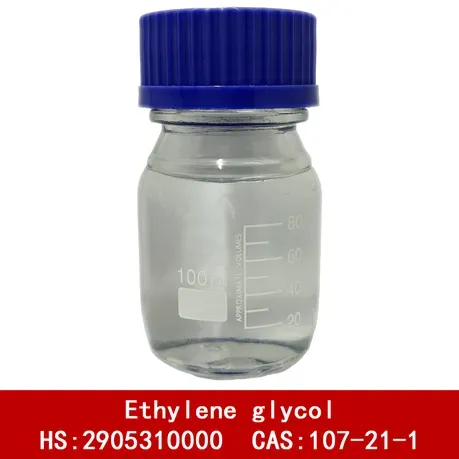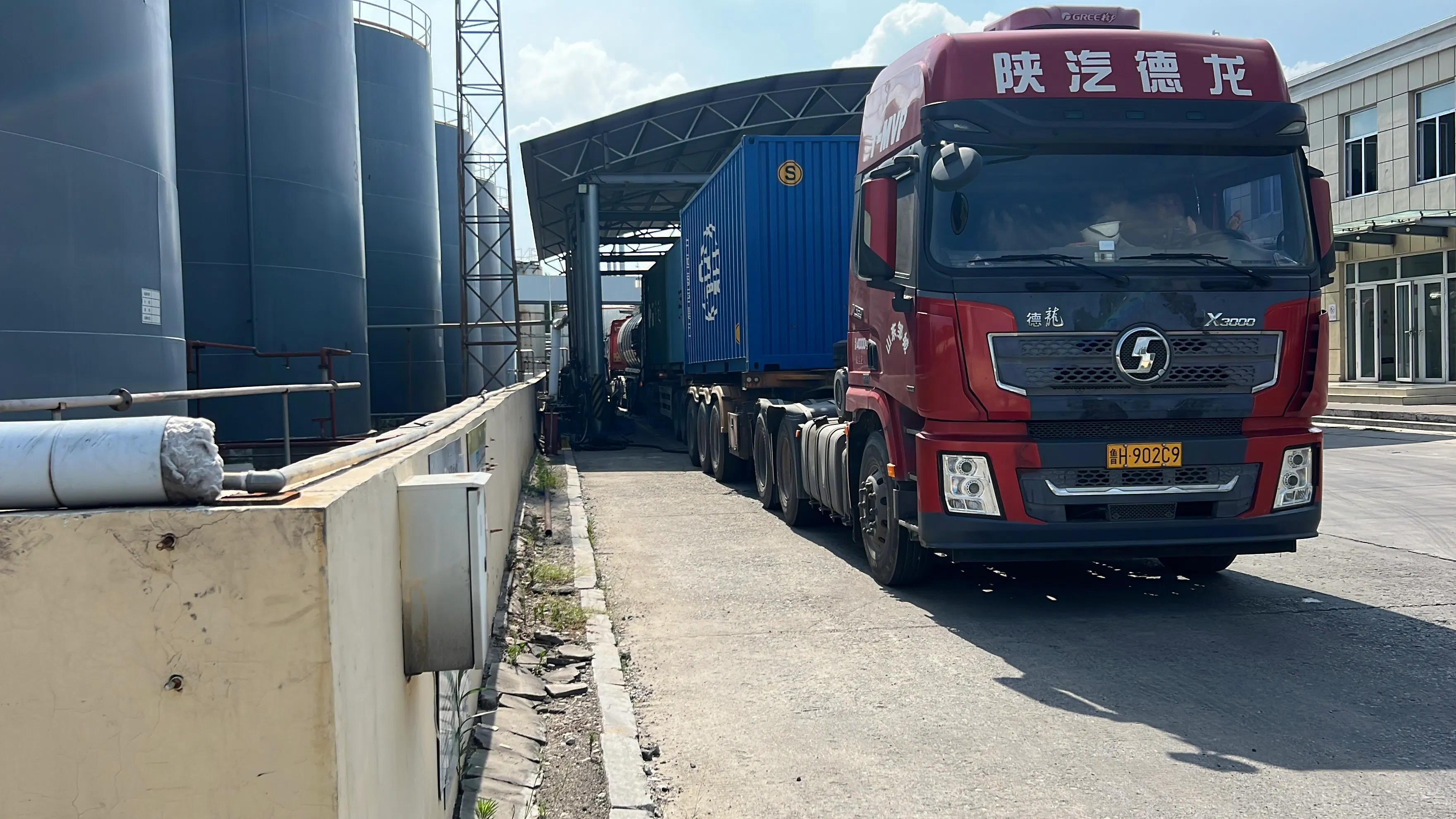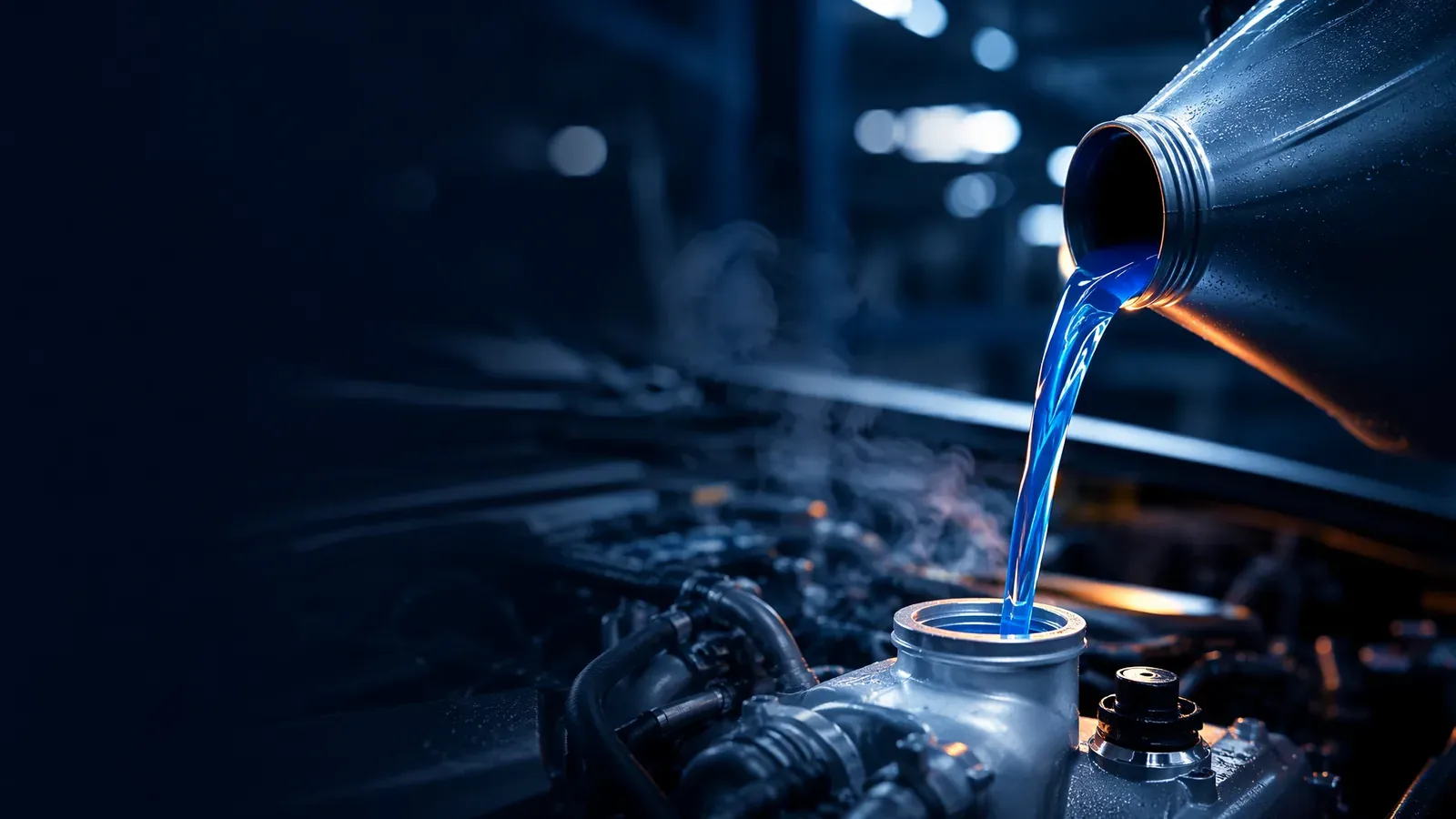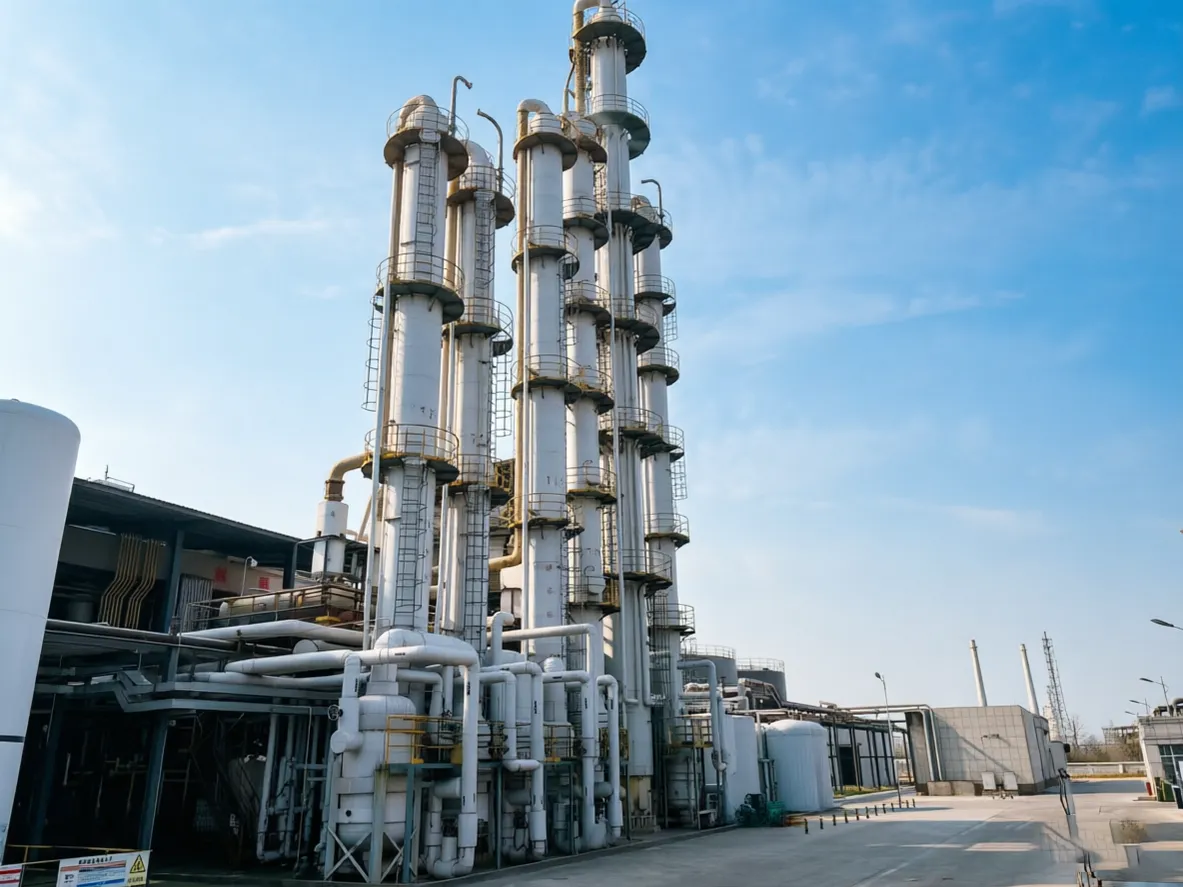

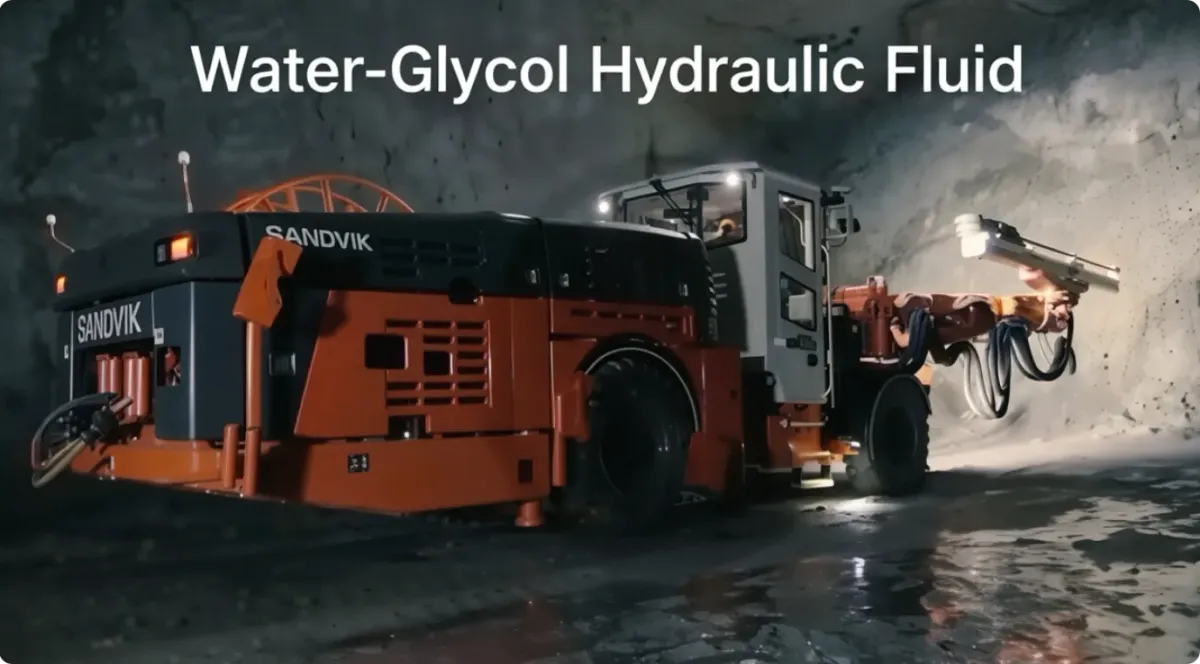
When fire hazard is a primary safety concern — in steel mills, foundries, die-casting plants, and underground mines — water-glycol hydraulic fluids (ISO HFC class) are the industry standard for fire-resistant power transmission. At the heart of every HFC formulation is ethylene glycol hydraulic fluid: a blend of Ethylene Glycol (MEG, CAS 107-21-1), water, thickeners, and additive packages that delivers hydraulic power without the ignition risk of mineral oil. This guide focuses exclusively on the role of Ethylene Glycol (MEG) in HFC hydraulic fluid formulation, system design considerations, and real-world industrial applications — content not covered in our ethylene glycol antifreeze and coolant guide.
Key Takeaways
- Water-glycol hydraulic fluids (ISO HFC) are the most widely used fire-resistant hydraulic fluids globally, with MEG as the primary glycol component.
- HFC fluids contain 35–45% water, 20–40% MEG, and 10–20% thickeners plus additives — the water content provides fire resistance while MEG prevents freezing and raises the boiling point.
- MEG is preferred over propylene glycol in hydraulic applications due to lower viscosity (better pump efficiency), superior heat transfer, and lower cost.
- Hydraulic-grade MEG requires purity ≥99.5% and chloride ≤0.5 ppm to protect system metals and prevent additive depletion.
- Shandong Changxing supplies antifreeze/hydraulic-grade MEG with typical purity ≥99.5%, backed by ISO 9001/14001/45001/50001 certification and 300,000 tons annual capacity.
What Are Ethylene Glycol Water-Glycol Hydraulic Fluids (ISO HFC)?
The ISO 6743-4 standard classifies fire-resistant hydraulic fluids into several categories. HFC fluids — water-glycol solutions — are the most commonly deployed class worldwide, accounting for approximately 60% of all fire-resistant hydraulic fluid consumption [source: ISO 6743-4 industry survey]. Their defining characteristic is the combination of water (for fire resistance) and glycol (for freeze protection and lubricity).
| ISO Class | Composition | Water Content | Fire Resistance |
|---|---|---|---|
| HFA-E | Oil-in-water emulsion | ≥80% | ★★★★★ |
| HFB | Water-in-oil emulsion | 40–50% | ★★★★ |
| HFC | Water-glycol solution | 35–45% | ★★★★★ |
| HFD-R | Phosphate ester | 0% | ★★★★ |
| HFD-U | Other synthetic (anhydrous) | 0% | ★★★★ |
HFC fluids are preferred over HFA and HFB emulsions because they offer better lubrication, longer service life, and greater stability under shear. They are preferred over HFD synthetics because they are significantly less expensive and non-toxic (phosphate esters in HFD-R fluids are both costly and environmentally hazardous).
MEG in HFC Fluid Composition: The Role of Each Component
A typical HFC water-glycol hydraulic fluid contains four functional component groups:
| Component | Typical Range | Function |
|---|---|---|
| Water | 35–45% | Fire resistance — evaporative cooling suppresses ignition at leak points |
| MEG (Ethylene Glycol) | 20–40% | Freeze protection (to −20 °C), boil-over protection, lubricity aid |
| Polymer thickener | 10–20% | Viscosity index improvement — typically polyalkylene glycol (PAG) |
| Additive package | 2–5% | Anti-wear, corrosion inhibition, anti-foam, and pH buffer |
Why MEG, not propylene glycol? In hydraulic systems, MEG offers three critical advantages over PG: (1) Lower viscosity — a 40% MEG solution at 40 °C has approximately 30% lower viscosity than the equivalent PG solution [source: Dow Chemical MEG technical data sheet], translating directly to higher pump efficiency and lower energy consumption; (2) Better heat transfer — MEG's higher thermal conductivity means more efficient heat removal from pumps and actuators; (3) Lower cost — MEG is typically 20–40% less expensive than PG per ton [source: ICIS MEG/PG market pricing]. PG is reserved for food-processing hydraulic systems where accidental ingestion risk demands low toxicity. For a full comparison, see our MEG uses overview.
Water-Glycol vs Mineral Oil Hydraulic Fluids
Switching from mineral oil to HFC water-glycol fluid is not a simple drop-in replacement. The two fluid types have fundamentally different physical properties that affect system design and operation:
| Property | HFC (Water-Glycol) | Mineral Oil (HM/HV) | Design Impact |
|---|---|---|---|
| Fire resistance | Inherently fire-resistant | Flammable (flash point ~210 °C) | HFC eliminates fire risk at leak points |
| Specific gravity | 1.05–1.10 | 0.85–0.90 | HFC is denser — pump suction must be redesigned |
| Viscosity index | 140–200 (very high) | 90–130 | HFC viscosity changes less with temperature |
| Lubricity | Moderate | Excellent | HFC requires anti-wear additives and harder pump materials |
| Operating temperature range | −20 to +60 °C | −10 to +80 °C | HFC has lower upper limit due to water evaporation |
| Seal compatibility | NBR, FKM, PTFE | NBR, FKM, PU | PU seals swell in HFC — must switch to FKM or PTFE |
Critical design note: HFC fluids must not exceed 60 °C bulk temperature. Above this threshold, water evaporation accelerates, changing the water-to-glycol ratio and compromising both fire resistance and viscosity. Systems must include adequate reservoir cooling (heat exchangers or finned tanks) and regular water content monitoring.
Hydraulic System Design Considerations for HFC Fluids
Converting a mineral-oil hydraulic system to HFC water-glycol fluid requires attention to five key design areas:
1. Pump Selection and Wear Protection
HFC fluids have lower lubricity than mineral oils, which increases wear on pump internals — particularly in vane and gear pumps. Recommended practices include:
- Use piston pumps where possible — axial and radial piston pumps tolerate HFC fluids better than vane or gear pumps due to hydrostatic bearing design.
- Derate pump speed by 10–20% compared to mineral oil operation — lower speed reduces sliding contact wear.
- Specify hardened or coated wear surfaces — nitrided or chrome-plated pistons and valve plates extend service life by 2–3× in HFC service.
- Monitor water content weekly — water loss below 35% reduces fire resistance; water gain above 45% dilutes the glycol and reduces viscosity below acceptable limits.
2. Seal and Hose Compatibility
Not all elastomers are compatible with water-glycol fluids:
| Seal Material | HFC Compatibility | Notes |
|---|---|---|
| NBR (Nitrile) | ✅ Compatible | Most common for HFC; slight swelling acceptable |
| FKM (Viton/Fluorocarbon) | ✅ Compatible | Best for high-temperature HFC service (up to 60 °C) |
| PTFE (Teflon) | ✅ Compatible | Excellent chemical resistance; used for backup rings |
| PU (Polyurethane) | ❌ Not compatible | Swells and degrades rapidly in water-glycol — must be replaced |
| EPDM | ⚠️ Conditional | Compatible with water-glycol but NOT with mineral oil — avoid if cross-contamination possible |
3. Filtration Requirements
HFC fluids are more prone to particle contamination than mineral oils because the water phase promotes corrosion of ferrous components. Filtration recommendations:
- Return-line filter: β₁₀ ≥ 75 (10 μm absolute) — standard for most HFC systems.
- Pressure-line filter: β₅ ≥ 75 (5 μm absolute) — for servo and proportional valve systems.
- Reservoir breather filter: 3 μm with desiccant — prevents moisture and particulate ingress.
- Filter element material: Use water-compatible media (stainless steel mesh or synthetic fiber) — standard cellulose elements degrade in water-glycol.
4. Temperature and Water Content Monitoring
Maintaining the correct water-to-MEG ratio is critical for both fire resistance and viscosity. Best practices include:
- Install reservoir temperature alarms at 55 °C (warning) and 60 °C (shutdown) to prevent water evaporation.
- Measure water content monthly using Karl Fischer titration or refractometry. Target range: 35–45% water by volume.
- Adjust water content by adding deionized water (if water is low) or high-purity MEG (if water is high) to restore the correct ratio.
- Never use tap water for topping up — chloride and minerals cause corrosion and inhibitor depletion.
5. System Conversion Procedure
When converting an existing mineral-oil system to HFC fluid, a thorough cleaning procedure is essential:
- Drain all mineral oil — remove reservoir oil, drain lines, cylinders, and accumulators.
- Flush with HFC fluid — fill with HFC, circulate for 2–4 hours, then drain. Repeat until drained fluid shows <0.1% mineral oil content.
- Replace PU seals and hoses — polyurethane components are incompatible with HFC and must be swapped to NBR, FKM, or PTFE.
- Install compatible filters — replace cellulose filter elements with water-compatible synthetic media.
- Fill with fresh HFC fluid — verify water content is 35–45% before commissioning.
Ethylene Glycol HFC Fluid Industrial Applications: Where Fire Resistance Is Mandatory
Fire-resistant hydraulic fluids are not optional in many industries — they are mandated by insurance requirements, occupational safety regulations, and equipment manufacturer specifications:
🏭 Steel & Metal Processing
Continuous casters, hot rolling mills, and forging presses operate near molten metal at 1,500+ °C. A mineral oil hydraulic leak would ignite instantly. HFC fluids are required by FM Global Approval Standard 6930 and EN ISO 12922.
🔥 Die Casting & Foundries
Aluminum and zinc die-casting machines use hydraulic clamping forces of 200–3,000 tons. Molten metal splashes are routine — HFC fluids prevent catastrophic fires at hydraulic fitting failure points.
⛏️ Underground Mining
Coal mine hydraulic supports (shield supports) and shearers use HFC fluids mandated by MSHA 30 CFR §75.1907 and national mine safety regulations. The combination of methane atmosphere and hydraulic pressure makes fire resistance non-negotiable.
🛢️ Oil & Gas Platforms
Offshore platform hydraulic systems for blowout preventers (BOPs), cranes, and winches use HFC fluids to eliminate ignition risk in hydrocarbon-rich environments. DNV-OS-E101 and API safety standards apply.
According to industry estimates, the global fire-resistant hydraulic fluid market exceeds USD 1.5 billion annually [source: MarketsandMarkets fire-resistant hydraulic fluid market report], with HFC water-glycol fluids holding the largest share by volume. Growth is driven by tightening workplace safety regulations in China, India, and Southeast Asia — regions where Shandong Changxing's high-purity MEG is competitively positioned.
MEG Quality Requirements for HFC Hydraulic Fluid Production
The quality of MEG directly affects HFC fluid performance, service life, and system reliability. Hydraulic fluid manufacturers must specify MEG that meets the following minimum requirements:
| Parameter | HFC Hydraulic Grade | Why It Matters in Hydraulic Systems |
|---|---|---|
| MEG Purity | ≥99.5% | Ensures consistent freeze/boil point and viscosity prediction |
| Chloride (Cl⁻) | ≤0.5 ppm | Chloride causes stress corrosion cracking of stainless steel hydraulic lines |
| Iron (Fe) | ≤0.1 ppm | Iron accelerates anti-wear additive depletion and forms abrasive particles |
| Water Content | ≤0.1% | Excess water skews the critical water-to-glycol ratio in final formulation |
| DEG Content | ≤0.5% | DEG increases toxicity without improving hydraulic performance |
| Chroma (Pt-Co) | ≤40 | Visual quality indicator for end-product clarity and market acceptance |
Shandong Changxing Plastic Additives Co., Ltd. supplies MEG that consistently meets or exceeds these specifications, with typical purity ≥99.5%, chroma ≤20, and chloride ≤0.5 ppm. Our ISO 9001-certified quality management system ensures batch-to-batch consistency — essential for hydraulic fluid manufacturers who cannot afford formulation drift. For current pricing and supply terms, see our MEG price trends and market outlook guide.
Conclusion: MEG Is the Foundation of Safe, Reliable HFC Hydraulic Systems
Ethylene glycol (MEG) is not merely an ingredient in water-glycol hydraulic fluids — it is the foundation that makes HFC fluids both functional and safe. Without MEG's freeze protection, HFC fluids could not operate in cold environments; without its boil-over protection, water evaporation would compromise fire resistance; without its lubricity contribution, pump wear would render HFC systems uneconomical.
For hydraulic fluid manufacturers and end users alike, the quality of MEG directly determines system reliability. Chloride contamination causes stress corrosion cracking; iron impurities accelerate additive depletion; inconsistent purity leads to formulation drift. Specifying MEG with purity ≥99.5%, chloride ≤0.5 ppm, and iron ≤0.1 ppm is not optional — it is a system integrity requirement.
Shandong Changxing Plastic Additives Co., Ltd. delivers hydraulic-grade MEG that meets these exacting standards, backed by ISO 9001/14001/45001/50001 certification and 300,000 tons annual capacity. Whether you are formulating HFC fluids for steel mills, die-casting operations, or underground mining, our MEG provides the consistency and purity your systems demand.
Frequently Asked Questions
Can ethylene glycol be used in hydraulic systems?
Yes. Ethylene glycol (MEG) is a key component of water-glycol hydraulic fluids (ISO HFC class), which are fire-resistant hydraulic fluids used in steel mills, foundries, die-casting operations, and coal mines. Typical MEG concentration in HFC fluids is 20–40% by volume, combined with 35–45% water, thickeners, and corrosion inhibitors.
What concentration of MEG is used in industrial coolant systems?
Industrial coolant systems typically use 20–50% MEG by volume, depending on the required freeze protection. Mild climates use 20–30% MEG (freeze protection to −8 to −15 °C), while cold climates use 40–50% MEG (freeze protection to −25 to −37 °C). Data center liquid cooling systems typically use 20–30% MEG with deionized water.
Why is MEG preferred over propylene glycol for industrial applications?
MEG offers superior heat transfer efficiency, lower viscosity at low temperatures, and lower cost compared to propylene glycol (PG). PG is reserved for applications where low toxicity is a regulatory or safety requirement, such as food processing plants, breweries, and marine applications where accidental ingestion is a concern.
What purity of MEG is required for hydraulic fluid and coolant production?
Hydraulic and coolant-grade MEG requires purity ≥99.5%, water content ≤0.1%, chloride ≤0.5 ppm, iron ≤0.1 ppm, and chroma ≤40 (Pt-Co). Chloride above 1.0 ppm can cause pitting corrosion of aluminum components, while iron above 0.5 ppm accelerates inhibitor depletion and sludge formation. Shandong Changxing's MEG consistently meets these specifications.
What types of corrosion inhibitors are used in MEG-based hydraulic and coolant systems?
The main inhibitor types are: IAT (Inorganic Acid Technology — silicates, phosphates, borates, 2–3 year service life), OAT (Organic Acid Technology — 2-EHA, sebacate, benzoate, 5+ year service life), HOAT (Hybrid Organic Acid Technology — OAT + silicates or phosphates, 4–5 year service life), and OAT-LC (Low-conductivity OAT for EV battery cooling, 5+ year service life).
Ready to Source Premium MEG for Hydraulic Fluid Production?
Shandong Changxing Plastic Additives Co., Ltd. is an ISO 9001 certified manufacturer with 300,000 tons annual capacity. We supply high-purity MEG for HFC fire-resistant hydraulic fluids, antifreeze, and industrial coolant applications to clients worldwide.
Request a Free Quote- ✓ Hydraulic-grade MEG: ≥99.5% purity, chloride ≤0.5 ppm
- ✓ ISO 9001/14001/45001/50001 certified
- ✓ Global delivery to 30+ countries
- ✓ SDS and COA provided with every shipment