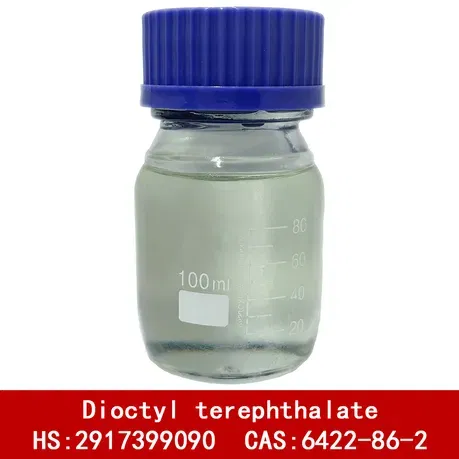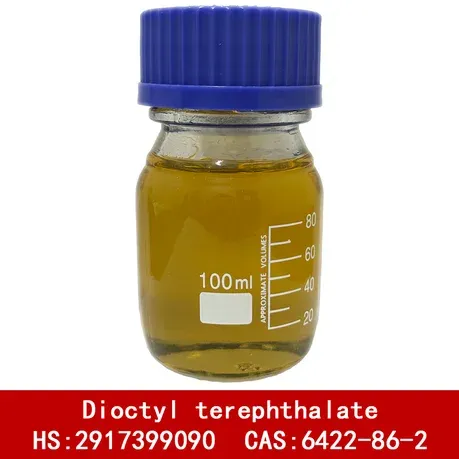

In 2026, regulatory pressure on ortho-phthalate plasticizers has reached a tipping point. The EU's REACH restriction roadmap, the U.S. EPA's ongoing TSCA risk evaluation, and China's updated GB 31604.30-2025 standard have created a synchronized global compliance wall. Manufacturers still using DOP, DINP, or DBP now face supply-chain disruptions, market-access denials, and liability exposure. At Shandong Changxing Plastic Additives, we supply DOTP—a non-phthalate plasticizer that satisfies every major regulatory framework without sacrificing PVC processing performance.
This guide maps the 2026 regulatory landscape, explains why DOTP's terephthalate chemistry places it outside the restricted class, and shows how our certified production program supports procurement teams with audit-ready documentation.
The 2026 Regulatory Landscape: A Synchronized Global Crackdown
What distinguishes 2026 from previous years is the convergence of major economies: the EU, the United States, and China are all tightening restrictions simultaneously. For global manufacturers, compliance is no longer a regional checkbox—it is a cross-border survival requirement.
EU REACH: From SVHC Listing to Authorization
DEHP, DBP, BBP, and DIBP are already restricted under REACH Annex XVII (entry 51). In 2026, the European Chemicals Agency (ECHA) is advancing the authorization process for additional phthalates, meaning uses not explicitly exempted will require individual authorization. Meanwhile, the RoHS Directive (2011/65/EU) continues to ban the four phthalates in electrical and electronic equipment. For exporters to the EU, REACH plasticizer compliance is now a binary condition: use an exempt chemistry, or face market exclusion.
U.S. Federal and State Action
The U.S. Consumer Product Safety Commission (CPSC) permanently banned phthalates in children's toys and childcare articles under 16 CFR § 1307. The EPA's 2024 TSCA risk evaluation for phthalates, finalized in 2025, now triggers risk-management rules expected in 2026. At the state level, California Proposition 65 requires warning labels for DEHP, DBP, and BBP, while Washington and New York have enacted broader restrictions on phthalates in food packaging and cosmetics. The regulatory trajectory is unambiguous: the U.S. market is closing to ortho-phthalates.
China GB 31604.30 and Asia-Pacific Alignment
China's National Food Safety Standard GB 31604.30-2025 (effective September 2025) sets stricter migration limits for phthalates in food-contact materials. Japan's CSCL and South Korea's K-REACH have aligned their restricted substance lists with EU SVHCs. For manufacturers exporting to Asia, a phthalate-free formulation is now the default specification, not a premium option.
Why DOTP Escapes Phthalate Restrictions
Regulatory definitions matter. The term "phthalate" in restriction lists refers specifically to esters of ortho-phthalic acid. DOTP (dioctyl terephthalate) is synthesized from para-terephthalic acid—a structural isomer that places it outside the restricted chemical class. This is not a loophole; it is a fundamentally different molecule recognized by ECHA, the U.S. FDA, and China's NHC as exempt from phthalate bans.
Structural Chemistry: Ortho vs. Para
DOP and DINP derive from phthalic anhydride, forming an ester with an ortho-substituted aromatic ring. DOTP derives from terephthalic acid (or dimethyl terephthalate), forming a para-substituted ester. This para configuration alters steric geometry, migration behavior, and toxicological profile. Independent migration studies show DOTP exhibits significantly lower extraction rates in PVC compared to DOP, a key reason regulators do not classify it as a substance of concern.
Performance Equivalence in Critical Applications
Switching from DOP or DINP to DOTP does not require a compromise. In 90°C cable compounds, DOTP delivers volume resistivity ≥2×10¹² Ω·cm and passes 136°C thermal-aging tests. In medical-grade PVC, DOTP's low cytotoxicity and low extractables meet USP Class VI and ISO 10993 benchmarks. For food-contact films, DOTP's migration values under GB 31604.30 remain well below the regulatory limits. The DOTP alternative is a technical upgrade, not a downgrade.
DOTP vs. Restricted Ortho-Phthalates: At a Glance
| Parameter | DOTP (terephthalate) | DOP / DINP (ortho-phthalate) |
|---|---|---|
| Chemical class | Para-terephthalate ester | Ortho-phthalate ester |
| REACH Annex XVII (entry 51) | Outside scope — non-phthalate | Restricted to 0.1% in articles |
| EU RoHS (EEE) | Compliant | Banned (4 phthalates) |
| US CPSIA / 16 CFR 1307 | Outside children's scope | Restricted in toys & childcare |
| PVC migration (ISO 177) | 3–5× lower than DOP | Higher |
| 90°C cable thermal aging | Passes 136°C; ≥2×10¹² Ω·cm | Baseline |
| Endocrine disruptor status | Not classified | DEHP/BBP listed as SVHC |
Certified Production at Scale
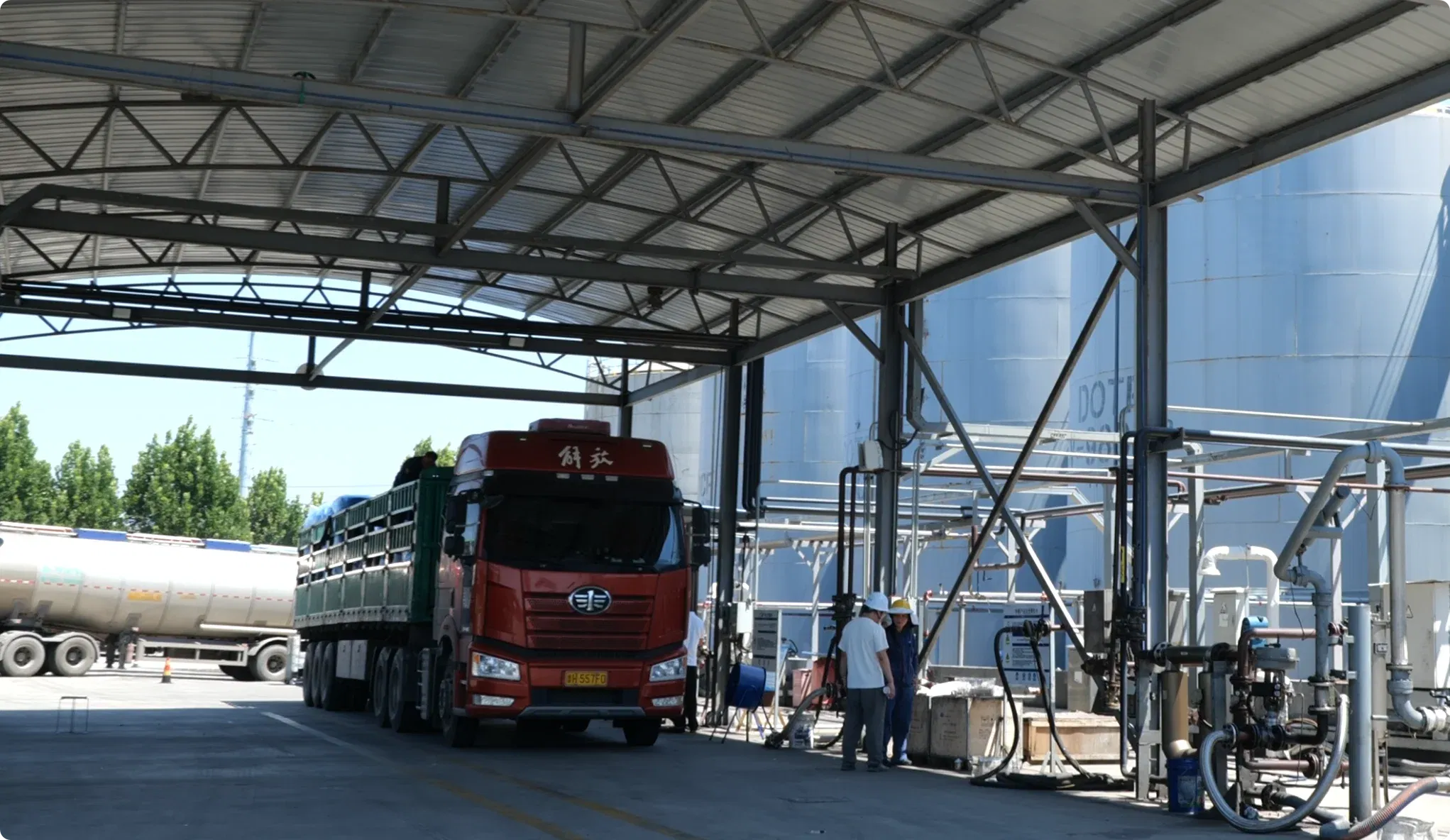
Compliance requires more than the right molecule; it requires manufacturing discipline. Jining Wansheng Environmental Protection Materials Co., Ltd. operates under Shandong Changxing's integrated management system, ensuring every batch of DOTP is produced with documented traceability.
Four-System ISO Certification
Our certifications—ISO 9001 (quality), ISO 14001 (environment), ISO 45001 (safety), and ISO 50001 (energy)—provide the documentation framework that procurement managers need for supplier audits, ESG reporting, and customer due diligence. In 2026, buyers are no longer satisfied with a COA; they demand system-level evidence. Our four-system certification delivers exactly that.
300,000-Ton Annual Capacity
Regulatory bans create demand surges. When REACH forced a European cable compounder to switch suppliers in 2024, lead times for compliant plasticizers spiked by 8 weeks. Our group annual capacity of 300,000 tons absorbs such shocks. For procurement teams, this scale means contractual certainty during market transitions driven by phthalate ban regulations.
"We switched from DINP to DOTP in Q1 2025 to meet a new EU customer specification. Wansheng provided REACH compliance statements, full COA traceability, and delivered the first 500-ton batch within 4 weeks. Their documentation package passed our third-party audit without a single finding."
Where DOTP Replaces Phthalates in 2026
Our DOTP is already serving as a direct replacement in sectors where regulations are most stringent:
90°C Cable Jacket Compounds
Non-phthalate profile satisfies RoHS and REACH; volume resistivity and thermal-aging performance exceed DINP baselines
Medical-Grade PVC
Low cytotoxicity and extractables meet FDA 21 CFR 175.105 and EU MDR requirements for tubing and bags
Food-Contact Films
Migration values under GB 31604.30 and EU 10/2011 remain well below limits, replacing restricted phthalates in packaging
Children's Toys and Childcare Articles
Structurally outside CPSC and EN 71-3 phthalate restriction scope, eliminating formulation risk
Your 2026 Compliant Transition Roadmap
Switching from restricted ortho-phthalates to DOTP is a managed, low-risk process. Follow this five-step roadmap to stay ahead of the 2026 global bans while keeping production uninterrupted:
- Map your phthalate exposure. Audit every PVC compound containing DOP, DINP, DBP, or DEHP. Record plasticizer type, loading, target hardness, end-use, and export markets (EU, U.S., China). Prioritize EU- and U.S.-bound, food-contact, medical, and children's products.
- Confirm DOTP's compliance status. DOTP's para-terephthalate structure sits outside REACH Annex XVII, EU RoHS, U.S. CPSIA, and China's GB 31604.30 scope. Request the supplier's REACH statement, GHS-classified SDS, and Certificate of Analysis.
- Run laboratory-scale trials. Substitute DOTP at the same phr loading — add 2–5 phr versus DOP for equivalent hardness. Evaluate gelation, hardness, tensile strength, elongation at break, and thermal stability.
- Validate with third-party testing. Send samples to an accredited lab for phthalate screening (CPSC-CH-C1001-09.4 / EN 71-3) and migration testing (ISO 177). Retain reports for customer audits and ESG filings.
- Secure certified supply at scale. Transition production lines incrementally and sign a supply agreement with a DOTP producer holding ISO 9001/14001/45001/50001 and verified capacity — our group operates at 300,000 tons per year.
Frequently Asked Questions
Is DOTP officially exempt from phthalate bans?
Yes. DOTP is based on terephthalic acid, not ortho-phthalic acid. ECHA, the U.S. CPSC, and China's NHC restrict ortho-phthalates specifically. DOTP's para-terephthalate structure is classified outside the restricted chemical class, making it a structurally compliant DOTP alternative.
Will switching to DOTP require reformulation?
In most PVC applications, DOTP substitutes for DOP or DINP on a near-drop-in basis. Plasticizing efficiency, compatibility with PVC resin (K-value 65–72), and processing temperatures are comparable. Our technical team, supported by the Shandong Provincial Enterprise Technology Center and Academician Workstation, provides formulation support for specific compound requirements.
What compliance documentation do you provide?
We supply certificates of analysis (COA), REACH compliance statements, RoHS test reports, and technical data sheets. Our four ISO certifications (9001, 14001, 45001, 50001) support buyer audits and ESG reporting. All documentation is available in English and Chinese.
Can you guarantee supply during demand surges?
Yes. Our group annual capacity of 300,000 tons is designed to serve both regional distributors and global manufacturers. We maintain buffer inventory for contract customers and can absorb demand spikes triggered by regulatory transitions without extending lead times.
What is the 2026 outlook for phthalate regulations?
The 2026 outlook is further tightening. The EU is expected to expand REACH authorization lists; the U.S. EPA will finalize TSCA risk-management rules; and China's GB standards will continue to lower migration limits. Early adoption of DOTP is the most cost-effective strategy to stay ahead of these changes.
References and External Resources
- ECHA — Understanding REACH
- U.S. CPSC — Phthalates Information
- U.S. EPA — Phthalates under TSCA
- China NHC — National Food Safety Standards (GB)
Stay Ahead of 2026 Phthalate Regulations with DOTP
As phthalate ban regulations tighten across Europe, North America, and Asia, procurement teams need a plasticizer partner that delivers compliance without compromise. Shandong Changxing's DOTP alternative combines non-phthalate chemistry with internationally certified manufacturing at group scale of 300,000 tons.
Request Compliance Documentation- ✓ Non-phthalate DOTP for REACH, RoHS, and CPSC compliance
- ✓ ISO 9001 / 14001 / 45001 / 50001 four-system certified
- ✓ Group annual capacity: 300,000 tons
- ✓ Shandong Province Single-Champion Product
- ✓ Technical support and formulation guidance available