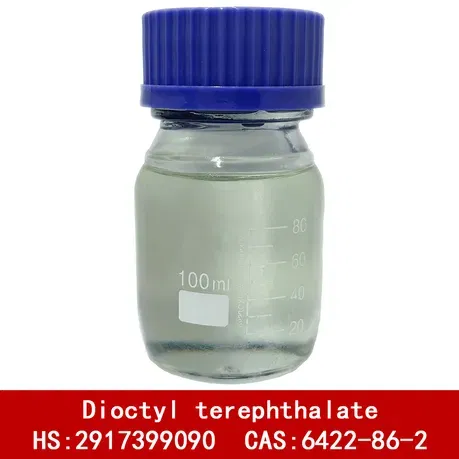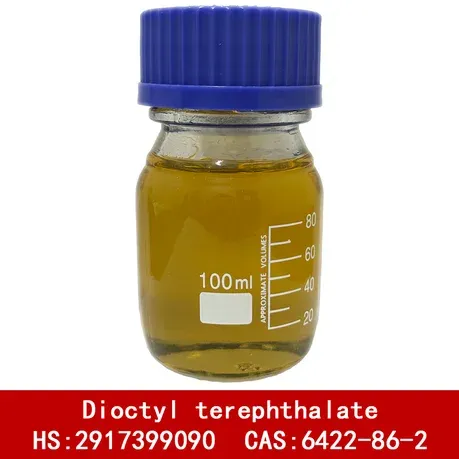

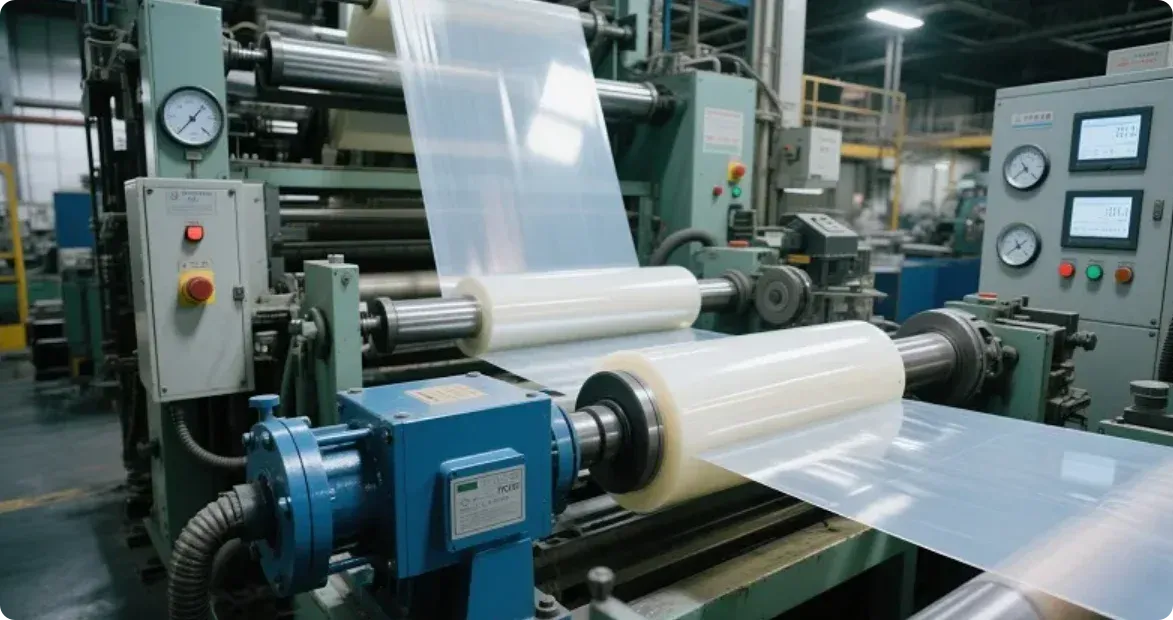
DOTP PVC film plasticizer is transforming how manufacturers produce food packaging, shrink wrap, agricultural covers, and cling film. DOTP (Dioctyl Terephthalate, CAS 6422-86-2) is a non-phthalate terephthalate ester that delivers the clarity, flexibility, and low migration that PVC film applications demand - while meeting the strict regulatory requirements of EU REACH, US FDA, and global food-contact frameworks. As the world shifts away from restricted ortho-phthalates like DEHP and DOP, premium DOTP plasticizer has become the material of choice for PVC film producers who need both performance and compliance. For a broader overview of DOTP chemistry and properties, see our guide on what is DOTP plasticizer.
Key Takeaways
- DOTP is a non-phthalate terephthalate plasticizer approved for food-contact PVC film under FDA 21 CFR §175.300 and EU Regulation 1935/2004.
- DOTP-plasticized PVC film shows migration loss of only 0.5–1.5 mg/cm² (ISO 177), roughly 3–5× lower than DOP-based film - critical for food safety and product shelf life.
- DOTP's low-temperature flexibility (cold flex to about −48°C) makes it ideal for agricultural film and cold-chain packaging that must perform in freezing environments.
- Shandong Changxing supplies film-grade DOTP with ISO 9001/14001/45001/50001 certification and SGS testing for 17 restricted phthalates (zero detection).
Types of PVC Film Using DOTP
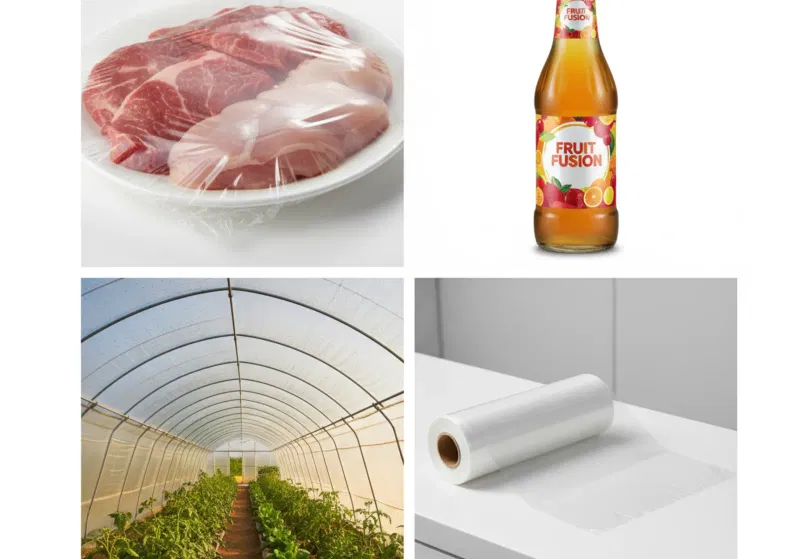
PVC film is one of the largest application segments for plasticizers, consuming millions of tons annually worldwide. DOTP serves as the primary plasticizer across multiple film categories, each with distinct performance requirements:
Food Packaging & Wrapping Film
PVC food wrap and packaging film requires ultra-low migration, crystal clarity, and compliance with FDA and EU food-contact regulations. DOTP food packaging film meets all three criteria, making it the preferred choice for meat wrap, cheese film, and fresh-produce packaging.
Shrink Film & Label Film
PVC shrink film for bottle labels and tamper-evident bands requires high clarity, consistent shrinkage, and thermal stability during the shrink-tunnel process. DOTP's low volatility at processing temperatures (150–190°C) ensures uniform shrinkage without plasticizer loss.
Agricultural Film
Greenhouse covers, mulch film, and tunnel film must withstand UV exposure, temperature extremes, and long service life. DOTP's typical cold flex temperature of about −48°C prevents cracking in frost, while its low migration rate extends film lifespan by reducing plasticizer loss under solar heating.
Cling Film & Stretch Film
Household and industrial cling film demands high elasticity, excellent cling performance, and food-contact safety. DOTP provides the softness and tack needed for effective sealing while maintaining regulatory compliance for direct food contact.
Why DOTP Food Packaging Film Is the Safe Choice
Food-contact PVC film is the most demanding application for any plasticizer. The plasticizer must not migrate into food at levels that exceed regulatory limits, must not alter the taste or odor of the packaged product, and must be explicitly approved for food-contact use. DOTP meets all these requirements:
FDA and EU Food-Contact Compliance
DOTP is approved for indirect food contact under FDA 21 CFR §175.300 (adhesives and components of coatings) and complies with EU Regulation (EC) No 1935/2004 on materials and articles intended to contact food. Unlike DEHP (DOP), which is restricted to 0.1% under REACH Annex XVII and effectively banned in food-contact articles, DOTP is a non-phthalate terephthalate ester that falls outside the scope of phthalate restrictions. For a full regulatory analysis, see our phthalate-free plasticizer guide.
Low Migration - Critical for Food Safety
Plasticizer migration from PVC film into food is the single most important safety metric. In ISO 177 migration testing (40°C, 72 hours, against polyethylene), DOTP-plasticized PVC film shows migration loss of only 0.5–1.5 mg/cm², compared to 3.0–5.0 mg/cm² for DOP-based film. This 3–5× reduction in migration directly translates to lower plasticizer transfer into food, which is why food-packaging manufacturers are switching to DOTP. These are representative ISO 177 lab results; confirm exact migration with your supplier's Certificate of Analysis.
Clarity and Optical Performance
Food packaging film demands exceptional optical clarity so consumers can see the product. DOTP-plasticized PVC film achieves light transmittance above 90% and haze below 2% in typical formulations, producing crystal-clear wrap that rivals premium-grade film. DOTP's excellent color stability (APHA ≤150 for premium grade) ensures the film remains transparent throughout its shelf life, even after exposure to retail lighting and ambient UV. For full optical and physical property data, see our guide on DOTP technical properties.
DOTP in Agricultural Film
Agricultural PVC film - including greenhouse covers, low tunnels, and mulch film - faces some of the harshest operating conditions of any plasticized product. The film must survive UV radiation, temperature cycling between day and night, wind loading, and contact with agrochemicals. DOTP provides three critical advantages for agricultural film applications. For related DOTP applications in other flexible PVC products, see our guides on DOTP in artificial leather and DOTP in household gloves.
- Extreme cold flexibility. DOTP's typical cold flex temperature of about −48°C means PVC agricultural film remains flexible even in severe frost. DOP-based film becomes brittle below −20°C, leading to cracking and premature failure in cold-climate greenhouses. DOTP film can be deployed in northern Europe, Canada, and high-altitude regions without winter damage.
- Low migration extends service life. Under solar heating, plasticizer migration from PVC film accelerates. DOTP's 3–5× lower migration rate compared to DOP means the film retains its flexibility and mechanical properties for longer. Typical DOTP-plasticized greenhouse film lasts 3–5 seasons versus 2–3 seasons for DOP-based film.
- Compatibility with UV stabilizers. DOTP is fully compatible with standard UV absorbers (benzotriazoles, HALS) and thermal stabilizers (Ca/Zn, Ba/Zn) used in agricultural film formulations, without interfering with their protective function.
DOTP for Shrink Film & Cling Film
Shrink film and cling film represent two of the highest-volume PVC film segments where plasticizer performance directly determines end-product quality. DOTP delivers specific advantages for each application that DOP cannot match:
Shrink Film & Label Film
PVC shrink film for bottle labels, tamper-evident bands, and multi-pack bundling requires precise and consistent shrinkage during the heat-tunnel process (typically 150–190°C). DOTP's low volatility at these processing temperatures ensures uniform shrinkage without plasticizer loss, which would otherwise cause uneven shrinkage, surface defects, or label distortion. DOTP-plasticized shrink film achieves shrinkage ratios of 40–60% with excellent clarity and no haze development during the shrink process. For manufacturers also producing DOTP-based PVC wire and cable, the same DOTP inventory can serve both production lines, simplifying procurement and reducing inventory costs.
Cling Film & Stretch Film
Household and industrial cling film demands a unique combination of high elasticity, excellent cling (self-adhesion), and food-contact safety. DOTP provides the softness and tack needed for effective sealing while maintaining full regulatory compliance for direct food contact. Unlike DOP-based cling film, which faces increasing regulatory barriers in food-contact applications, DOTP cling film is approved under FDA 21 CFR §175.300 and EU Regulation 1935/2004. The low migration rate of DOTP (0.5–1.5 mg/cm² vs 3.0–5.0 mg/cm² for DOP) is especially critical for cling film because the large surface area and direct food contact maximize potential plasticizer transfer. DOTP cling film also maintains its cling performance over a longer shelf life because the lower migration rate means the film retains its plasticizer content - and therefore its flexibility and tack - for longer periods.
DOTP vs DOP: Choosing a PVC Film Plasticizer
The table below compares DOTP with DOP (DEHP) across the properties most relevant to PVC film applications. The data shows why film manufacturers worldwide are transitioning to DOTP - and why regulators are accelerating that transition.
| Property | DOTP | DOP (DEHP) |
|---|---|---|
| Chemical class | Terephthalate (non-phthalate) | Ortho-phthalate |
| Food-contact approval | FDA & EU approved | Restricted / banned |
| REACH status | Not restricted | SVHC, Annex XVII restricted |
| Migration loss (ISO 177) | 0.5–1.5 mg/cm² | 3.0–5.0 mg/cm² |
| Cold flex temperature | −48°C | −20 to −25°C |
| Film clarity (light transmittance) | >90% | >88% |
| Heat loss at 125°C | ≤0.3% | 1.0–1.5% |
| Volatile loss during film extrusion | Very low | Moderate |
| Film service life (agricultural) | 3–5 seasons | 2–3 seasons |
| IARC carcinogen classification | Not listed | Group 2B (possibly carcinogenic) |
The regulatory gap between DOTP and DOP is widening rapidly. Under EU REACH, DEHP is listed as an SVHC and restricted to 0.1% in all consumer articles. The US CPSIA restricts DEHP to 0.1% in children's products. These restrictions make DOP-based PVC film unsuitable for food packaging and agricultural applications in major markets. For a detailed comparison of the regulatory landscape, see our guide on DOTP as a DEHP replacement. For a broader comparison including DINP, see our DOTP vs DINP comparison guide.
DOTP Film Formulation Guide
DOTP loading in PVC film varies by application and target film properties. The following ranges are typical starting formulations; fine-tuning should be based on laboratory trials under your specific processing conditions.
| Film Type | DOTP Loading (phr) | Key Performance Target |
|---|---|---|
| Food wrapping film (thin) | 50–65 | Ultra-low migration, high clarity, cling |
| Shrink label film | 45–60 | Uniform shrinkage, thermal stability |
| Greenhouse cover film | 55–75 | UV resistance, cold flexibility, long life |
| Mulch film | 50–65 | Soil contact resistance, flexibility |
| Cling / stretch film | 55–70 | High elasticity, food safety, cling |
| Medical packaging film | 45–60 | Sterilization resistance, low migration |
Processing Tips for DOTP Film
- Gelation temperature. DOTP has a slightly higher gelation temperature than DOP (approximately 5°C higher). Increase mixing temperature by 5–10°C and allow 10–15% additional gelation time for optimal plasticizer absorption in the PVC paste resin.
- Plastisol viscosity. DOTP produces slightly higher plastisol viscosity than DOP at the same phr loading. This is advantageous for thick-film applications (greenhouse covers) and manageable for thin-film applications (cling wrap) with minor rheology adjustments.
- Blending with DOP. For manufacturers transitioning gradually, DOTP and DOP are fully miscible and can be blended at any ratio. A 50/50 DOTP/DOP blend reduces migration by approximately 50% compared to pure DOP while maintaining familiar processing behavior.
- Stabilizer compatibility. DOTP is fully compatible with Ca/Zn, Ba/Zn, and organotin stabilizer systems commonly used in PVC film. No stabilizer change is required when switching from DOP to DOTP.
Compliance and Certification
PVC film manufacturers exporting to regulated markets must verify that their plasticizer supply chain delivers complete compliance documentation. Shandong Changxing provides the following for every shipment of film-grade DOTP:
- SGS phthalate testing. All 17 restricted ortho-phthalates screened per CPSC-CH-C1001-09.4 - zero detection. This confirms DOTP is phthalate-free and suitable for food-contact and children's product applications.
- EN 71-3 element migration. 19 regulated heavy metals tested per EN 71-3:2019+A2:2024 Category III - zero detectable migration. Critical for film used in toy packaging and children's product wrapping.
- PFAS screening. Total fluorine screening per EN 14582:2016 - not detected (<20 mg/kg). As EU PFAS restrictions tighten, this preemptive compliance gives film manufacturers a future-proof advantage.
- REACH registration. DOTP is fully registered under EU Regulation (EC) No 1907/2006, enabling seamless import into the European Union.
- GHS-classified SDS and CoA. Every shipment includes a Safety Data Sheet compliant with GHS Rev.9 and a Certificate of Analysis with actual test results for all specification parameters.
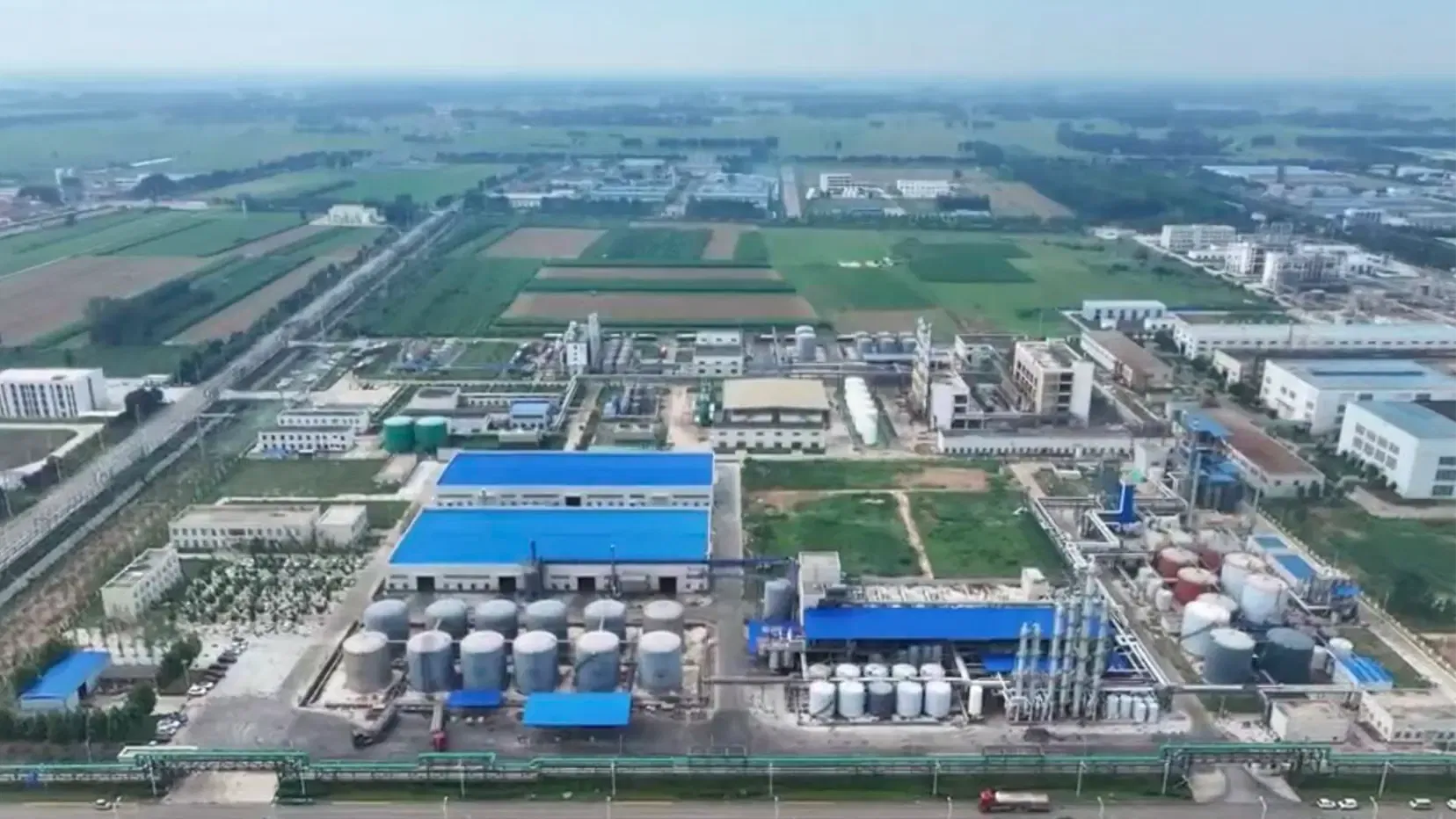
Shandong Changxing Plastic Additives Co., Ltd. holds four ISO certifications - ISO 9001 (quality), ISO 14001 (environmental), ISO 45001 (occupational health and safety), and ISO 50001 (energy management) - and operates with a group annual capacity of 300,000 metric tons. Our DOTP production process has been certified as "internationally advanced" by the Shandong Association for Science and Technology, ensuring consistent quality for the most demanding film applications. For environmental impact considerations, see our analysis of DOTP biodegradability and environmental impact. For general-purpose film applications where the tightest specification tolerances are not critical, our Qualified DOTP grade offers reliable performance at a more accessible price point.
Choosing the Right DOTP for Your Film Application
Selecting the optimal DOTP grade and loading level depends on your specific film application, target markets, and regulatory requirements. Here is a decision framework:
- Food-contact film (wrapping, cling, shrink labels). Choose Superior-grade DOTP for the tightest specification tolerances and lowest color value (APHA ≤150). Loading: 50–65 phr for thin wrapping film, 45–60 phr for shrink label film. Verify migration compliance with your supplier's Certificate of Analysis for each batch.
- Agricultural film (greenhouse, mulch, tunnel). Superior or Qualified grade both perform well. Focus on UV stabilizer package compatibility and cold-flex performance. Loading: 55–75 phr for greenhouse covers, 50–65 phr for mulch film. The 3–5× lower migration rate of DOTP vs DOP directly translates to longer service life and lower replacement costs.
- Industrial film (non-food wrapping, protective covers). Qualified-grade DOTP provides excellent value for general-purpose applications. Loading: 50–70 phr depending on target flexibility and thickness.
- Medical packaging film. Superior-grade DOTP is recommended for its tighter purity specifications and lower extractable content. Loading: 45–60 phr. Confirm compliance with USP Class VI or ISO 10993 as required by your end-use market.
For manufacturers transitioning from DOP to DOTP, a gradual blend approach (50/50 DOTP/DOP) reduces risk while delivering immediate migration improvements. Full transition to DOTP eliminates regulatory exposure and future-proofs your product line against tightening phthalate restrictions worldwide.
Frequently Asked Questions
Can DOTP be used in food-contact PVC film?
Yes. DOTP (Dioctyl Terephthalate, CAS 6422-86-2) is approved for indirect food contact under FDA 21 CFR §175.300 and complies with EU Regulation (EC) No 1935/2004. Unlike DEHP (DOP), which is restricted to 0.1% under REACH Annex XVII and effectively banned in food-contact articles, DOTP is a non-phthalate terephthalate ester that falls outside the scope of phthalate restrictions.
What is the migration rate of DOTP in PVC film?
In ISO 177 migration testing (40°C, 72 hours, against polyethylene), DOTP-plasticized PVC film shows migration loss of only 0.5–1.5 mg/cm², compared to 3.0–5.0 mg/cm² for DOP-based film. This 3–5× reduction in migration directly translates to lower plasticizer transfer into food, making DOTP the preferred choice for food packaging applications.
What DOTP loading should I use for PVC film?
DOTP loading varies by film type: food wrapping film 50–65 phr, shrink label film 45–60 phr, greenhouse cover film 55–75 phr, mulch film 50–65 phr, cling/stretch film 55–70 phr, and medical packaging film 45–60 phr. Because DOTP has slightly lower plasticizing efficiency than DOP, increase loading by 2–5 phr for equivalent hardness.
Why is DOTP better than DOP for agricultural PVC film?
DOTP offers three critical advantages for agricultural film: (1) extreme cold flexibility with a cold flex temperature of −48°C versus −20 to −25°C for DOP, preventing cracking in frost; (2) 3–5× lower migration rate that extends film service life from 2–3 seasons to 3–5 seasons; (3) full compatibility with UV stabilizers and thermal stabilizers used in agricultural formulations.
Is DOTP-compliant PVC film safe for children's product packaging?
Yes. DOTP is a non-phthalate terephthalate ester not restricted under EU REACH, US CPSIA, or EU Toy Safety Directive. Shandong Changxing's DOTP has passed SGS testing for all 17 restricted phthalates (zero detection), EN 71-3 element migration (19 elements, zero migration), and PFAS total fluorine screening - providing documentation for children's product packaging and toy wrapping applications.
Ready to Source Premium DOTP for PVC Film?
Shandong Changxing Plastic Additives Co., Ltd. is an ISO 9001 certified manufacturer with 300,000 tons annual capacity. We supply DOTP, DCP, and 2-octanol to clients worldwide - with SGS-tested compliance documentation for every shipment.
Request a Free Quote