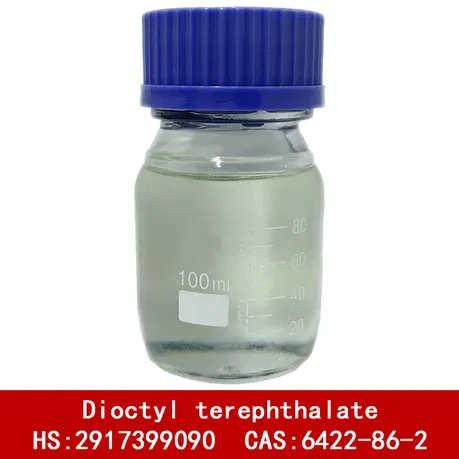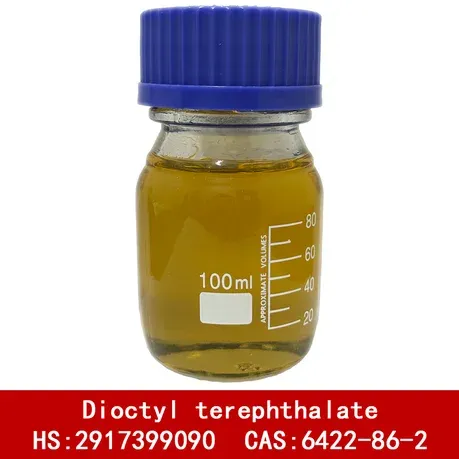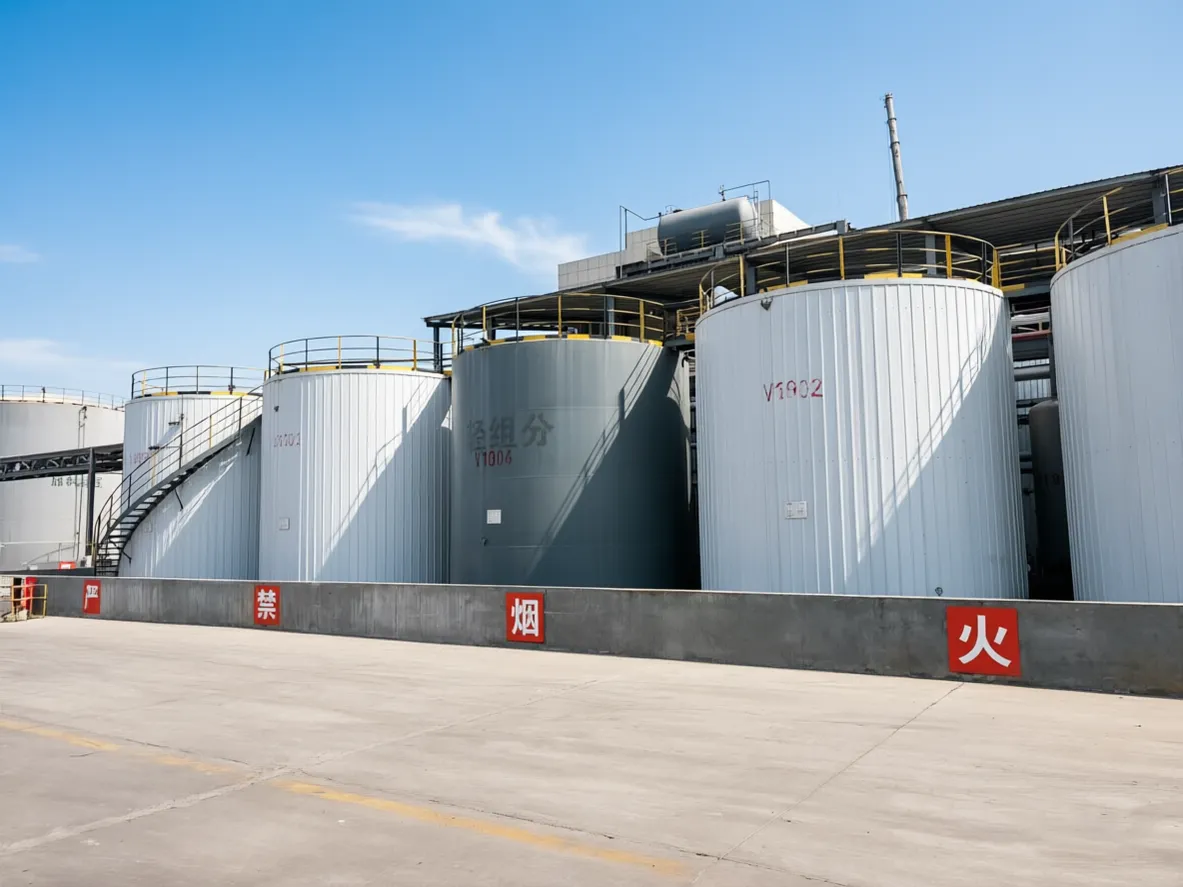

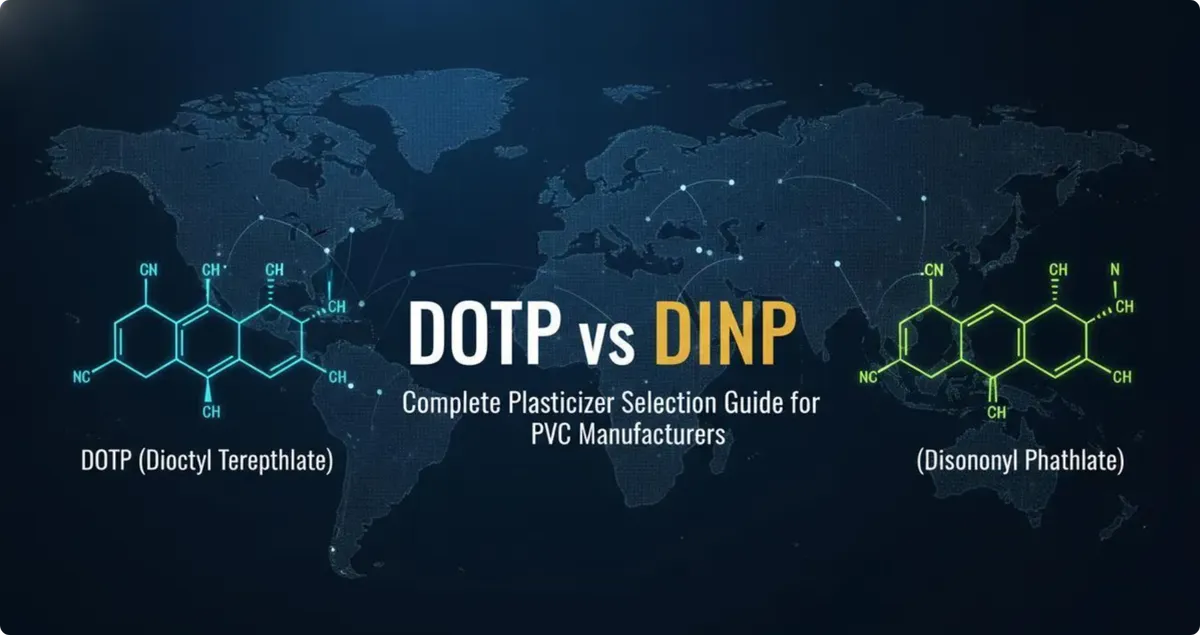
DOTP vs DINP is now one of the most searched plasticizer comparison queries among PVC manufacturers evaluating non-phthalate alternatives. DOTP (Dioctyl Terephthalate, CAS 6422-86-2) is a terephthalate ester that is structurally exempt from all global phthalate restrictions. DINP (Diisononyl Phthalate, CAS 68515-48-0) is an ortho-phthalate that is restricted or warning-labeled in the EU, California, and an increasing number of jurisdictions. For manufacturers who need regulatory certainty without sacrificing performance, DOTP has emerged as the preferred replacement for DINP in wire and cable, flooring, automotive interiors, and synthetic leather applications. This guide compares DOTP and DINP across regulation, heat resistance, migration, electrical properties, and cost, with data sourced from Shandong Changxing Plastic Additives production specifications and industry standards.
Key Takeaways
- DOTP is a terephthalate ester and is not classified as a phthalate under REACH, CPSIA, or RoHS. DINP is an ortho-phthalate and is restricted in children's products and articles in the EU and California.
- DOTP has 2 to 3 times lower heat loss at 125°C compared with DINP, making it superior for 90°C and 105°C rated wire and cable compounds.
- Volume resistivity of DOTP-plasticized PVC is approximately 10 times higher than DINP-plasticized PVC, which is critical for electrical insulation applications.
- DOTP and DINP have equivalent plasticizing efficiency in most flexible PVC formulations, so DOTP can replace DINP on a phr-for-phr basis with minimal adjustment.
- Shandong Changxing Plastic Additives produces DOTP at 300,000 tons annual capacity with ISO 9001/14001/45001/50001 certifications and SGS phthalate-free testing.
What Is DOTP vs DINP?
Definition: DOTP (Dioctyl Terephthalate) is a non-phthalate ester plasticizer produced by esterifying terephthalic acid or recycled PET with 2-ethylhexanol. DINP (Diisononyl Phthalate) is a traditional ortho-phthalate plasticizer produced by esterifying phthalic anhydride with isononyl alcohol. Both are primary plasticizers for flexible PVC, but DOTP is structurally outside the phthalate regulatory class, while DINP is within it.
The molecular distinction between DOTP plasticizer and DINP is the position of the ester groups on the benzene ring. In DOTP, the two ester groups are in the para position (opposite sides). In DINP, the two ester groups are in the ortho position (adjacent carbons). This positional difference is what regulatory agencies use to define the phthalate class. All major restrictions, including EU REACH Annex XVII, US CPSIA, and California Proposition 65, apply specifically to ortho-phthalate esters. DOTP, as a terephthalate, is exempt from every one of these restrictions.
DINP has historically been favored for general-purpose PVC applications because of its low cost and broad availability. However, regulatory pressure has intensified since 2023. The European Chemicals Agency expanded REACH restrictions to cover all consumer articles, and the US CPSC maintains strict limits on DINP in children's products. As a result, manufacturers who previously relied on DINP are now evaluating DOTP as a structurally compliant replacement that requires no regulatory authorization or warning labels.
Regulatory Comparison: Why DOTP Is Exempt and DINP Is Restricted
The regulatory gap between DOTP and DINP is widening, not narrowing. For manufacturers exporting to multiple markets, this gap has become the decisive factor in plasticizer selection. The following table summarizes the regulatory status of DOTP and DINP as of June 2026:
| Regulation | Scope | DINP Status | DOTP Status |
|---|---|---|---|
| EU REACH Annex XVII (Entry 51) | All consumer articles | Restricted (≤ 0.1%) | Not restricted |
| EU RoHS 2 | Electrical & electronic equipment | Restricted (≤ 0.1%) | Not restricted |
| US CPSIA Section 108 | Children's toys & childcare articles | Restricted (≤ 0.1%) | Not restricted |
| California Proposition 65 | All products sold in California | Warning required | No warning required |
| EU MDR 2017/745 | Medical devices | Requires justification | No justification required |
| Japan ST 2012 | Toys | Restricted (≤ 0.1%) | Not restricted |
For a complete overview of global phthalate regulations and how they affect plasticizer selection, see our phthalate-free plasticizer guide. The regulatory pattern is clear: DOTP is future-proof, while DINP carries escalating compliance costs and market-access risks.
Heat Resistance and Volatility Comparison
Heat resistance is where DOTP outperforms DINP by the widest margin. In PVC applications that operate at elevated temperatures, such as 90°C and 105°C rated wire insulation, automotive under-hood components, and conveyor belts, plasticizer volatility determines product lifetime and safety.
| Property | Test Method | DOTP | DINP | Advantage |
|---|---|---|---|---|
| Heat loss at 125°C / 2h | GB/T 1669 | ≤ 0.3% | 1.5–2.5% | DOTP: 5–8× lower |
| Flash point | GB/T 3536 | ≥ 210°C | ≥ 200°C | DOTP: safer |
| Low-temp flexibility | Clash-Berg | -48°C | -25 to -30°C | DOTP: superior |
| Volume resistivity | GB/T 1410 | ≥ 1.0 × 10¹² Ω·cm | ~ 1.0 × 10¹¹ Ω·cm | DOTP: 10× better |
| Soap water extraction at 70°C | ASTM D1239 | ≤ 0.5% | 2.0–4.0% | DOTP: 4–8× better |
| Plasticizing efficiency | Shore A comparison | Equivalent | Baseline | Drop-in replacement |
The heat loss data is particularly significant. At 125°C, DINP loses 1.5 to 2.5 percent of its mass within 2 hours, while DOTP loses less than 0.3 percent. For wire and cable rated at 90°C or 105°C, this means DOTP-insulated conductors maintain plasticizer content and mechanical flexibility for years longer than DINP-insulated equivalents. For automotive interior applications, DOTP's lower volatility directly reduces fogging on windshields and instrument panels, a failure mode that OEMs now test under VDA 278 and JAMA guidelines.
Migration and Extraction Resistance
Plasticizer migration occurs when the plasticizer moves out of the PVC matrix into adjacent materials or onto the product surface. Extraction happens when the plasticizer is pulled out by contact with liquids, oils, or detergents. Both phenomena cause hardening, cracking, and premature failure in finished products. DOTP resists migration and extraction significantly better than DINP because its symmetric para-terephthalate structure creates stronger intermolecular bonding with PVC polymer chains.
In soap water extraction tests at 70°C, DOTP-plasticized PVC loses 0.5 percent or less of its plasticizer content, while DINP-plasticized PVC loses 2.0 to 4.0 percent. This 4-fold to 8-fold difference translates directly to product durability in applications like flooring, shower curtains, and outdoor furniture that encounter regular cleaning. For medical tubing and blood bags, where extraction into fluids is a safety concern, DOTP's superior resistance profile supports biocompatibility requirements.
Electrical Properties: Volume Resistivity
Volume resistivity is the most important electrical property for PVC wire and cable insulation. It measures how effectively the insulation resists leakage current under applied voltage. DOTP-plasticized PVC achieves volume resistivity of 1.0 × 10¹² Ω·cm or higher, approximately one order of magnitude above DINP-plasticized PVC at 1.0 × 10¹¹ Ω·cm. This 10-fold advantage is why DOTP has become the dominant plasticizer for building wire (105°C rated), automotive harnesses, and appliance wiring that must pass UL, VDE, and IEC standards.
The higher volume resistivity of DOTP is not merely a marginal improvement. It is the difference between passing and failing insulation resistance tests for high-voltage cable. For cable manufacturers exporting to the EU, DOTP also satisfies RoHS 2 requirements that restrict phthalates in electrical and electronic equipment. DINP cannot be used in these applications without regulatory exemption, which is not available for general-purpose cables.
Cost and Availability Comparison
Cost is the primary reason some manufacturers still hesitate to switch from DINP to DOTP. In 2026, DOTP typically carries a 5 to 15 percent price premium over DINP in most Asian markets, depending on PTA and 2-ethylhexanol feedstock costs. However, this premium must be evaluated against the total cost of ownership, not just the raw material price:
- Regulatory cost: DINP-containing products exported to the EU or US may require testing, documentation, warning labels, or reformulation. These costs often exceed the DOTP price premium.
- Product lifetime: DOTP's lower volatility and better extraction resistance extend product life by 20 to 40 percent in high-temperature or wet environments, reducing warranty claims and replacement costs.
- Market access: Products with DINP cannot enter certain regulated markets, while DOTP-formulated products have unrestricted global market access.
- Supply security: Global DOTP capacity has grown to over 4 million tons annually. Shandong Changxing Plastic Additives alone operates 300,000 tons of capacity, ensuring stable supply for annual contracts.
For buyers evaluating DOTP as a DEHP or DINP alternative, the economics increasingly favor DOTP when compliance, warranty, and market-access costs are included in the analysis. The price gap has also narrowed as DOTP production has scaled, and further narrowing is expected as waste PET-to-DOTP processes reduce feedstock costs.
Application Guide: When to Choose DOTP or DINP
For manufacturers who need a practical decision framework, the following application matrix provides guidance based on regulatory exposure and technical requirements:
Choose DOTP For:
- Wire and cable (90°C / 105°C rated)
- PVC flooring exported to EU or US
- Toys and children's products
- Medical devices and tubing
- Automotive interiors (low fogging)
- Any product requiring phthalate-free certification
- High-temperature or outdoor applications
DINP Limitations Apply To:
- All consumer articles sold in the EU (REACH)
- Children's products sold in the US (CPSIA)
- Products sold in California (Prop 65 warning)
- Electrical and electronic equipment (RoHS 2)
- Medical devices (MDR justification required)
- Toys exported to Japan, South Korea, EU
- Any product with brand-level RSL requirements
The practical reality is that DINP's allowable application scope is shrinking while DOTP's scope is universal. For manufacturers who produce multiple product lines for multiple markets, standardizing on DOTP simplifies inventory, reduces compliance documentation, and eliminates the risk of accidentally shipping DINP-formulated products into restricted markets.
Frequently Asked Questions
Q: Is DOTP safer than DINP?
Yes. DOTP is not classified as hazardous under GHS and is not listed as a carcinogen or reproductive toxicant by IARC, NTP, or OSHA. DOTP is structurally outside the phthalate class. DINP is an ortho-phthalate with regulatory restrictions in children's products and consumer articles. Shandong Changxing's DOTP has passed SGS testing for all 17 restricted phthalates with zero detection.
Q: Can DOTP replace DINP directly without reformulation?
In most flexible PVC applications, DOTP can substitute for DINP at the same phr loading with minimal or no adjustment. Gelation time, melt viscosity, and Shore A hardness are typically equivalent. Minor processing temperature adjustments may optimize mixing efficiency. Laboratory-scale validation is recommended before full-scale transition.
Q: Which is better for high-temperature applications?
DOTP is superior for high-temperature applications. Its heat loss at 125°C is 0.3% or less, compared with 1.5 to 2.5% for DINP. This makes DOTP the preferred choice for 90°C and 105°C rated wire and cable, automotive under-hood components, and any PVC product that operates in hot climates or near heat sources.
Q: What is the price difference between DOTP and DINP?
DOTP typically costs 5 to 15% more than DINP in raw material terms. However, when regulatory compliance costs, market-access restrictions, and product-lifetime advantages are included, DOTP often delivers lower total cost of ownership. The price gap has narrowed as DOTP production capacity has expanded to over 4 million tons globally.
Q: Does DOTP meet the same PVC processing standards as DINP?
Yes. DOTP meets and exceeds DINP in all standard PVC processing parameters. Plasticizing efficiency is equivalent. Thermal stability is superior. Electrical insulation is 10 times better. Low-temperature flexibility extends to -48°C versus -25 to -30°C for DINP. DOTP is compatible with all standard PVC stabilizers, fillers, and pigments used with DINP formulations.
References and Further Reading
- ECHA — Understanding REACH Regulation
- US CPSC — Phthalates Business Guidance
- SGS — Global Testing and Certification
Source DOTP for Your PVC Manufacturing
Shandong Changxing Plastic Additives Co., Ltd. is an ISO 9001 certified manufacturer with 300,000 tons annual DOTP capacity. We supply non-phthalate DOTP to PVC manufacturers worldwide.
- SGS-certified: 17/17 phthalate-free, EN 71-3 compliant, PFAS-free
- Four ISO systems: 9001 / 14001 / 45001 / 50001
- National "Little Giant" enterprise with 300,000-ton annual capacity