

Global regulation of phthalate esters has entered an aggressive phase. Between 2023 and 2026, the European Chemicals Agency (ECHA) expanded REACH Annex XVII restrictions on phthalate esters to all consumer articles, effectively requiring phthalate-free plasticizer formulations. The US Consumer Product Safety Commission (CPSC) finalized its phthalate rule covering 8 ortho-phthalates. China updated GB 24613. South Korea's K-REACH added DEHP to its candidate list. For PVC compounders, wire and cable manufacturers, flooring producers, and toy makers, the message is unambiguous: transition to non-phthalate plasticizer formulations or lose access to regulated markets.
This guide covers what phthalate-free plasticizers are, how global regulations are reshaping the industry, why DOTP (Dioctyl Terephthalate) has emerged as the dominant alternative, how to verify compliance through SGS testing, and practical steps for manufacturers making the transition. Drawing on data from ECHA, CPSC, and third-party laboratory certifications held by Shandong Changxing Plastic Additives, this resource addresses both regulatory compliance and industrial performance requirements.
What Are Phthalate-Free Plasticizers?
A phthalate-free plasticizer is any plasticizing compound whose molecular structure contains no ortho-phthalate ester group. Ortho-phthalate esters consist of two ester groups attached to adjacent (ortho position) carbon atoms on a benzene ring. This structural arrangement is what regulatory bodies worldwide classify as a "phthalate" for restriction purposes. Compounds lacking this ortho-ester configuration are chemically and legally outside the scope of phthalate regulations.
Phthalate-free plasticizers fall into several chemical classes:
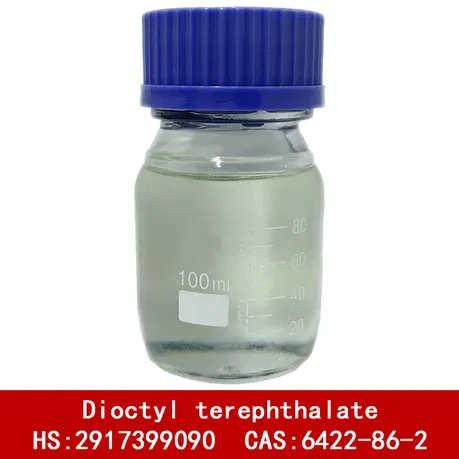
- Terephthalates — Ester groups in the para position (opposite carbons). DOTP (Dioctyl Terephthalate, CAS 6422-86-2) is the most commercially significant terephthalate plasticizer, with global production exceeding 4 million tons annually.
- Citrates — Esters of citric acid, such as ATBC (Acetyl Tributyl Citrate). Used primarily in medical devices and food-contact applications where premium pricing is accepted.
- Adipates — Diesters of adipic acid, such as DOA (Dioctyl Adipate). Provide excellent low-temperature flexibility but are generally used in combination with primary plasticizers due to higher volatility.
- Trimellitates — High-molecular-weight esters offering superior heat resistance. Used in automotive under-hood and high-temperature wire applications.
- Epoxidized Soybean Oil (ESBO) — A bio-based secondary plasticizer and stabilizer derived from soybean oil. Used as a co-plasticizer rather than a primary replacement.
- Cyclohexanoates — Newer class exemplified by DINCH (Diisononyl Cyclohexane-1,2-dicarboxylate), developed specifically as a phthalate alternative for sensitive applications.
Among these, DOTP dominates the non-phthalate plasticizer market for several reasons: it offers equivalent or superior plasticizing performance to DEHP/DOP at competitive cost, it is produced from readily available raw materials including recycled PET, and it benefits from 20+ years of industrial track record across every major PVC application sector.
Key distinction: Not all "phthalate-free" claims are equal. Only third-party laboratory certification like SGS testing provides verifiable proof that a plasticizer contains zero detectable ortho-phthalate esters. Always request laboratory reports, not just supplier declarations.
Why Are Phthalates Being Restricted Worldwide?
The global regulatory campaign against ortho-phthalate plasticizers is driven by three converging forces: toxicological evidence, regulatory precedent, and market demand.
Toxicological studies dating from the late 1990s established that certain low-molecular-weight phthalates (DEHP, DBP, BBP) exhibit endocrine-disrupting properties, interfering with hormonal systems in laboratory animals. The European Union classified DEHP as a Substance of Very High Concern (SVHC) under REACH in 2008. The US National Toxicology Program (NTP) listed DEHP as "reasonably anticipated to be a human carcinogen" in its 14th Report on Carcinogens. While epidemiological evidence in humans remains debated, the precautionary principle embedded in EU chemical regulation drove early restrictions, and other jurisdictions followed.
From a regulatory precedent perspective, once major markets restrict a substance, global supply chains reorganize around compliant alternatives. A PVC flooring factory in Vietnam supplying IKEA must meet EU phthalate standards regardless of Vietnam's own regulations. An automotive wiring harness manufacturer in Mexico supplying GM or Volkswagen must comply with both US and EU requirements. The result is a cascade effect: phthalate restrictions in one jurisdiction become de facto global standards.
Market demand reinforces this trend. Major retailers including IKEA, Walmart, Target, and Home Depot maintain restricted substance lists (RSLs) that exceed legal minimums. Consumer-facing brands in footwear, fashion, and home goods increasingly market "phthalate-free" as a differentiator. For manufacturers, switching to phthalate-free plasticizers is increasingly a commercial requirement rather than just a compliance exercise.
Global Regulatory Landscape for Plasticizers
Understanding the patchwork of phthalate regulations is essential for any manufacturer exporting PVC products. The following table summarizes the key regulatory frameworks affecting plasticizer selection as of June 2026:
| Regulation | Jurisdiction | Scope | Phthalate Limit | DOTP Status |
|---|---|---|---|---|
| REACH Annex XVII (Entry 51) | EU / EEA | All consumer articles | ≤ 0.1% (DEHP, DBP, BBP, DIBP) | Not restricted |
| EU RoHS 2 (2011/65/EU) | EU / EEA | Electrical & electronic equipment | ≤ 0.1% (DEHP, BBP, DBP, DIBP) | Not restricted |
| US CPSIA Section 108 | United States | Children's toys & childcare articles | ≤ 0.1% (8 phthalates including DEHP) | Not restricted |
| California Proposition 65 | California, USA | All products sold in California | Warning required (DEHP, DBP, BBP, DIDP, DINP, DnHP) | No warning required |
| EU MDR 2017/745 | EU / EEA | Medical devices | CMR substances require justification; DEHP CMR category 1B | No CMR classification |
| China GB 24613-2009 | China | Wooden toys | ≤ 0.1% (DEHP, DBP, BBP) | Not restricted |
| South Korea K-REACH | South Korea | All products | DEHP designated as restricted substance | Not restricted |
| Japan Chemical Substances Control Law | Japan | Toys (ST 2012) | ≤ 0.1% (DEHP, DBP, BBP) | Not restricted |
| US FDA 21 CFR | United States | Food-contact materials | No phthalates cleared as food-contact plasticizers (indirect additives) | Requires FCN submission |
Practical compliance note: If your PVC products are exported to the EU, US, Japan, or South Korea, DOTP is the only large-volume plasticizer that satisfies all current phthalate restrictions without additional authorization, justification, or warning label requirements. For food-contact applications, consult with your regulatory affairs team regarding FDA Food Contact Notification (FCN) requirements.
DOTP: The Leading Non-Phthalate Plasticizer
DOTP (Dioctyl Terephthalate, CAS 6422-86-2) has become the dominant phthalate-free plasticizer globally, surpassing all other non-phthalate alternatives in production volume. The explanation lies in its molecular structure. In DEHP/DOP, the two ester groups occupy adjacent (ortho) positions on the benzene ring. In DOTP, the same ester groups occupy opposite (para) positions. This one structural change produces three critical advantages:
- Regulatory exemption — Because DOTP is a terephthalate ester rather than an ortho-phthalate ester, it falls outside the legal definition of "phthalate" in every major regulatory framework including REACH, CPSIA, RoHS, and K-REACH.
- Stronger intermolecular bonding — The symmetric para-orientation creates more effective van der Waals interactions with PVC polymer chains. This translates to lower volatility (2-3× less mass loss at 125°C versus DEHP/DOP), superior migration resistance, and 6-10× better soap water extraction resistance.
- Better electrical insulation — Volume resistivity of DOTP-plasticized PVC measures approximately 1.0 × 10¹² Ω·cm, one order of magnitude higher than DEHP/DOP-plasticized PVC at 1.0 × 10¹¹ Ω·cm. This property is decisive for wire and cable applications where insulation integrity determines product safety certification.
DOTP production has scaled dramatically over the past decade. Global capacity now exceeds 4 million tons annually. Shandong Changxing Plastic Additives produces DOTP at a scale of 300,000 tons per year across its manufacturing campus in Jining, Shandong Province, China. The company's DOTP is manufactured via transesterification of purified terephthalic acid (PTA) or recycled PET with 2-ethylhexanol, achieving purity consistently above 99.5%. This scale and consistency make DOTP a reliable choice for buyers who need predictable supply and uniform product quality across multiple container loads.
Performance Comparison: DOTP vs Traditional Phthalate Plasticizers
Manufacturers evaluating a switch from traditional phthalate plasticizers to non-phthalate plasticizer alternatives need to compare performance on measurable technical parameters rather than just regulatory status. The following data is based on GB/T and ASTM standard test methods for DOTP versus DEHP/DOP at equivalent plasticizer loading:
| Property | Test Method | DOTP | DEHP/DOP | Advantage |
|---|---|---|---|---|
| Chemical classification | Structural analysis | Terephthalate (non-phthalate) | Ortho-phthalate | DOTP: regulatory exemption |
| Molecular weight (g/mol) | — | 390.56 | 390.56 | Identical |
| Purity (%) | GB/T 1665 | ≥ 99.5 | ≥ 99.0 | DOTP: higher purity achievable |
| Density at 20°C (g/cm³) | GB/T 4472 | 0.983-0.987 | 0.984-0.988 | Equivalent |
| Acid value (mg KOH/g) | GB/T 1668 | ≤ 0.02 | ≤ 0.05 | DOTP: lower acidity |
| Volume resistivity (Ω·cm) | GB/T 1410 | ≥ 1.0 × 10¹² | ~ 1.0 × 10¹¹ | DOTP: 10× better |
| Heat loss at 125°C / 2h (%) | GB/T 1669 | ≤ 2.0 | 4.0-6.0 | DOTP: 2-3× lower |
| Flash point (°C) | GB/T 3536 | ≥ 210 | ≥ 200 | DOTP: safer processing |
| Low-temp flexibility (°C) | Clash-Berg | -40 to -50 | -25 to -35 | DOTP: superior cold resistance |
| Soap water extraction 70°C (%) | ASTM D1239 | ≤ 0.5 | 3.0-5.0 | DOTP: 6-10× better |
| Plasticizing efficiency | Shore A comparison | Equivalent | Baseline | Drop-in replacement |
The data shows a consistent pattern: DOTP matches DEHP/DOP in plasticizing efficiency while outperforming it in thermal stability, electrical insulation, low-temperature flexibility, and extraction resistance. These are not marginal improvements but order-of-magnitude differences in critical performance parameters. For manufacturers who previously accepted DEHP/DOP because "it works fine," this comparison reveals that DOTP works better while simultaneously solving the regulatory problem.
SGS Testing: Proving Phthalate-Free Compliance
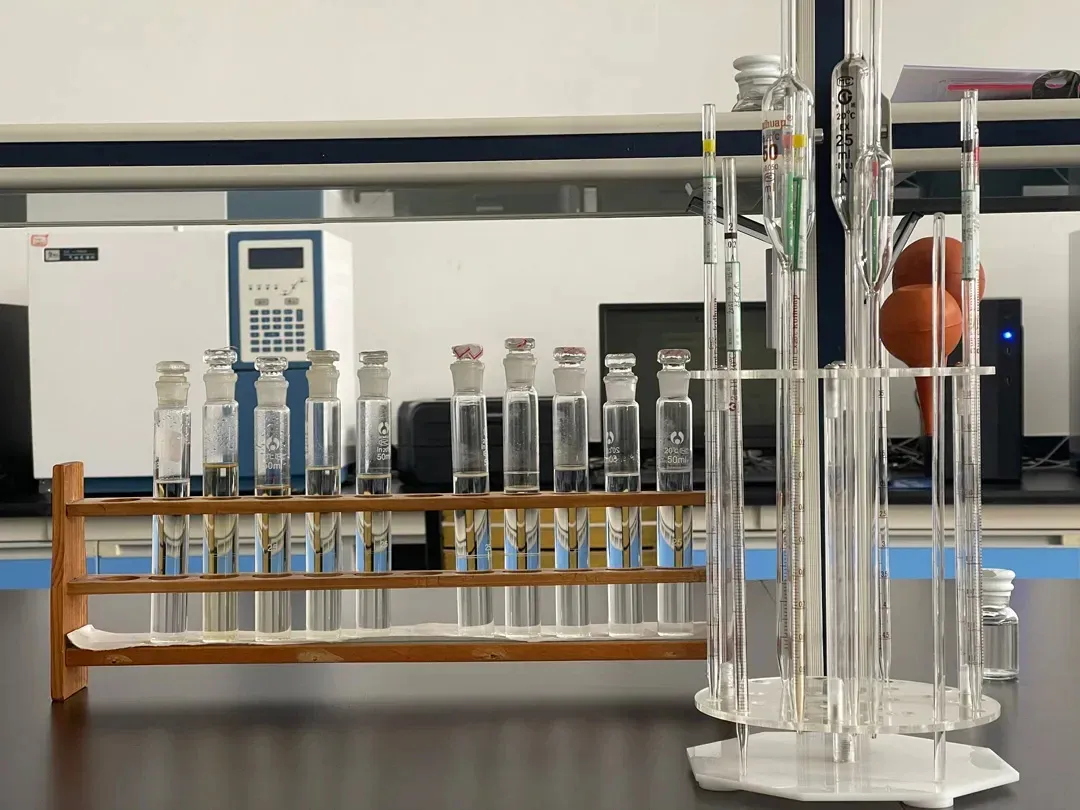
Claiming a product is "phthalate-free" is not sufficient for regulated markets. EU, US, and other jurisdictions require third-party laboratory certification from accredited testing organizations. SGS, the world's largest testing and certification company, operates over 2,600 laboratories globally and provides the phthalate testing standards that most major buyers accept without question.
DOTP produced by Shandong Changxing has passed three critical SGS tests:
Phthalate-Free Certified
All 17 restricted phthalates tested to US CPSC standard. Result: none detected (below limit of detection for all 17 substances). Includes DEHP, DBP, BBP, DINP, DIDP, DNOP, DIBP, DPENP, DHEXP, DCHP, and seven additional phthalates covered by CPSC-CH-C1001-09.4.
Toy Safety Certified
Zero migration of all 19 soluble elements tested under European toy safety standard EN 71-3. This certification is essential for plasticizers used in toys, childcare articles, and children's products exported to the EU and markets that adopt EN standards.
PFAS-Free Certified
Total fluorine content below detection limits by combustion ion chromatography. This screening covers all per- and polyfluoroalkyl substances (PFAS), including PFOA, PFOS, and emerging "forever chemical" compounds now regulated under EU and US EPA frameworks.
For PVC manufacturers: When your customer requests phthalate-free certification, a single-page SGS test report carries more weight than any supplier declaration. Request the full laboratory report from your plasticizer supplier and make it available to your own customers as part of your technical data package.
Industry Applications for Phthalate-Free Plasticizers
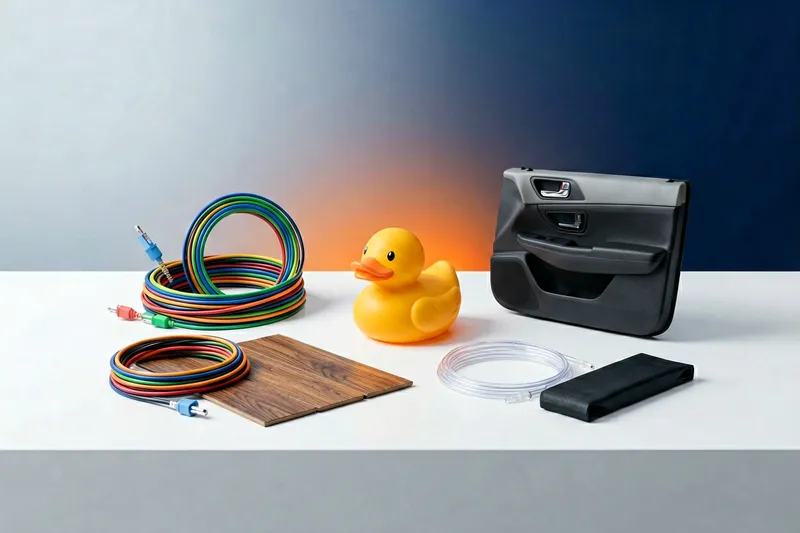
The transition from traditional phthalate plasticizers to phthalate-free plasticizer formulations is not uniform across industries. Each sector has distinct technical requirements, regulatory exposure, and adoption timelines:
🔌 Wire and Cable
DOTP's 10× better volume resistivity and 2-3× lower heat loss make it the preferred plasticizer for building wire (105°C rated), automotive harnesses, appliance wiring, and communication cables. EU RoHS compliance for cables sold in Europe mandates phthalate-free formulations. This is now the largest DOTP application segment globally.
🏠 PVC Flooring
LVT, SPC rigid core, and vinyl sheet flooring exported to EU and North America now require phthalate-free certification as standard. Major flooring brands including Tarkett, Forbo, Gerflor, and Mohawk maintain RSLs that exceed legal phthalate limits. DOTP provides the flexibility, wear resistance, and dimensional stability required for click-lock flooring systems. For a complete compliance package for flooring exports, see our PVC flooring compliance guide.
🧸 Toys and Children's Products
This is the most strictly regulated application category. CPSIA in the US and the EU Toy Safety Directive (2009/48/EC, referencing EN 71-3) set 0.1% limits on DEHP, DBP, and BBP in any toy or childcare article. DOTP with EN 71-3 certification is the standard compliance path for manufacturers exporting to both markets.
🧤 Medical Devices
The EU Medical Device Regulation (MDR 2017/745) identifies DEHP as a CMR Category 1B substance, meaning manufacturers must provide detailed justification for its use in any medical device. DOTP, with no CMR classification, eliminates this regulatory burden. For examination gloves, IV tubing, and blood bags, phthalate-free plasticizers are becoming the procurement default.
🚗 Automotive Interior
Vehicle cabin air quality regulations in China (GB/T 27630), Japan (JAMA guidelines), and Germany (VDA 278) drive demand for low-VOC, low-fogging plasticizers. DOTP's lower volatility compared to DEHP/DOP directly reduces VOC emissions from dashboard skins, door panels, and seat upholstery. Global OEM specifications from Toyota, Volkswagen, and GM now include phthalate-free requirements.
👜 Synthetic Leather
PU and PVC synthetic leather for footwear, bags, furniture, and automotive seating is increasingly subject to brand-level RSLs requiring phthalate-free certification. Consumer-facing labels like "phthalate-free" and "non-toxic materials" are driving rapid adoption in this sector, particularly for products sold through US and EU retail channels.
How to Transition from Phthalate to Phthalate-Free Plasticizers
For PVC compounders and product manufacturers, transitioning from traditional phthalate plasticizers to non-phthalate plasticizer formulations requires systematic planning but is technically straightforward. DOTP functions as a near drop-in replacement for DEHP/DOP in most formulations. For a detailed analysis of why DOTP is replacing DEHP in regulated markets, see our companion guide on DOTP as a DEHP Alternative. Here is a proven five-step transition process:
Step 1: Audit Your Current Formulations
Document every PVC compound in your production portfolio that contains DEHP, DOP, DINP, DIDP, or any other ortho-phthalate plasticizer. For each compound, note the plasticizer type, loading level (phr), target Shore A hardness range, end-use application, and export markets. This audit creates the baseline from which you prioritize transitions.
Step 2: Prioritize by Regulatory and Commercial Risk
Products destined for EU, US, Japanese, or South Korean markets carry the highest regulatory risk and should transition first. Within that group, products in children's, medical, and food-contact categories have the strictest enforcement. Products sold into markets without current phthalate regulations may still face customer-driven requirements and should follow in a second wave.
Step 3: Test DOTP in Laboratory-Scale Batches
Replace the existing phthalate plasticizer with DOTP at the same phr loading. Evaluate gelation time, melt viscosity, Shore A hardness, tensile strength, elongation at break, thermal stability (congored test), and volume resistivity. In the majority of cases, DOTP performs equivalently or better with no formulation adjustment required. Document any deviations from baseline and adjust mixing time or temperature if needed.
Step 4: Validate Compliance Through Third-Party Testing
Send finished product samples from DOTP-formulated batches to an accredited laboratory for phthalate content testing. Request testing to CPSC-CH-C1001-09.4 (US standard) and/or EN 71-3 (EU standard) depending on your export markets. Include total fluorine screening if PFAS-free claims are relevant to your customers. See our SGS testing certification overview for the compliance documentation Changxing provides. Retain laboratory reports as part of your technical file for at least 10 years, consistent with EU MDR and REACH documentation requirements.
Step 5: Scale Up and Secure Supply
Once laboratory validation is complete, transition production lines incrementally. Begin with one production line or product SKU, validate at full scale, then roll out across all target products. Secure a supply agreement with a DOTP manufacturer that can guarantee volume, lead time, and lot-to-lot consistency. For buyers importing from China, verify that the manufacturer holds ISO 9001, ISO 14001, ISO 45001, and ISO 50001 certifications, maintains in-house quality laboratories, and can provide SGS test reports specific to the supplied lots.
Phased approach recommendation: Begin with your highest-risk, highest-revenue products. After validating DOTP in those lines, expand to general-purpose compounds. This minimizes disruption while accelerating compliance for the products where it matters most. Most manufacturers complete a full transition across all product lines within 12-18 months.
Frequently Asked Questions
Q: Is DOTP a phthalate?
No. DOTP (Dioctyl Terephthalate) is a terephthalate ester, not an ortho-phthalate ester. The ester groups in DOTP are positioned on opposite (para) carbons of the benzene ring, whereas phthalate esters have ester groups on adjacent (ortho) carbons. This structural difference means DOTP is legally and chemically outside the definition of "phthalate" under REACH, CPSIA, RoHS, and all other major regulatory frameworks.
Q: Can DOTP replace DOP/DEHP directly without reformulation?
In most cases, yes. DOTP has equivalent plasticizing efficiency to DEHP/DOP and can typically be substituted at the same phr (parts per hundred resin) loading. Minor adjustments to mixing time or temperature may be beneficial but are rarely necessary. Always validate through laboratory-scale testing before full production transition.
Q: How do I prove my product is phthalate-free to customers?
Request the SGS or equivalent third-party laboratory test report from your DOTP supplier. The report should explicitly list all 17 restricted phthalates per CPSC-CH-C1001-09.4 with results showing "not detected" or below detection limits. Provide this report as part of your technical data package. For additional assurance, send samples of your finished product for independent testing at an ISO 17025 accredited laboratory.
Q: Is DOTP more expensive than DOP?
The price gap between DOTP and DOP/DEHP has narrowed significantly as DOTP production has scaled. In 2026, the premium is typically 5-15%, depending on regional market conditions and raw material costs. This premium should be evaluated against the cost of non-compliance (product recalls, market access loss, REACH authorization fees) and the performance advantages DOTP provides (longer product life, fewer warranty claims, reduced VOC emissions).
Q: What regulations require phthalate-free plasticizers?
Key regulations include: EU REACH Annex XVII (all consumer articles, ≤0.1% DEHP/DBP/BBP/DIBP), EU RoHS 2 (electrical and electronic equipment), US CPSIA Section 108 (children's products, ≤0.1% for 8 phthalates), California Proposition 65 (warning label required for DEHP-containing products), EU MDR 2017/745 (CMR substances in medical devices require justification), and China GB 24613-2009 (wooden toys). DOTP is not restricted under any of these regulations.
References and Further Reading
- ECHA — Understanding REACH Regulation
- US CPSC — Phthalates Business Guidance
- EU MDR 2017/745 — Medical Device Regulation
- SGS — Global Testing and Certification
Source Certified Phthalate-Free DOTP
Shandong Changxing Plastic Additives Co., Ltd. manufactures premium DOTP at 300,000 tons annual capacity. Every lot is supported by SGS test reports confirming zero detectable phthalate content.
- SGS-certified: 17/17 phthalate-free, EN 71-3 compliant, PFAS-free
- ISO 9001 / 14001 / 45001 / 50001 certified manufacturing
- National "Little Giant" enterprise with dedicated export logistics team