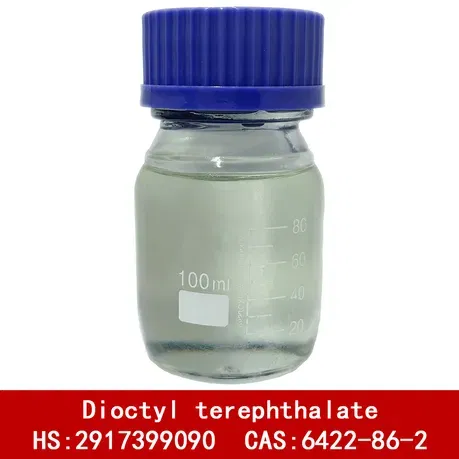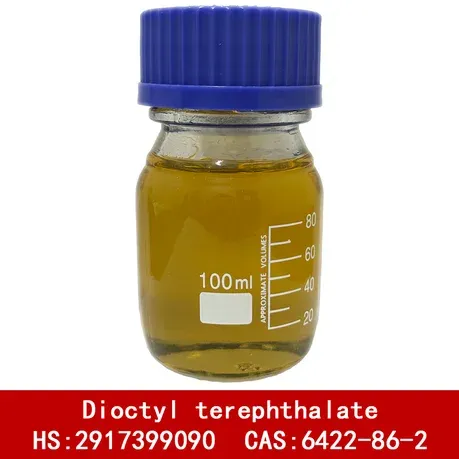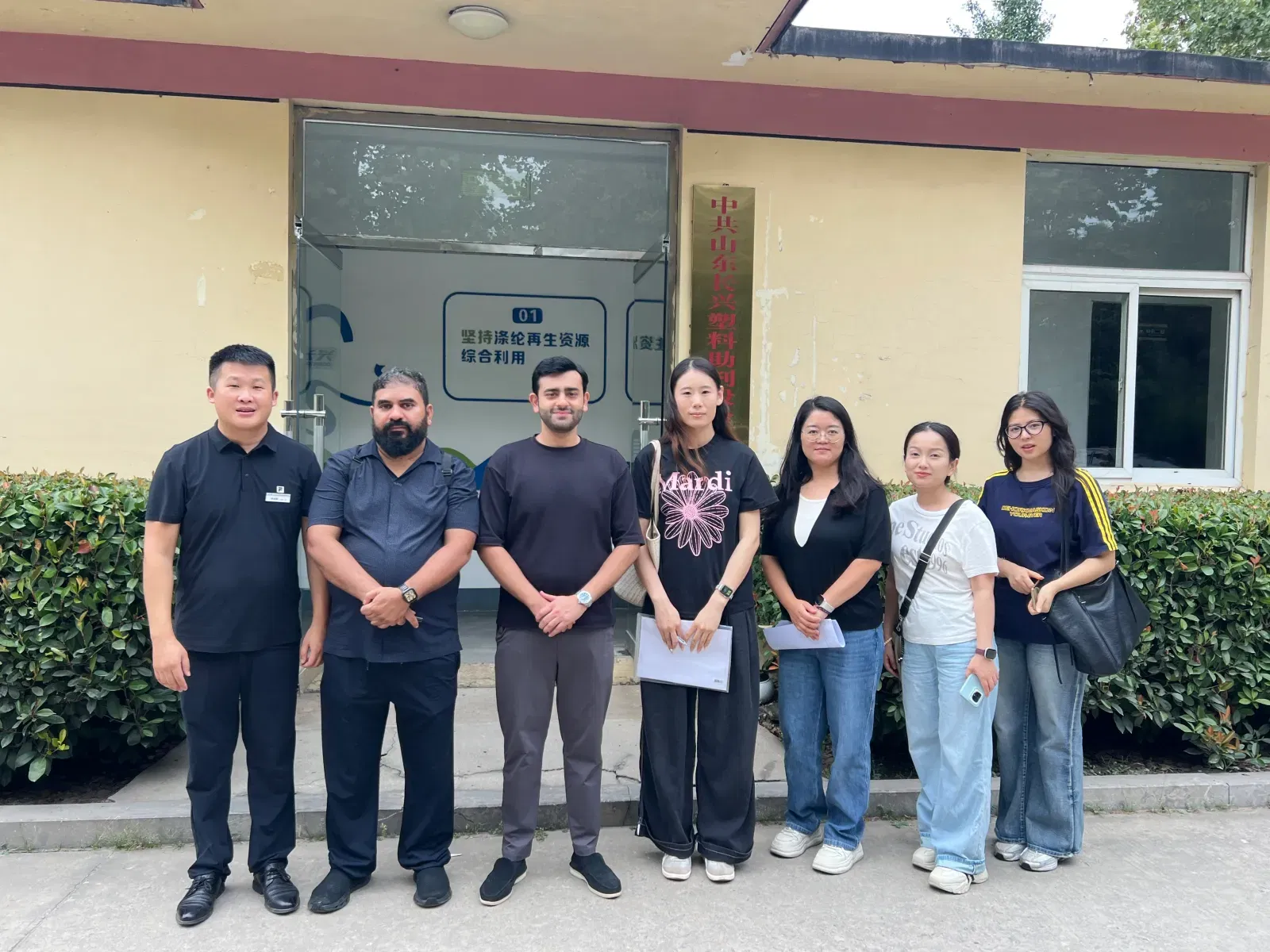

Is DOTP environmentally friendly? It is a question more buyers are asking as ESG requirements reach deep into the chemical supply chain. The short answer is yes - and the long answer is worth reading, because at Shandong Changxing Plastic Additives the answer is true on two levels at once: the molecule itself is green by design, and the factory that makes it is getting greener by the year.
DOTP (Dioctyl Terephthalate, CAS 6422-86-2) is the leading eco-friendly DOTP plasticizer for PVC - a non-phthalate alternative to DEHP used across wire and cable, flooring, film, and toys. But environmental credentials are no longer judged on chemistry alone. Regulators, auditors, and procurement teams increasingly want to know how the plasticizer is actually manufactured. This article walks through the environmental data behind our answer: rooftop solar generation, recycled-PET circular economy, and third-party-verifiable emissions figures.
This article is for PVC compounders, plastic product manufacturers, and procurement professionals evaluating the environmental footprint of their plasticizer supply chain.
Key Takeaways
- Yes - DOTP is environmentally friendly by molecular design: non-phthalate, readily biodegradable, low migration, not REACH-restricted.
- Our Jining factory's rooftop solar arrays generate 10,000+ kWh/day, avoiding roughly 6.4 tonnes of CO2 per day (~2,300+ tonnes/year) using the official 2023 North China grid emission factor.
- Shandong Changxing and its subsidiary Jining Wansheng run the same recycled-PET process, turning waste PET into DOTP - closing the plastic loop.
- Green manufacturing is backed by ISO 14001 and ISO 50001 environmental and energy management systems.
- Every environmental figure in this article is sourced and disclosed for verification.
Why the Question Matters
Ten years ago, "is this plasticizer environmentally friendly" was mostly a regulatory question. Today it is also a procurement and investor question. The EU REACH regime has progressively restricted ortho-phthalates, and downstream brands in flooring, wire and cable, toys, and automotive are extending those expectations through their own supply chains. If your PVC product is sold into regulated markets, the environmental profile of your plasticizer is no longer optional due diligence.
The environmental case for DOTP is well established at the molecule level. As we explain in our guide to DOTP's environmental impact and biodegradability, DOTP biodegrades readily under OECD 301B (≥60% within 28 days), migrates from PVC far less than DEHP, does not bioaccumulate, and is not classified as an endocrine disruptor. DEHP is restricted as an SVHC under REACH; DOTP is not.
But a compliant molecule can still be made in a carbon-heavy way. That is why this article turns the camera on the factory - because how DOTP is manufactured is now part of the environmental answer.
Solar Power on Our Factory Roof: The Numbers
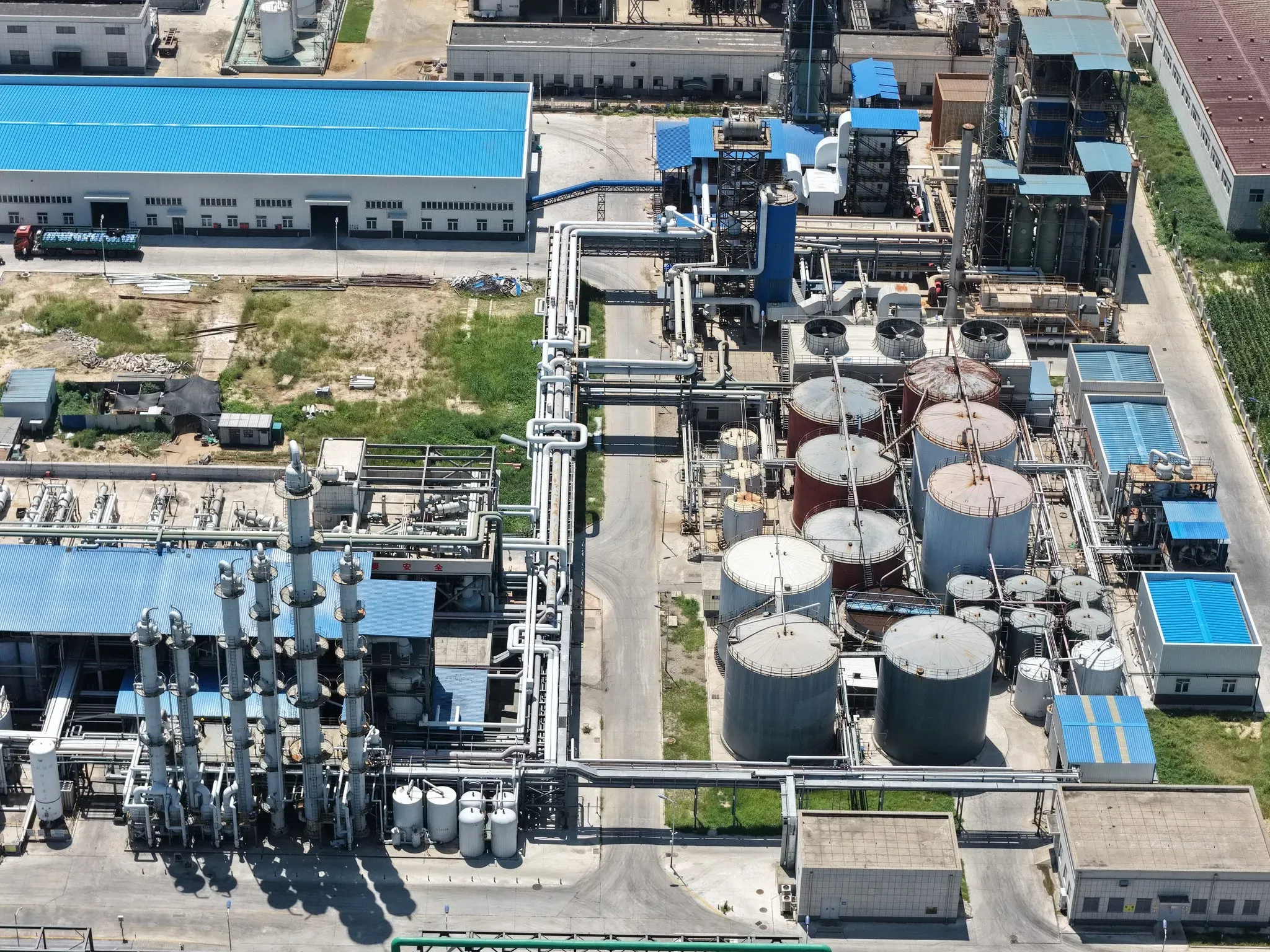
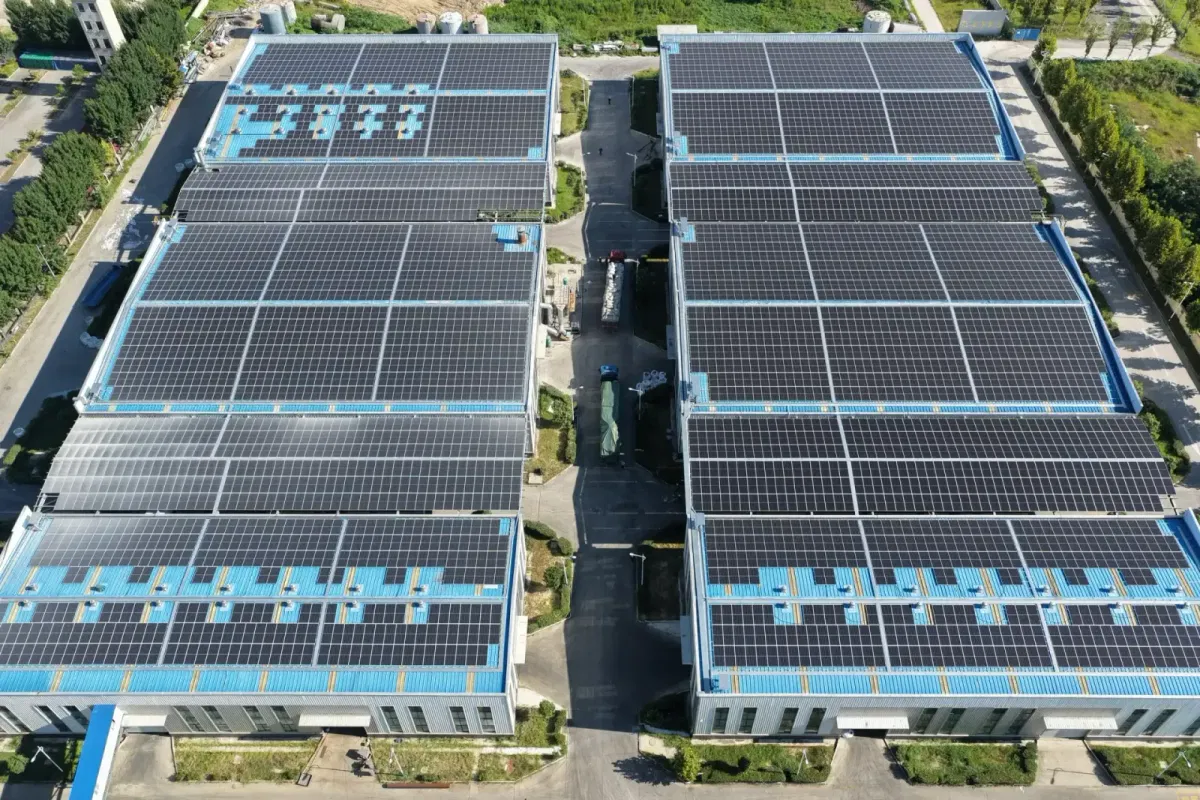
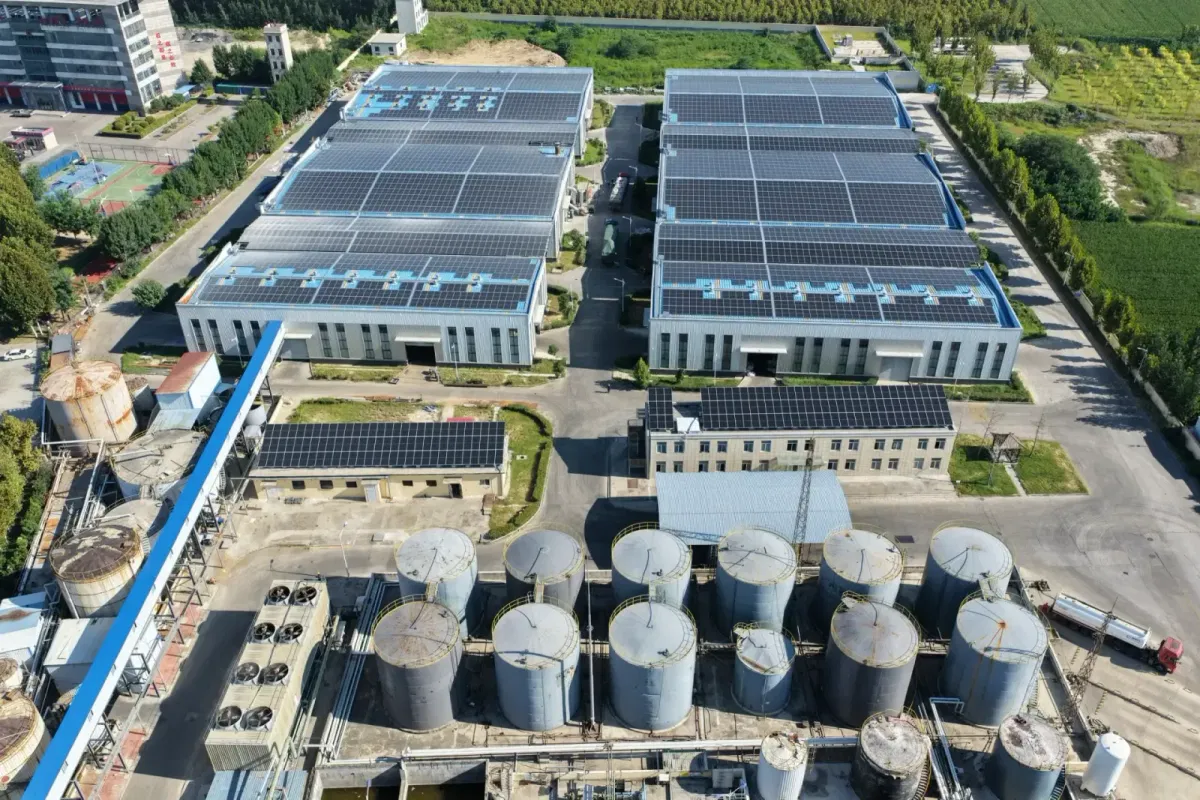
One of the most visible changes at our Jining factory is the rooftop photovoltaic array covering the warehouse buildings. The aerial photos in this article were taken recently, and they show what regular visitors already know: the roofs are working as well as sheltering.
Solar Generation at a Glance
- Daily generation: more than 10,000 kWh of electricity from rooftop solar panels
- CO2 avoided per day: ≈ 6.4 tonnes (10,000 kWh × 0.6361 kg CO2/kWh)
- CO2 avoided per year: ≈ 2,300+ tonnes
- Basis: 2023 North China regional grid emission factor, 0.6361 kg CO2/kWh
The conversion uses the official grid emission factor published by China's Ministry of Ecology and Environment (MEE) and National Bureau of Statistics in Announcement No. 47 of 2025, covering 2023 data. Because our factory is located in Shandong, which sits within the North China regional grid, we use the North China regional factor of 0.6361 kg CO2/kWh - a conservative and verifiable basis. Full source details are listed at the end of this article.
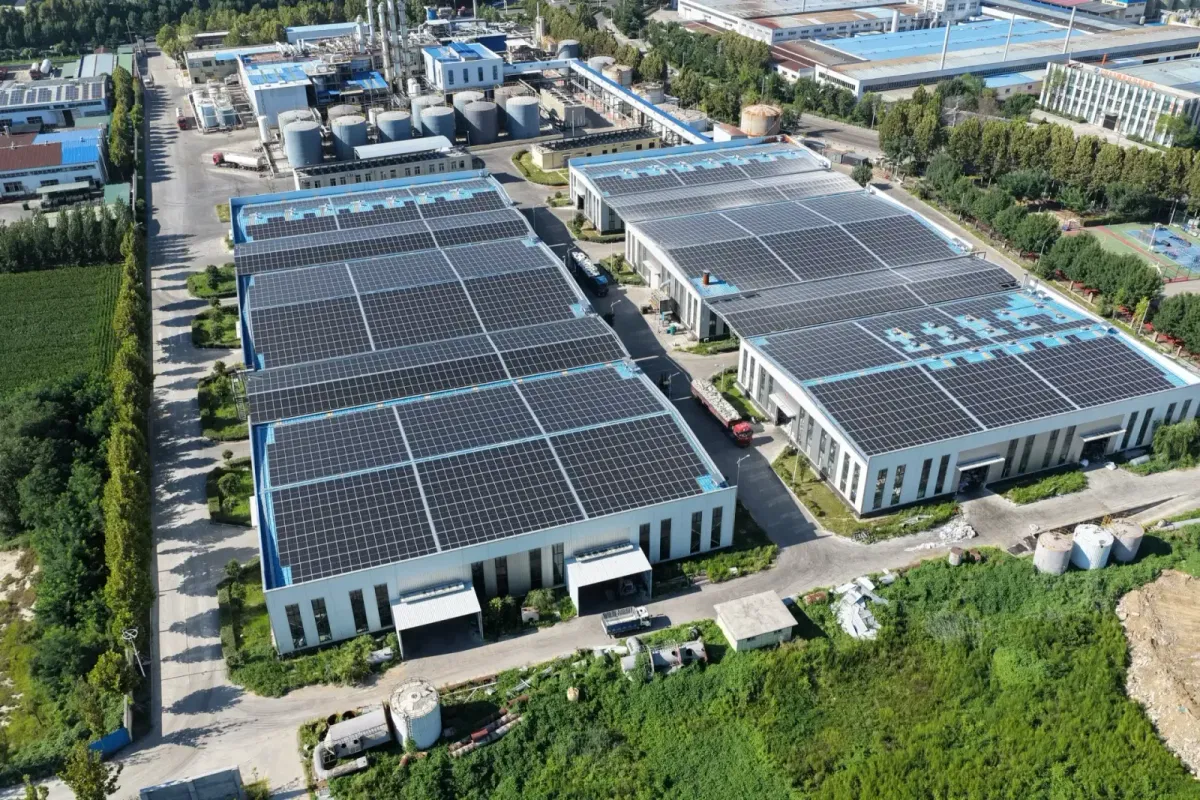
To put 2,300+ tonnes of annual CO2 avoidance in perspective: it is roughly the annual CO2 absorption of more than 100,000 mature trees, or the emissions from driving about 8.5 million kilometers in an average petrol car. It is a meaningful, measurable contribution - not a marketing flourish.
Green by Molecular Design
The solar array reduces the footprint of making DOTP, but the DOTP molecule itself carries environmental advantages that no manufacturing step can add. Four properties define its sustainable plasticizer profile:
Non-Phthalate Terephthalate Ester
DOTP's ester groups sit para on the benzene ring, giving it a fundamentally different toxicological and environmental profile from ortho-phthalates. It is not restricted under EU REACH Annex XVII and is not listed as an SVHC.
Ready Biodegradability
Under OECD 301B, DOTP achieves ≥60% theoretical CO2 evolution within 28 days - meeting the "readily biodegradable" threshold that most ortho-phthalates fail.
Low Migration, Less Release
DOTP migrates from PVC roughly 3–5× less than DEHP, so less plasticizer enters the environment during a product's service life.
Recycled PET Feedstock
A significant share of our DOTP is produced from recycled PET - turning plastic waste into a high-value plasticizer and cutting virgin petroleum demand.
Beyond Carbon: A Wider Environmental Footprint
Solar generation is the most visible part of our environmental program, but not the only one. Two structural commitments define how green manufacturing plasticizer works in practice at our group.
Circular Economy: PET → DOTP
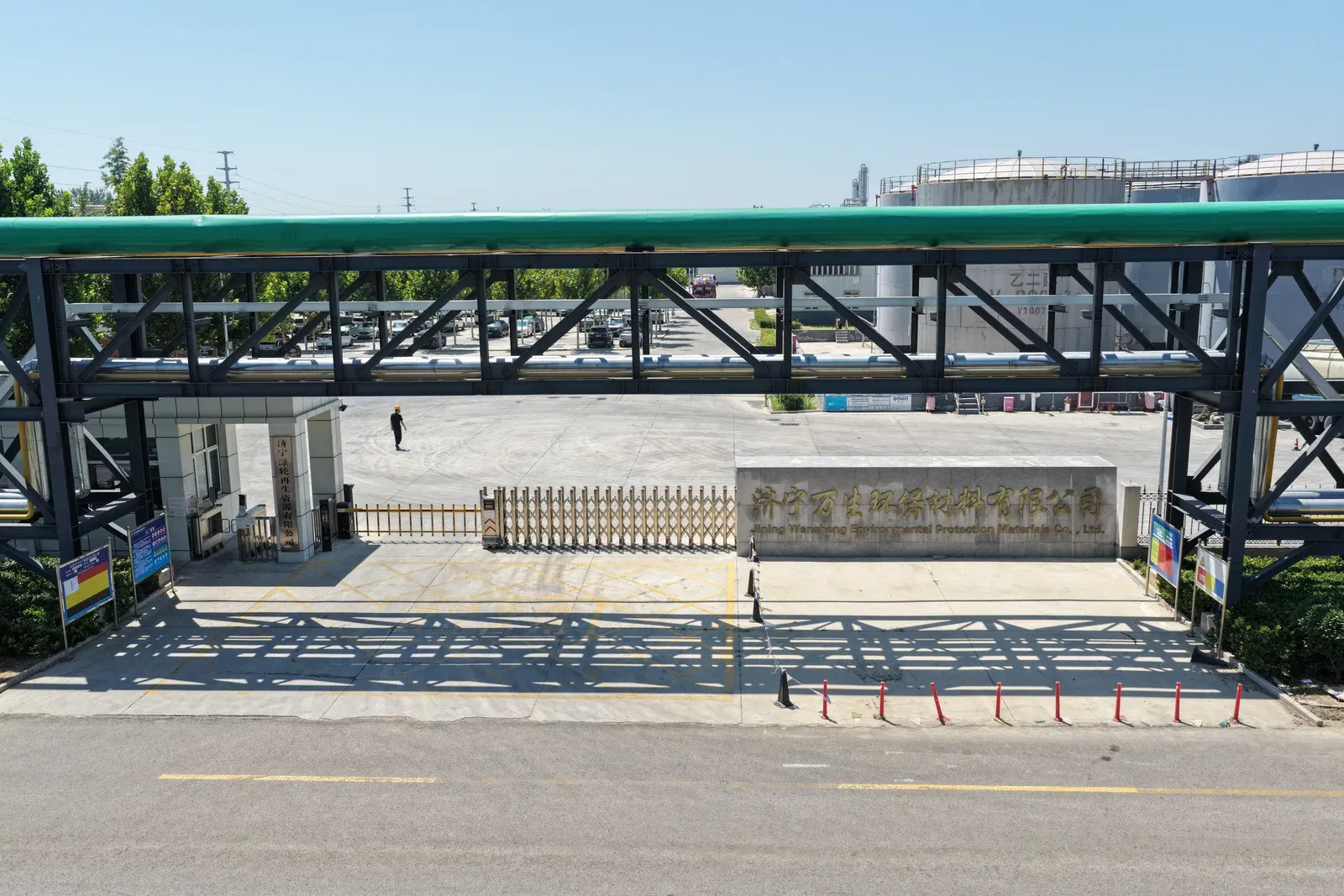
Both Shandong Changxing and its wholly owned subsidiary Jining Wansheng Environmental Protection Materials operate the same recycled-PET process. Waste PET - including bottles, textile offcuts, and fishing nets - is washed, crushed, and converted into DOTP and DCP plasticizers. This diverts thousands of tonnes of plastic waste from landfill and incineration each year while producing plasticizer that is chemically identical to petroleum-derived material. You can read more about how this works in our recycled PET to DOTP explainer.
Certified Environmental & Energy Management
Our group operates under ISO 9001 (quality), ISO 14001 (environmental), ISO 45001 (health & safety), and ISO 50001 (energy) management systems. ISO 50001 in particular drives continuous energy-efficiency improvement - the management discipline behind decisions like the rooftop solar investment. These are external, audited commitments, not self-declarations.
Verification & Transparency: Where Our Numbers Come From
"Trust us" is not a standard, so every headline figure in this article is sourced and stated with its basis:
| Figure | Value | Source / Basis |
|---|---|---|
| Daily solar generation | >10,000 kWh/day | On-site generation data, Changxing factory, Jining |
| Grid emission factor | 0.6361 kg CO2/kWh | 2023 North China regional electricity CO2 emission factor, MEE Announcement No. 47 of 2025 |
| Daily CO2 avoided | ≈ 6.4 tonnes | 10,000 kWh × 0.6361 kg CO2/kWh (conservative lower bound) |
| Annual CO2 avoided | ≈ 2,300+ tonnes | ≈ 6.4 t/day × 365 days |
| Biodegradability | ≥60% in 28 days | OECD 301B ready-biodegradability test |
We use the conservative lower bound of 10,000 kWh/day even though actual daily generation can be higher, so the claims in this article are deliberately understated rather than overstated. Any buyer who wants to verify a specific figure is welcome to raise it with our team - we treat environmental data the same way we treat product specifications.
Frequently Asked Questions
Is DOTP environmentally friendly?
Yes. DOTP is environmentally friendly on two levels: molecular and operational. Chemically, it is a non-phthalate terephthalate ester that biodegrades readily (OECD 301B, ≥60% in 28 days), has low migration from PVC, and is not restricted under EU REACH. Operationally, Shandong Changxing powers part of its factory with rooftop solar (10,000+ kWh/day) and sources recycled PET feedstock, further reducing its carbon footprint.
How much CO2 does the Changxing solar system save per day?
The rooftop solar arrays on our Jining factory generate more than 10,000 kWh of electricity per day. Using the 2023 North China regional grid emission factor of 0.6361 kg CO2/kWh (published by China's Ministry of Ecology and Environment, Announcement No. 47 of 2025), this equals roughly 6.4 tonnes of CO2 avoided per day - about 2,300+ tonnes per year.
What is a solar powered plasticizer factory?
A solar-powered plasticizer factory is a production plant that generates a meaningful share of its own electricity from rooftop photovoltaic arrays rather than drawing it all from the grid. At Shandong Changxing's factory, rooftop solar panels cover the warehouse buildings and generate more than 10,000 kWh daily, directly offsetting grid electricity and its associated CO2 emissions.
Is DOTP made from recycled PET?
Yes, a significant share of our DOTP is produced from recycled PET feedstock. Shandong Changxing and its subsidiary Jining Wansheng both operate the same PET-recycling process, converting waste PET (bottles, textile offcuts, fishing nets) into DOTP and DCP plasticizers. This circular-economy model diverts plastic waste from landfill and reduces dependence on virgin petroleum feedstock - while the resulting DOTP is chemically identical to petroleum-derived material.
Why is DOTP considered the eco-friendly alternative to DEHP?
DOTP outperforms DEHP on every major environmental parameter: it biodegrades readily (≥60% vs <30% in OECD 301B), has lower bioaccumulation potential (log Kow ~5.7 vs ~7.5), shows lower aquatic toxicity, and is not classified as an endocrine disruptor. DEHP is restricted as an SVHC under EU REACH; DOTP is not restricted. These advantages, combined with greener manufacturing, make DOTP the sustainable choice.
Sources: Ministry of Ecology and Environment of the People's Republic of China & National Bureau of Statistics, Announcement on the Publication of 2023 Electricity CO2 Emission Factors (Announcement No. 47 of 2025), North China regional average factor 0.6361 kgCO2/kWh; OECD Test Guideline 301B (Ready Biodegradability); ECHA REACH Annex XVII and SVHC Candidate List; ISO 177 (plasticizer migration); ISO 9001 / ISO 14001 / ISO 45001 / ISO 50001 certification scopes; on-site solar generation records, Changxing factory, Jining, Shandong.
Ready to Source Eco-Friendly DOTP?
Shandong Changxing Plastic Additives Co., Ltd. is an ISO 9001 and ISO 14001 certified manufacturer with 300,000 tons annual capacity. We supply DOTP, DCP, and 2-octanol to clients worldwide - made with solar power and recycled PET. Our DOTP has passed SGS testing for 17 restricted phthalates, EN 71-3, and PFAS.
Request a Free Quote