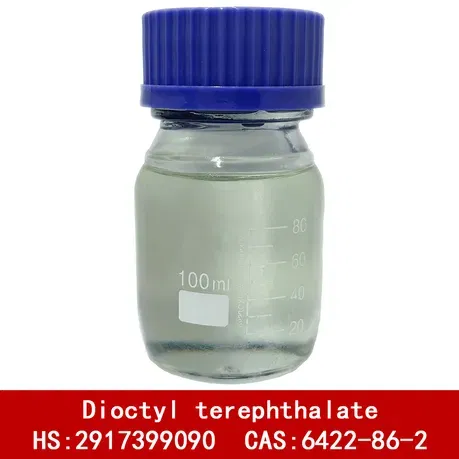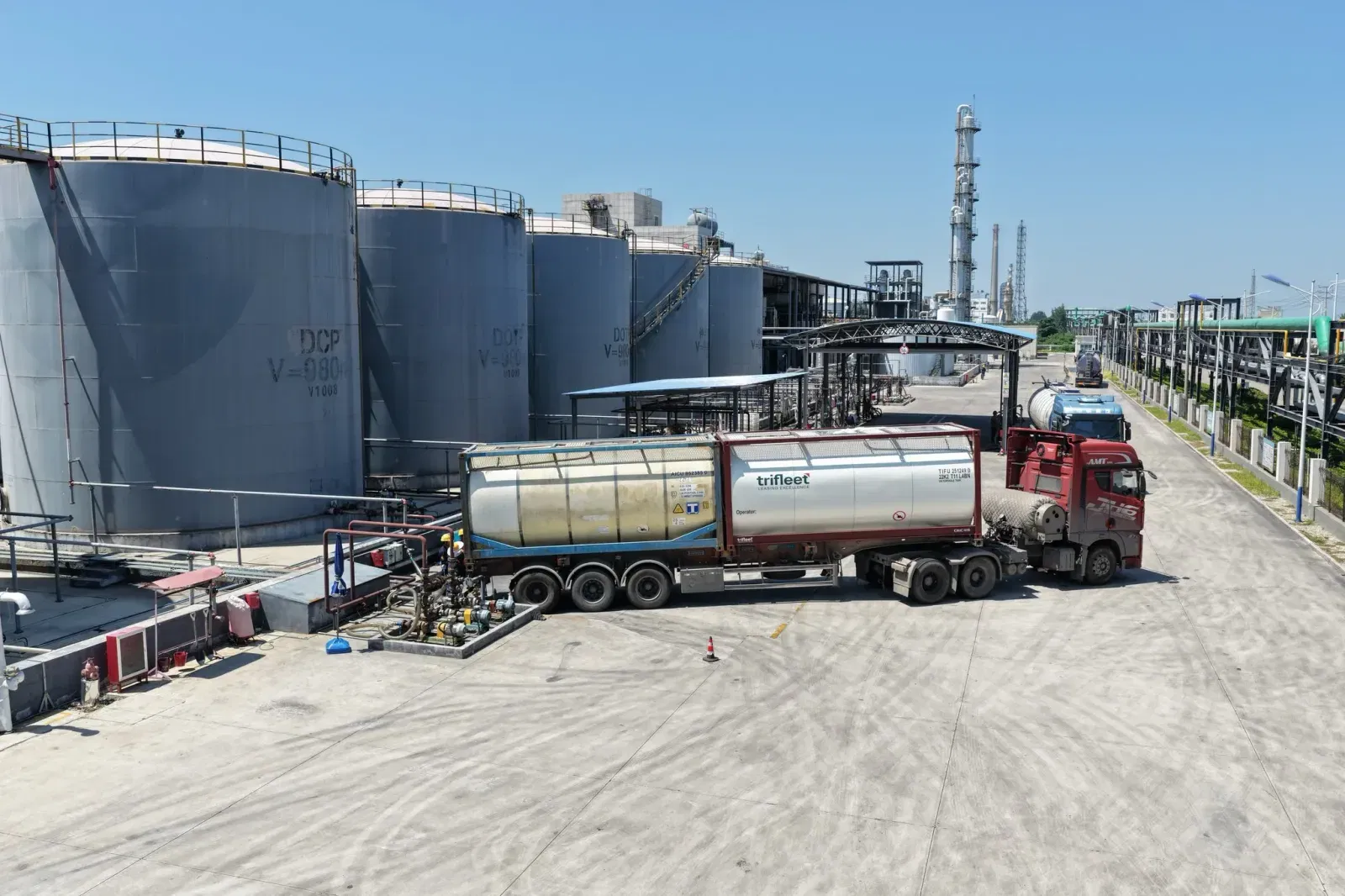

The DOTP price forecast for 2026-2027 is being shaped by a complex interplay of feedstock costs, regulatory shifts, and regional supply-demand dynamics. According to Expert Market Research (EMR), the global average dioctyl terephthalate price staged a significant rebound in early 2026, rising 20.2% quarter-on-quarter in Q1 to USD 2,139.78/MT, before edging up a further 3.1% in Q2 to USD 2,206.60/MT. This DOTP price trend 2026 analysis examines the fundamental drivers behind this surge, delivers a regional DOTP market outlook for H2 2026 and 2027, and provides actionable sourcing strategies for PVC manufacturers and plasticizer buyers across Asia, Europe, the Middle East, and the Americas.
Key Takeaways
- ✅ Global average DOTP price surged +20.2% in Q1 2026 to USD 2,139.78/MT, then rose +3.1% in Q2 to USD 2,206.60/MT (EMR, September 2026 update)
- ✅ China remains the world's lowest-cost DOTP base: domestic price at RMB 9,800-10,200/MT (~USD 1,380-1,440) as of early September 2026
- ✅ PTA: China FOB prices easing toward RMB 5,900/MT on 4.4+ million tons of new capacity; primary downside lever for H2 2026
- ✅ 2-EH: China FOB at USD 1,160-1,180/MT; domestic prices firmed to RMB 8,500-8,800/MT in late August on restocking demand
- ✅ Regional divergence widening: North America strong on manufacturing expansion, Germany recovering, Asia-Pacific pressured by oversupply
- ✅ Shandong Changxing provides daily competitive pricing based on real-time feedstock costs, ensuring transparent market-aligned quotes
DOTP Price Trend 2026: Market Overview
After a subdued 2025 in which DOTP prices declined 3-4% across most regions, the market staged a dramatic reversal in early 2026. EMR data shows the global average price jumped 20.2% in Q1 2026 (from USD 1,780.80/MT in Q4 2025 to USD 2,139.78/MT), followed by a further 3.1% increase in Q2 to USD 2,206.60/MT. Three converging forces triggered this rebound: sharply higher PTA and 2-EH feedstock costs, genuine industrial demand recovery in North America and Germany, and energy-cost inflation from Middle East geopolitical tensions that disrupted shipping routes through the Hormuz Strait.
The rebound has distinct regional characteristics. China, the world's lowest-cost producer, saw domestic DOTP prices firm from approximately USD 1,580/MT in Q1 to USD 1,630/MT in Q2, supported by restocking ahead of the construction season even as domestic supply remained ample. France emerged as the most expensive tracked market at USD 2,580/MT, driven by regulatory-driven substitution from restricted ortho-phthalates and elevated energy costs. The United States climbed to USD 2,190/MT on expansionary ISM PMI readings and robust light-vehicle demand, while Germany reached USD 2,350/MT as industrial demand recovered after more than a year of weakness.
Key Feedstock Drivers: PTA & 2-EH
Understanding DOTP price movements requires tracking its two primary raw materials: purified terephthalic acid (PTA) and 2-ethylhexanol (2-EH). Together, these feedstocks account for 70-80% of total production cost, making their price trajectories the single most reliable predictor of DOTP market direction.
PTA: The Volume Component
PTA represents the larger cost share in DOTP production. According to Procurement Resource, China FOB PTA prices stood at approximately USD 920/MT in June 2026, with domestic Chinese prices quoted around RMB 6,253/MT. However, the PTA market faces significant oversupply pressure, with Oilchem (隆众资讯) forecasting H2 2026 prices easing toward RMB 5,900/MT as more than 4.4 million tons of new capacity comes online. This PTA oversupply represents the primary downside lever for DOTP prices in the coming quarters.
2-EH: The Volatile Component
2-ethylhexanol, the alcohol component in DOTP synthesis, exhibits greater price volatility than PTA. China FOB 2-EH prices fell 7.4% month-on-month to USD 1,165.97/MT in June 2026 (Procurement Resource), but domestic Chinese prices firmed back to RMB 8,500-8,800/MT in late August on restocking demand ahead of the traditional September-October peak season. The 2-EH market remains tighter than PTA due to concentrated production and limited new capacity additions, making it the more likely source of upward price surprises.
| Feedstock | Q2 2026 Price | H2 2026 Outlook | Key Driver |
|---|---|---|---|
| PTA (China FOB) | USD 920/MT | Easing toward RMB 5,900/MT | 4.4M+ tons new capacity, oversupply |
| 2-EH (China FOB) | USD 1,166/MT | RMB 8,500-8,800/MT domestic | Restocking demand, limited new capacity |
| DOTP (China domestic) | RMB 9,800-10,200/MT | USD 1,540-1,780/MT FOB forecast | PTA easing vs 2-EH tightness |
Regional DOTP Price Outlook: H2 2026 – 2027
DOTP price trends vary significantly by region due to divergent demand patterns, freight costs, regulatory environments, and local supply dynamics. The following outlook synthesizes data from EMR, ChemAnalyst, and Procurement Resource to provide a comprehensive regional forecast.
Asia-Pacific: The Supply Anchor
China remains the global price anchor, with domestic DOTP trading near RMB 9,800-10,200/MT (~USD 1,380-1,440) as of early September 2026. EMR forecasts Chinese DOTP at USD 1,540-1,780/MT FOB for H2 2026, with the wide range reflecting uncertainty around PTA's downward trajectory versus potential 2-EH tightness. India, the world's largest DOTP import market (see our India DOTP price analysis), sees CFR Mundra prices at USD 1,700-1,820/MT, supported by antidumping duties on competing materials and growing BIS certification requirements. Southeast Asia (CFR Singapore) trades at USD 1,580-1,720/MT, with Vietnam and Indonesia driving demand growth in wire, cable, and footwear applications.
Europe: The Premium Market
Europe commands the highest DOTP prices globally, with CFR Rotterdam at USD 2,250-2,780/MT for H2 2026. German industrial demand is recovering for the first time in over a year, but consumer confidence remains depressed. France's USD 2,580/MT price point reflects the cost of regulatory compliance and energy-intensive production. The EU's active consideration of accelerated ortho-phthalate phase-outs continues to drive substitution demand toward DOTP, providing structural price support despite weak macroeconomic conditions.
Middle East: The Growth Frontier
GCC DOTP demand is projected to reach 75,000-85,000 MT by 2026, with Saudi Arabia and UAE accounting for 70% of consumption. CFR Jebel Ali prices range USD 1,650-1,780/MT, reflecting SABER/SASO compliance overhead, freight costs, and regional energy premiums. Saudi Arabia's Vision 2030 infrastructure pipeline and the UAE's re-export economy provide robust demand foundations, while Halal certification requirements add a unique regional dimension to supplier selection.
Americas: The Recovery Story
North America presents the strongest demand picture among developed markets. CFR Houston DOTP prices at USD 2,050-2,350/MT reflect expansionary ISM PMI readings, robust automotive production, and the reshoring of manufacturing capacity. The United States continues to absorb significant DOTP volumes for wire, cable, and construction applications, with domestic supply supplemented by imports from Asia and Europe.
| Region | Q2 2026 (USD/MT) | H2 2026 Forecast (USD/MT) | Key Driver |
|---|---|---|---|
| China (FOB) | 1,580-1,630 | 1,540-1,780 | PTA easing vs 2-EH tightness |
| India (CFR Mundra) | 1,700-1,780 | 1,700-1,820 | BIS certification, import duty, antidumping |
| Middle East (CFR Jebel Ali) | 1,650-1,750 | 1,650-1,780 | SABER/SASO, freight, energy premium |
| Europe (CFR Rotterdam) | 2,350-2,580 | 2,250-2,780 | Regulatory substitution, energy costs |
| North America (CFR Houston) | 2,190 | 2,050-2,350 | Manufacturing expansion, automotive demand |
| Southeast Asia (CFR Singapore) | 1,600-1,700 | 1,580-1,720 | Imported 2-EH, regional demand growth |
Supply Chain Risk Factors to Watch
Several risk factors could materially alter the DOTP price trajectory for 2026-2027. Procurement teams should monitor these variables and maintain contingency plans for rapid market shifts.
| Risk Category | Trigger Event | Price Impact | Probability |
|---|---|---|---|
| Feedstock rebound | PX/PTA plant outages, propylene strength, 2-EH restocking | +USD 80-200/MT | Medium |
| Geopolitical/energy | Middle East escalation, Hormuz/Red Sea disruption, Iran sanctions | +USD 60-150/MT freight + energy | Medium (partially materialized) |
| Regulatory acceleration | EU DEHP phase-out acceleration, US tariffs, new BIS/Prop 65 rulings | +USD 40-120/MT | Medium-High |
| Demand relapse | China construction downturn, European recession, 2025-style soft demand | -USD 100-200/MT | Medium |
The regulatory risk is particularly under-priced. The EU is actively considering accelerated phase-out of remaining ortho-phthalates (see DOTP as a DEHP replacement), which would convert significant DOP and DINP volumes to DOTP almost overnight. India's BIS framework is moving in the same direction for food-contact and childcare articles. EMR's analysts estimate that regulatory-driven substitution could add 150,000-200,000 MT of annual DOTP demand by 2027, fundamentally altering the supply-demand balance.
Strategic Sourcing Recommendations for 2026-2027
Navigating DOTP price volatility requires a proactive sourcing strategy. Based on current market dynamics, we recommend the following approaches for PVC manufacturers and plasticizer buyers.
1. Monitor Daily Price Movements
With DOTP priced through daily competitive bidding in China, buyers who track PTA and 2-EH spot trends can time purchases during temporary softness. Shandong Changxing publishes daily quotes reflecting real-time feedstock costs, allowing buyers to capitalize on intraweek volatility. Establish a routine of checking feedstock prices every morning and acting quickly when PTA or 2-EH shows unexpected weakness.
2. Optimize Inventory Buffers
Maintain 30-45 day inventory buffers during high-volatility windows (typically Q1 and Q4), and reduce to 15-20 days during stable periods. This dynamic approach balances working capital efficiency against supply security. For buyers with storage constraints, consider tank leasing arrangements at major ports like Qingdao, Ningbo, or Singapore.
3. Diversify Supplier Base
Dual-supplier sourcing with one primary Asian supplier and one regional backup provides resilience against logistics disruptions, quality issues, and geopolitical risks. Evaluate suppliers based on production capacity, ISO certifications, REACH registration, and ability to provide application-specific documentation. For Middle East buyers, verify SABER registration; for India, confirm BIS application support capability.
4. Audit Supplier Financial Health
The DOTP sector is consolidating amid margin pressure in China. Shandong Changxing (300,000 MT/year DOTP capacity, ISO 9001/14001, full SABER/REACH documentation, and BIS application support) represents the financially stable, audit-ready tier preferred by global buyers. Request financial statements, production audits, and reference checks before committing to large volumes.
5. Pre-Clear Regulatory Documentation
REACH, SABER, BIS, and Prop 65 documentation takes 4-12 weeks to prepare. Verify suppliers maintain current dossiers (including Safety Data Sheets, Certificates of Analysis, and food-contact declarations) before placing orders. For EU-bound shipments, confirm REACH registration numbers; for Saudi Arabia, verify SABER platform registration; for California, obtain Prop 65 compliance statements.
Frequently Asked Questions
Q1: What is the DOTP price forecast for H2 2026 in China?
EMR forecasts Chinese DOTP FOB averaging USD 1,540-1,780/MT for H2 2026; domestic spot traded near RMB 9,800-10,200/MT (~USD 1,380-1,440) in early September 2026, with the higher H2 average reflecting peak-season restocking and 2-EH cost support. Watch PTA's H2 easing toward RMB 5,900/MT as the main downside lever.
Q2: Which feedstock has the biggest impact on DOTP price?
PTA and 2-EH together drive 70-80% of DOTP cost. PTA (China FOB USD 920/MT in June 2026) is the volume component and is easing on oversupply; 2-EH (China FOB USD 1,166/MT) is the more volatile one; Chinese domestic 2-EH firmed to RMB 8,500-8,800/MT in late August. EMR flags both as decisive for H2 pricing.
Q3: How do I hedge against DOTP price volatility?
Three proven approaches: (1) Monitor daily price movements and buy during PTA/2-EH softness, (2) Maintain 30-45 day inventory buffers during high-volatility windows, and (3) Diversify suppliers across regions. Some buyers also hedge PTA exposure via Zhengzhou Commodity Exchange (ZCE) futures.
Q4: Will DOTP prices fall in 2027?
The balance is mixed. PTA oversupply and Chinese DOTP capacity additions push prices down, while regulatory-driven substitution (EU DEHP phase-out, India BIS) and Middle East energy risk push them up. Our base case: a modest USD 20-50/MT easing in China versus 2026, with Europe and the US holding firm if industrial recovery continues.
Q5: What's the current price difference between DOTP and DOP?
As of September 2026, Chinese domestic DOTP (RMB 9,800-10,200/MT) trades at a premium of approximately RMB 500-600/MT (~USD 70-85/MT) over DOP (RMB 9,200-9,600/MT), narrower than the historical USD 100-250/MT gap. For regulated applications, the compliance value of DOTP justifies the remaining premium.
Q6: Where can I find reliable DOTP price data?
Key sources include Expert Market Research (EMR) for global forecasts, ChemAnalyst for regional pricing, Procurement Resource for feedstock trends, Oilchem (隆众资讯) for China domestic prices, and ECHEMI for market intelligence. Shandong Changxing also provides daily competitive quotes based on real-time feedstock costs.
Conclusion
The DOTP price forecast for 2026-2027 points to a market in transition. The dramatic Q1 2026 rebound has given way to a more nuanced landscape where PTA oversupply battles regulatory-driven demand growth, and regional divergences create both risks and opportunities for informed buyers.
Looking to 2027, the balance of forces tilts toward stability rather than collapse. EMR's H2 2026 band of USD 2,050-2,450/MT globally (with China at USD 1,540-1,780) captures a tug-of-war between easing PTA costs, persistent 2-EH tightness, genuine industrial recovery in North America and Germany, and unresolved Middle East energy risk. The practical implication for procurement teams is clear: buyers who monitor daily price movements, optimize inventory buffers, diversify suppliers, and pre-clear regulatory documentation will outperform those relying on spot procurement.
On the supply side, global DOTP capacity remains concentrated among a handful of producers. LG Chem (South Korea) operates the largest single-train Asian DOTP plant. Nan Ya Plastics (Taiwan, Formosa Group) integrates backward into PTA and 2-EH. UPC Technology (Taiwan) is a long-established exporter to Europe and North America with strong REACH dossiers. Eastman (US) supplies the Americas from Texas. Shandong Changxing (China) operates 300,000 MT/year of DOTP capacity and is a leading Chinese exporter to the Middle East, India, and Africa with full SABER and REACH documentation, plus BIS application support. Chinese capacity additions will keep tilting the global supply curve toward Asia in 2026-2027.
Looking for stable DOTP supply at competitive pricing?
Shandong Changxing Plastic Additives Co., Ltd. offers daily competitive pricing based on real-time feedstock costs, full REACH/SABER documentation, BIS application support, and 300,000 MT/year certified DOTP capacity. Contact our team for a 2026-2027 procurement proposal.
Request a Free Quote- ✓ 300,000 MT/year DOTP capacity with stable supply
- ✓ ISO 9001 / 14001 / 45001 / 50001 certified
- ✓ Full REACH registration and SABER/SASO documentation
- ✓ BIS certification application support for India
- ✓ National "Little Giant" enterprise — trusted by global buyers