
Key Takeaways
- 27 May 2026: India's DGTR issued the final finding recommending a bilateral safeguard duty on Korean non-phthalate plasticizers (DOTP CAS 6422-86-2 and DEHCH CAS 84731-70-4) under the India-Korea CEPA.
- 2-year structure: Year 1, duty restored to 100% of MFN rate; Year 2, 75% of MFN rate. Korea previously enjoyed zero duty under CEPA.
- Korean imports grew 550%, from 6,484 MT (FY2021-22) to 42,157 MT (FY2024-25), with prices undercutting domestic producers by 0-10%.
- The measure targets Korea only; Chinese-origin DOTP is not covered by this action, though buyers should continue monitoring other trade-remedy filings.
- What Indian buyers should do: reprice landed cost for Korean cargo, pre-qualify alternate origins (China first), and secure documentation (BIS IS 10158, SGS phthalate-free, REACH) before the policy window closes.
On 27 May 2026, the Directorate General of Trade Remedies (DGTR) under India's Ministry of Commerce and Industry issued its final findings in Case No. (SG)-01/2025, recommending bilateral safeguard duties on DOTP and DEHCH imports originating in the Republic of Korea. The recommendation was published in the Gazette of India (Extraordinary, Part I-Section 1, Gazette ID CG-DL-E-01062026-273034) on 1 June 2026 and takes effect for two years upon notification by the Ministry of Finance.
The measure restores customs duty that had been phased to zero under the India-Korea Comprehensive Economic Partnership Agreement (CEPA). For Indian DOTP buyers the effect is commercial, not merely editorial: landed cost on a material share of supply will reprice within weeks.
What Happened: DGTR Final Finding Timeline
The investigation ran on a compressed, fully documented schedule:
| Date | Event |
|---|---|
| 2009 | India-Korea CEPA signed; tariff liberalization schedule begins. |
| 2017 | Duty on covered non-phthalate plasticizers reduced to zero. |
| 1 Apr 2021 – 31 Mar 2025 | Injury investigation period (4 fiscal years, FY2024-25 latest). |
| 30 Sep 2025 | DGTR initiates bilateral safeguard investigation (Case No. (SG)-01/2025). |
| 24 Feb 2026 | Oral hearing at DGTR. |
| 27 May 2026 | Final Findings recommending 100%/75% of MFN duty for Years 1-2. |
| 1 Jun 2026 | Notified in Gazette of India, ID CG-DL-E-01062026-273034. |
The applicant was KLJ Plasticizers Limited (60-70% of Indian DOTP/DEHCH output, part of the KL Jain Group), supported by Payal Polyplast and Payal Plastichem. Korean exporters named in the case include LG Chem and SK Geo Centric, two large Korean petrochemical producers behind much of the CEPA-era volume growth into India.
The Duty Structure: How Much and For How Long
This is not a new tariff line. It is a withdrawal of an existing CEPA preference. Under India-Korea CEPA (Bilateral Safeguard Measures) Rules, 2017, the affected HS lines are 2917 20 00 and 2917 39 20, plus partial coverage across 2917 13 90, 2917 32 00, 2917 33 00, 2917 39 30, 2917 39 50 and 2917 39 90.
| Period | Duty on Korean-origin DOTP/DEHCH | Comparative landed-cost shift |
|---|---|---|
| Pre-safeguard (2017 → effective date) | 0% under CEPA (MFN 7.5% BCD + surcharge waived) | Baseline |
| Year 1 of safeguard | 100% of applicable MFN rate (full MFN restored) | Approx. +8.25% on CIF in isolation, before IGST effects |
| Year 2 of safeguard | 75% of applicable MFN rate | Approx. +6.20% on CIF, partial preference retained |
| Year 3 (sunset) | Return to 0% CEPA duty (unless extended) | Reverts to baseline |
IGST (18%) applies to CIF + duty + surcharge for all commercial importers, Korean and Chinese alike, with input tax credit available to GST-registered manufacturers. That means the safeguard does not create a permanent cost penalty, but it removes the tariff advantage Korean suppliers have enjoyed for nine years.
Why India Moved: Import Surge and Injury
The DGTR's injury analysis rests on a striking trajectory.
| Metric | FY2021-22 | FY2022-23 | FY2023-24 | FY2024-25 |
|---|---|---|---|---|
| Korean imports (MT) | 6,484 | 126,488* | 120,683* | 42,157 |
| Relative to Year 2021-22 | baseline | +1,850% | +1,761% | +550% |
*Intermediate-year figures per Gazette; DGTR headline finding: "imports increased ~550% over the injury period."
Three factors triggered India's move:
- Zero CEPA tariff gave Korean producers an ~8.25% structural cost advantage versus MFN-origin competitors.
- Price undercutting: Korean CIF prices ran 0-10% below domestic Indian prices in FY2024-25, forcing local producers to cut margins.
- Deteriorating indicators: declining market share, weak capacity utilization, and eroding cash flow and ROCE in the domestic industry.
Indian buyers cannot absorb the swing on their own. Domestic capacity is structurally thin: Indian DOTP/DEHCH production has consistently been under ~20,000 MT/year, while consumption is estimated at roughly 120,000-126,000 MT/year, with imports alone running 80,000-120,000 MT in recent years. Rebalancing has to come from other import origins, not from KLJ alone.
Korea vs. China vs. India: Structural Landscape for Buyers
For procurement teams the decision framework is straightforward: compare landed cost, reliability, compliance, and exposure to future trade actions.
| Supplier origin | Duty status (2026) | Global capacity share | Certification / docs | Trade-remedy exposure |
|---|---|---|---|---|
| South Korea | Safeguard duty, Year 1: 100% MFN; Year 2: 75% MFN | ~9% | Mature REACH, ISO 9001; established brands | Active (this case) |
| China | Standard MFN: BCD 7.5% + SWS 0.75% (IGST 18% recoverable) | ~62% | BIS IS 10158 support, SGS phthalate-free, EN 71-3, REACH; ISO 9001/14001/45001/50001 | None under this action; monitor future |
| India domestic | No import duty | <3% | BIS IS 10158 local | Beneficiary (petitioner) |
| Taiwan / Turkey / others | Standard MFN | Niche | Mixed | Monitor |
Key structural fact for buyers: Korea's advantage in Indian DOTP was never product performance, and the DOTP technology gap is small. Korea's advantage was tariff arbitrage enabled by CEPA. Reversing that arbitrage resets competitive conditions back toward feedstock cost, freight, and reliability, the axes where Chinese producers have historically competed.
Why Chinese DOTP Is the Pragmatic Alternative in 2026
China currently supplies ~55-70% of India's DOTP imports: the DOTP Price in India 2026 guide uses the conservative 55-60% end of that range, while other market trackers put it closer to 70%. China also operates the world's largest flexible-PVC manufacturing base and, per industry estimates, accounts for roughly 62% of global DOTP capacity. Three structural drivers favor Chinese supply in the near term:
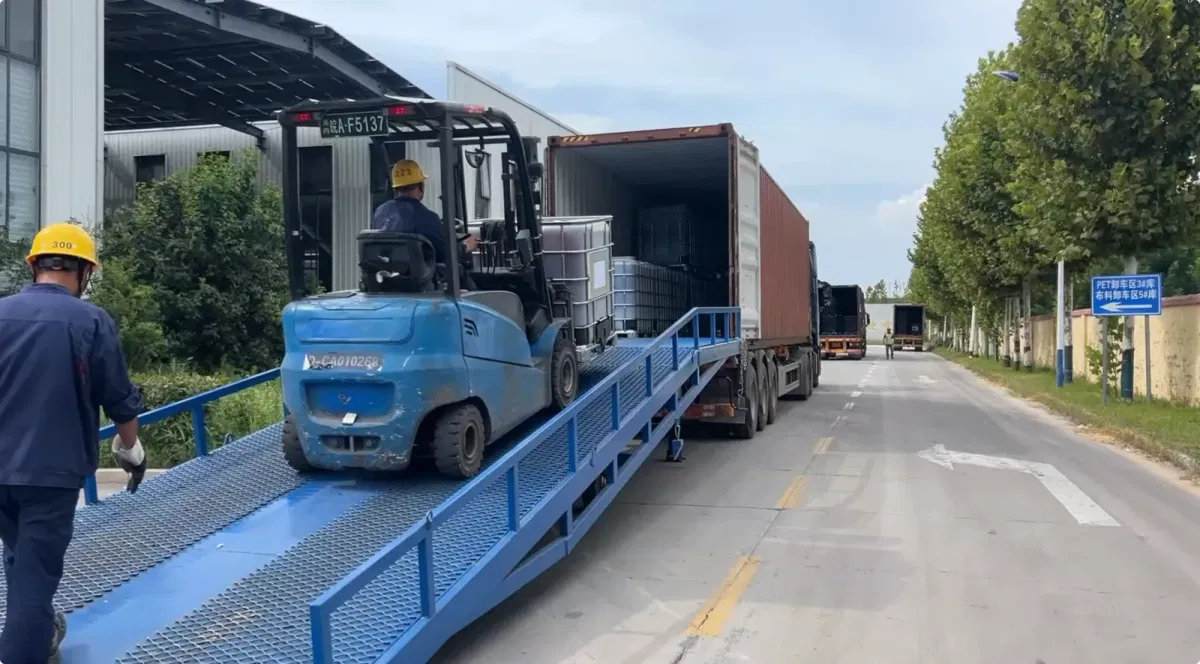
- Capacity depth: Shandong Changxing operates 300,000 tons/year of plasticizer capacity, and wholly-owned subsidiary Jining Wansheng Environmental Materials runs a 150,000 ton/year DOTP line at Wenshang Chemical Industrial Park, taking planned group capacity to 450,000 tons/year (see Wan Sheng 150K-ton DOTP expansion).
- Cost stability: Chinese producers source PTA and 2-ethylhexanol domestically at scale, and export-scale DOTP capacity keeps liner sailings from Qingdao and Ningbo to Nhava Sheva/Mundra frequent (18-25 day transit), so CIF-India pricing is less exposed to feedstock swings.
- Documentation maturity for BIS: Indian importers need BIS IS 10158 and a GHS-classified SDS to clear customs. Shandong Changxing ships a documentation set that includes CoA, SGS phthalate-free report, EN 71-3, REACH registration statement, and BIS test support, the same set we routinely present for DOTP import into India.
Shandong Changxing has been shipping DOTP to India for over five years with zero customs rejections, running 1,000L IBC totes, flexitanks, and 200kg drums (see our recent 165 MT India shipment dispatch). For cable compounders in Mumbai, hose extruders in Delhi/NCR, and medical-glove converters in Tamil Nadu, this is the shortest path from policy shock to commercial continuity.
Buyer Action Checklist: Next 60-90 Days
Every procurement team that currently buys Korean DOTP should treat 27 May 2026 as a hard clock start. Suggested sequence:
- Requote active Korean volume against new landed cost starting from the effective date. Add ~8% on CIF for Year 1; Korean FOB prices rarely absorb the duty.
- Sample and test alternate origins (China first): run 3-batch COA comparison on ester content (≥98%), color (≤150 Hazen), moisture (≤0.1%), acid value (≤0.035 mg KOH/g), and volume resistivity (≥2×10¹² Ω·cm).
- Confirm BIS pathway for your product grade. Private-label converters who don't require an ISI mark can import freely; suppliers bidding government tenders or ISI-marked products must hold a BIS license (8-12 weeks lead).
- Lock freight and insurance for Qingdao/Ningbo to Nhava Sheva/Mundra. If rerouting from Busan/Incheon, plan for ~18-22 days transit on feeder services.
- Preserve a Korea-to-China dual-source basket: the safeguard sunsets after 2 years, so avoid 100% switching in one contract cycle.
Long Run: What the DGTR Case Signals
For India's own industrial policy, this safeguard is a template: where CEPA/FTA preferences demonstrably injure domestic capacity, New Delhi is willing to unwind the concession using bilateral safeguard provisions under the India-Korea CEPA (Bilateral Safeguard Measures) Rules, 2017. Buyers should monitor future filings in adjacent PVC-adjuvant and phthalate-alternative categories.
For Chinese suppliers, the short-term window is clear. For Korean producers, the medium-term answer is either building an Indian domestic footprint or repositioning on specialty performance grades not covered by the domestic industry. LG Chem's reported ultra-low-temperature DOTP grade, introduced in 2025, is exactly that kind of value-added play.
For buyers, the takeaway is simple: diversify now, do not scramble later. A 12-point factory-audit checklist, covering capacity, compliance documentation, India shipment track record, and trade-remedy exposure, is worth running on any new qualified origin before contracts are signed.
Official Sources
- DGTR Final Findings, Case No. (SG)-01/2025 (27 May 2026): dgtr.gov.in (PDF)
- Gazette of India notification CG-DL-E-01062026-273034 (1 June 2026): egazette.gov.in (PDF)
- DGTR initiation notice CG-DL-E-07102025-266734 (30 Sep 2025): Gazette of India record
Market-size and capacity-share figures in this article are third-party estimates as of September 2026, provided for orientation rather than as official statistics; the DGTR/Gazette figures are primary-source data.
Frequently Asked Questions
What is the DOTP safeguard duty in India in 2026?
On 27 May 2026 the DGTR finalized a bilateral safeguard against non-phthalate plasticizers (DOTP CAS 6422-86-2 and DEHCH CAS 84731-70-4) originating in Korea under the India-Korea CEPA. Year 1 of the measure restores 100% of the applicable MFN rate; Year 2 restores 75%.
Why did India impose safeguard duty on Korean DOTP?
Under CEPA, duty on this category dropped from ~10.94% (2010) to zero by 2017. Korean shipments then surged ~550%, from 6,484 MT in FY2021-22 to 42,157 MT in FY2024-25. KLJ Plasticizers (60-70% of Indian output) filed a complaint; DGTR found serious injury and a causal link.
Does the duty apply to DOTP from China?
No. This safeguard action is bilateral under the India-Korea CEPA and covers only Korean-origin DOTP/DEHCH. Chinese-origin DOTP continues to pay the standard MFN load: BCD 7.5%, SWS 0.75%, IGST 18% (recoverable for GST-registered manufacturers). Buyers should still track separate trade-remedy filings that may emerge against other origins.
How will the safeguard duty affect Indian DOTP prices?
Korean DOTP previously entered at zero duty, undercutting domestic prices by 0-10%. Restoring MFN-level duty raises landed cost from Korea by roughly 8.25% on CIF in Year 1 (~6.2% in Year 2). Indian buyers can either reprice Korean contracts or shift volume to China and India-domestic sources.
Where can I source DOTP for India besides Korea?
Chinese producers (Shandong Changxing: 300,000 tons/year capacity, 450,000 tons/year planned group total, ISO 9001/14001/45001/50001, 5+ years of India shipments, BIS IS 10158 documentation support); Indian domestic (KLJ, Payal Polyplast, Payal Plastichem, Rachna Plasticizers) at <20% of demand; and secondary origins such as Taiwan (Formosa Plastics) and Turkey. Pre-qualify before the policy window closes.
Lock DOTP Supply for India Before Korean Re-Pricing Hits
Shandong Changxing Plastic Additives Co., Ltd. has been shipping DOTP to Nhava Sheva, Mundra, and Chennai for over five years. We provide BIS IS 10158-compliant documentation, SGS phthalate-free test reports, EN 71-3, and REACH registration, and can quote CIF India on 1,000L IBC / flexitank / 200 kg drums terms within 48 hours.
Request a CIF India Quote- ✓ 300,000 tons/year capacity, stable supply guaranteed
- ✓ ISO 9001 + ISO 14001 + ISO 45001 + ISO 50001 certified
- ✓ BIS IS 10158 documentation pack, SGS phthalate-free report
- ✓ 5+ years of India shipments, zero customs rejections