
An automotive interior programme does not buy a plasticizer. It buys a leather that has to pass a cabin: no fog on the windshield, no smell, no bloom on the buckle, no crack when the temperature drops, and a phthalate declaration an auditor accepts. Each of those lines lands on the plasticizer table as a measurable property. What automotive artificial leather demands of a plasticizer is therefore a list of tests, and a buyer who can name the test cannot be handed a vague answer.
Key Takeaways
- Six property groups decide a plasticizer in car interior leather: volatility and fogging, migration and extraction, cabin emission and odour, cold and heat behaviour, paste processing, appearance.
- Each group has a public test method you can cite. Almost none has a public acceptance number, because that comes from the OEM specification.
- Migration runs per ISO 177:2016 or HG/T 4454-2012, at 50 to 100 °C, reported as mass change. The copied "40 °C / 72 h against PU foam in mg/cm²" is not that method.
- Gelation temperature and plasticizing efficiency have no public ISO, ASTM or GB method. Any figure there is vendor data.
- Ask for the method, the edition, and a report matching the shipped batch. Then compare quotations line by line.
From Requirement to Test Method
The middle column is what goes into a specification; the last column is where the pass value comes from.
| What the leather must do | Property it puts on the plasticizer | Public method | Where the limit lives |
|---|---|---|---|
| Keep the windshield clear | Volatility, fogging behaviour | DIN 75201-A/-B, ISO 6452, SAE J1756, GB/T 1669 | OEM specification |
| Stay inside the compound | Migration, exudation, extraction | ISO 177, HG/T 4454 / 4456 / 4457 / 4459 | OEM or your own programme |
| Pass cabin air and odour panels | Emission spectrum, odour | VDA 278, ISO 12219-11, VDA 270, GB/T 27630 | Partly legal (formaldehyde, cabin air) |
| Survive a winter night | Low-temperature flexibility | GB/T 5470, ISO 4675 / GB/T 18426 | OEM specification |
| Hold up on a hot dashboard | Heat ageing, softening behaviour | GB/T 1633-2025 (VST), GB/T 7141, ISO 4892-2 | OEM specification |
| Coat and emboss predictably | Paste viscosity, fusion | GB/T 12004.4, ASTM D1824, ISO 6451 | Your own line trial |
| Match colour batch after batch | Chroma, colour stability | GB/T 1664, ASTM D1045, ISO 105-B04 | Your own standard |
| Clear the restricted-substance list | Chemical identity | REACH XVII 51 / 52 / 77, CPSIA, Prop 65 | The regulation itself |
Plasticizer Volatility and Fogging: the First Cabin Test
A plasticizer that leaves the compound condenses on the next cold surface it meets, which in a car is glass. The methods are public: DIN 75201-A reads gloss loss on a glass plate after 100 °C for 3 hours, DIN 75201-B weighs what collects on aluminium foil after 100 °C for 16 hours, and SAE J1756 and ISO 6452 are the US and ISO counterparts. For coated fabrics, ISO 6452:2021 is written for fogging of automotive interior trim materials; China's counterpart is GB/T 40726-2021, taken identically from the 2007 edition of ISO 6452. On the plasticizer itself, GB/T 1669-2001 measures heating weight loss, with HG/T 4455-2012 and HG/T 4458-2012 giving the hot-air and activated-carbon routes.
Two citation errors circulate widely enough to name. ASTM D1203 is Volatile Loss From Plastics Using Activated Carbon Methods: it measures a plastic, not a drum of plasticizer. And PV 3341 is not a fogging test; it determines organic compound emission from non-metallic interior materials as total carbon in µgC per gram, while Volkswagen fogging sits in PV 3015 and PV 3920. Emission and fogging answer different questions, so specify which one your programme gates on.
Plasticizer Migration and Extraction: What Ruins the Neighbouring Part
Migrated plasticizer ruins whatever it touches: foam backing, adhesive lines, polycarbonate glazing, packaging film. ISO 177:2016, Plastics — Determination of migration of plasticizers, measures the tendency of plasticizers to leave a plastic for an absorbent sheet or another material kept in close contact, the standard noting organic coatings among possible receivers, and reports mass change of specimen and receiver after oven conditioning between 50 and 100 °C. China's adopted version is HG/T 4454-2012. Three siblings cover the other failure routes: HG/T 4456-2012 exudation under compressive stress, HG/T 4457-2012 exudation under damp conditions, HG/T 4459-2012 extraction by liquids.
A data sheet claiming "migration per ISO 177, 40 °C for 72 hours against polyisocyanate foam, 0.5 to 1.5 mg/cm²" has borrowed a standard it does not follow: 40 °C is outside the oven range, a foam block is not the specified receiver, and mg/cm² is not how the method reports. ASTM D1239 is the honest alternative for thin goods, but its scope stops at films up to 0.25 mm, so it does not cover a coated automotive leather either.
Cabin Air and Odour: Where a Number Is Actually Law
Emission panels run on VDA 278, thermal desorption GC-MS reporting VOC at 90 °C for 30 minutes as toluene equivalent in µg/g and FOG at 120 °C for 60 minutes as n-hexadecane equivalent across n-C14 to n-C32, with ISO 12219-11 as the ISO counterpart. Odour runs on VDA 270, six points from 1 not perceptible to 6 intolerable, half points allowed, at least three assessors.
Formaldehyde is where law catches up with specification. China's GB/T 27630—2011 sets cabin formaldehyde at 0.10 mg/m³ or below among its eight limits for newly produced passenger cars, and it is a recommended standard. In the EU, REACH Annex XVII entry 77 (Regulation (EU) 2023/1464) bars a vehicle whose interior air exceeds 0.062 mg/m³ from 6 August 2027, tested per Appendix 14 using ISO 12219-1 or ISO 12219-10. Since the cabin figure is a sum, a skin built from resin, plasticizer and additive package that off-gas is now a market-access problem. Odour has no public ISO, ASTM or GB method at all; it lives inside the OEM procedures your programme works to.
Cold, Heat and Processing on the Line
Cold weather makes the plasticizer choice visible. GB/T 5470-2008 (modified adoption of ISO 974) determines plastics brittleness temperature by impact; for coated fabrics the low-temperature bend is ISO 4675, adopted as GB/T 18426. A naming caution: ASTM D2137 is Rubber Property — Brittleness Point of Flexible Polymers and Coated Fabrics, not a plasticized-PVC method, however supplier pages label it. Heat is specified through softening and ageing: GB/T 1633-2025 is the current Vicat method, published 2 December 2025 and effective 1 July 2026, replacing the 2000 edition. The ISO counterpart is ISO 306:2022. GB/T 7141-2008 covers heat-ageing oven procedures, and colour holds under ISO 4892-2:2013 exposure with ISO 105-B04:2024 fading grades.
Automotive PVC leather is coated or slush-moulded from a plastisol, so the plasticizer has to behave in the mixing tank too. GB/T 12004.4-2003 measures apparent viscosity of PVC plasticizer pastes by the Brookfield method, GB/T 16613-2008 covers paste preparation, ASTM D1824 and ASTM D1823 give the low-shear and high-shear routes, and fusion completeness can be checked against ISO 6451 / GB/T 12588-2003. Here is the honest boundary: gelation temperature and plasticizing efficiency have no public ISO, ASTM or GB test method, and viscosity stability over 24 hours or 30 days is a house method. Those figures come from supplier hot-plate routines and patent examples. The figure you can actually commit to is the one your own line trial produces.
The Compliance List, and What to Demand in Writing
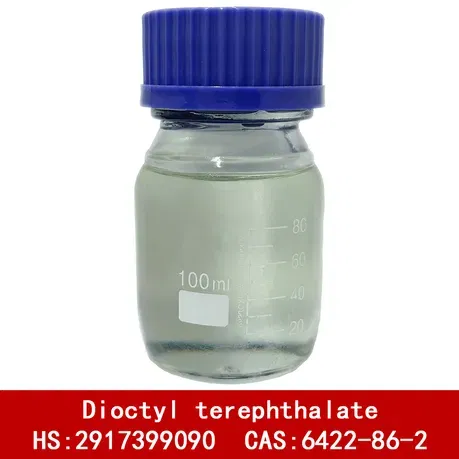
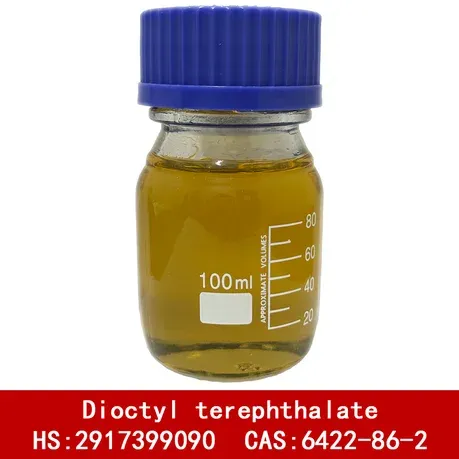
Identity first: DOTP, also called DEHT, is bis(2-ethylhexyl) terephthalate, CAS 6422-86-2, C24H38O4, molar mass 390.56, used in synthetic leather and interior compounds. Public reference data for the pure substance puts boiling point at 383 °C, melting point at −48 °C, flash point 238 °C open cup, density 0.9825 at 20/20, viscosity 63 cP at 25 °C and refractive index 1.4867 (PubChem CID 22932). Those are the figures a technical data sheet should be able to reproduce under stated conditions. Specify by CAS, because DOP covers at least four isomers and only the number is unambiguous on a contract, invoice, certificate of analysis or report. Then the list: REACH Annex XVII entry 51 has restricted DEHP, DBP, BBP and DIBP above 0.1 percent in plasticised material across all articles since 7 July 2020; entry 52 covers DINP, DIDP and DNOP above 0.1 percent in toys and childcare articles a child may mouth; CPSIA bans DEHP, DBP and BBP above 0.1 percent permanently in children's products, added DINP, DIBP, DPENP, DHEXP and DCHP at the same threshold from 25 April 2018, and lifted the ban on DIDP and DNOP for articles a child may mouth; Proposition 65 lists DEHP, DBP, BBP, DINP and DIDP. A 13 October 2026 search of the ECHA candidate and authorisation lists returned no entry for DOTP or DEHT, and DOTP is not a Proposition 65 substance. State that as a position backed by a written supplier statement and a third-party report, never as "DOTP is unregulated" and never as "DOP-free". Substance detail sits in our artificial leather guide and the REACH compliance guide.
Appearance closes the list, because a dark plasticizer will not let a pale interior match its master sample. GB/T 1664-1995 determines plasticizer appearance colour, and ASTM D1045 is the sampling and testing standard covering acid number, ester content, specific gravity, colour, refractive index and moisture. Those belong on the certificate of analysis batch by batch for light colours.
- Identity in writing. Chemical name plus CAS 6422-86-2 on the contract and repeated on every certificate of analysis.
- Methods, not adjectives. Which of GB/T 1669, ISO 177 or HG/T 4454, GB/T 1633, GB/T 12004.4 and GB/T 1664 the supplier can produce a report for, and to which edition.
- Batch-level evidence. A report whose identifier appears on your packing list. A type test on a retained sample protects the supplier, not you.
- A compliance position. Written REACH and Proposition 65 statements, the phthalate panel with limits of quantification, and IMDS support where your OEM asks.
Price sits on top of that. DOTP tracks purified terephthalic acid and 2-ethylhexanol, so quotations move daily and any figure printed on a website is history. Minimum order quantity and lead time depend on the test panel you request and the laboratory's booking position, so ask for them with the method list rather than expecting a catalogue number.
Frequently Asked Questions
Q1: Which single property decides whether a plasticizer suits automotive leather?
Volatility, because it drives both fogging and long-term emission and shows up first as windshield film. Migration is the close second, since it damages adjacent parts rather than the leather. Both have public methods: DIN 75201 or ISO 6452 for fogging, GB/T 1669 for weight loss, ISO 177 or HG/T 4454 for migration.
Q2: Why does this article avoid comparing DOTP and DOP numbers?
Because quantitative comparisons between plasticizers come from supplier data sheets and patent examples rather than a harmonised public test. A common example is a vapour-pressure comparison between the two: the public reference data puts the DEHP figures below the DOTP figure, so even the direction of such a comparison is not safe. A comparison without a named method and edition cannot be checked by either party, so we list the properties that matter and let your trial produce the binding numbers.
Q3: What should a plasticizer certificate of analysis contain here?
Identity by name and CAS, assay, colour, moisture, acid number and heating loss with the method cited, plus the phthalate panel with limits of quantification and the batch identifier. That maps to ASTM D1045 and GB/T 1664 on the plasticizer itself, and to the restriction lists on the compliance side.
Q4: Does the 2027 EU formaldehyde rule apply to a leather supplier?
Indirectly but firmly. REACH Annex XVII entry 77 gates the vehicle interior at 0.062 mg/m³ from 6 August 2027, and the obligation sits with whoever places the vehicle on the market. Interior components contribute to that measured figure, so expect it to reach you as a material-level emission clause.
Q5: How do I compare two plasticizer quotations?
Line up the methods first, then the price. Quotations are comparable only if both carry the same tests on the same batch basis: heating loss by GB/T 1669, migration by ISO 177 or HG/T 4454, viscosity by GB/T 12004.4, colour by GB/T 1664, and a phthalate panel with stated limits of quantification. If those lines are missing, the lower price is not something you can verify.
Bottom Line
Automotive artificial leather asks a plasticizer for six things: stay in the compound, keep the glass clear, stay soft in the cold, hold up in the heat, coat and emboss predictably, and stay pale. Five have public methods you can name in a specification; odour is gated entirely inside OEM procedures. Acceptance numbers come from the vehicle programme, not from a brochure. Build the specification from methods and batch evidence and the marketing column stops being part of the decision.
Need a DOTP Supplier That Answers by Method?
Shandong Changxing Plastic Additives Co., Ltd. supplies DOTP, DCP and 2-octanol to leather and coating compounders worldwide, with batch certificates of analysis, REACH statements and third-party phthalate panels behind every interior specification.
Request a Free Quote + Technical Data Sheet- ✓ ISO 9001 / 14001 / 45001 / 50001 certified
- ✓ SGS phthalate panel, EN 71-3, PFAS-free testing available
- ✓ Certificate of analysis with CAS identity per batch
- ✓ National "Little Giant" enterprise for specialised and innovative manufacturing
- ✓ 230,000 tonnes annual group plasticizer capacity upon full completion