
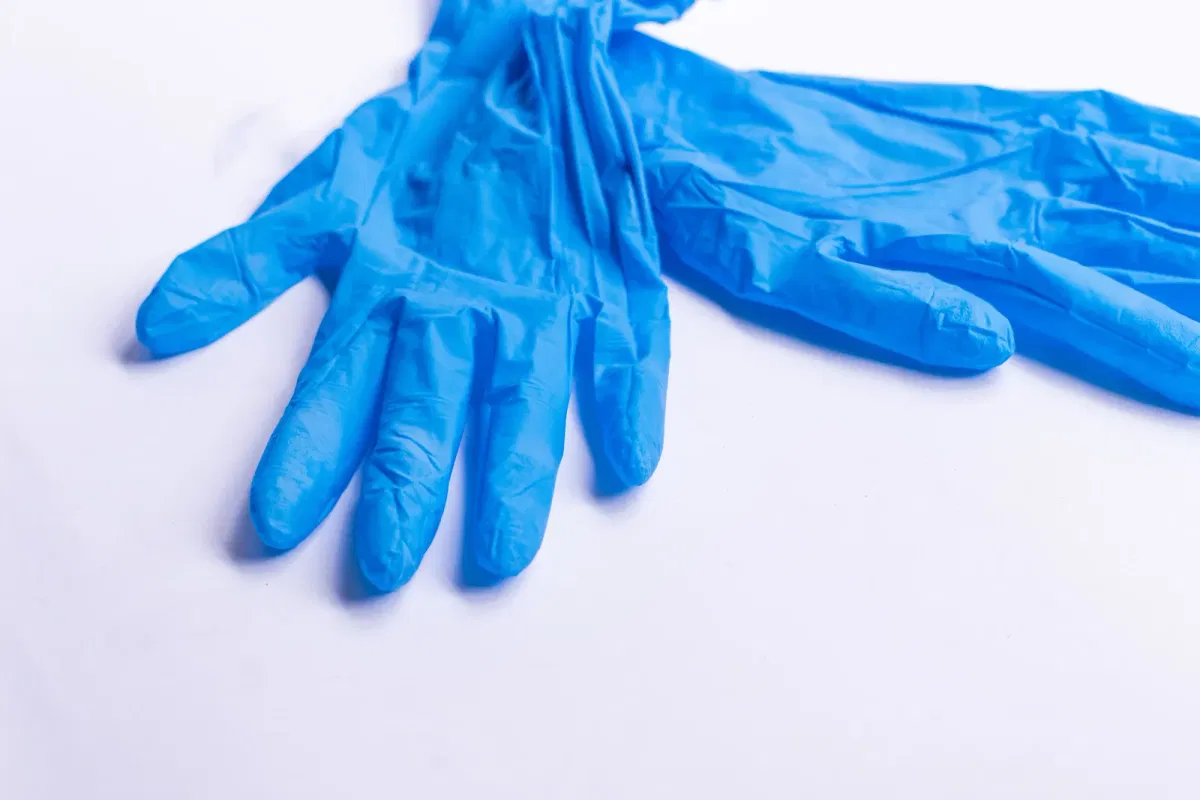
DOTP for PVC medical examination gloves is the single largest destination for our Superior-grade product. A disposable vinyl exam glove is a plastisol article: PVC paste resin plus plasticizer, dipped onto ceramic hand-formers and fused in an oven. At 55 to 70 parts of plasticizer per hundred parts of resin, the plasticizer is roughly a third of the dry compound. It sets glove softness, clarity, stretch, pinhole rate and the compliance file, all at the same time. Choose it badly and every one of those four things moves against you.
For a decade the default was DOP (DEHP). It plasticises beautifully and it is a CMR substance, which is why it no longer appears in the tender specifications of most hospital buyers. DOTP (dioctyl terephthalate, CAS 6422-86-2) is the practical replacement: same molecular formula and molecular weight as DEHP (C₂₄H₃₈O₄, 390.56 g/mol), different substitution position on the benzene ring, and therefore not an ortho-phthalate. This page covers what a glove plant actually needs to know: how DOTP behaves on a dip line, what our Superior grade commits to batch by batch, where our DOTP already ships, and how we price against other domestic supply. Physical test data lives in our DOTP technical properties guide.
Key Takeaways
- DOTP is a terephthalate ester, not an ortho-phthalate, so it stays clear of the DEHP/DBP/BBP/DIBP restrictions and of the California Prop 65 listing that applies to legacy phthalates.
- In the EU, medical devices are derogated from REACH Annex XVII entry 51; the binding rule for a CE-marked exam glove is MDR Annex I GSPR 10.4, which forces justification of CMR substances above 0.1%. DEHP is CMR 1B, so it is out. DOTP carries no such burden.
- Typical DOTP loading in vinyl exam-glove plastisol is 55 to 70 phr; start from your current DOP or DINP level and add 2 to 5 phr to hold hardness.
- Superior grade is the grade for transparent exam gloves: colour ≤150 APHA, acid value ≤0.035, moisture ≤0.1%, and a spec sheet that does not move between batches.
- We supply glove plants across the three Chinese PVC clusters (Hebei, Shandong, Jiangsu) and to international brands, at roughly 10% below comparable domestic Superior-grade DOTP, with volume pricing improving from full-container quantities.
Why Vinyl Gloves Depend on the Plasticizer
Disposable gloves split into three material families, and only one of them uses a plasticizer. Latex is natural rubber, nitrile is a synthetic latex, and both are coagulated and cured rather than plasticised. Vinyl is PVC paste resin suspended in plasticizer, and DOTP is the plasticizer that carries it. Third-party market estimates put vinyl at roughly a quarter of global disposable glove volume, concentrated in examination and food-handling use rather than surgical use; examination gloves as a category account for just under two-thirds of the medical glove market (Mordor Intelligence, 2025).
Vinyl keeps three structural advantages that do not go away: it is latex-protein-free, which is the original reason hospital procurement bought it; it is the cheapest per-piece option at the low end of the price band; and it produces a smooth, low-tack surface that powders and coatings bond to well. Its weakness is comfort at thickness: a vinyl glove needs more plasticizer than a nitrile glove needs curatives to feel soft, which is exactly why the plasticizer choice is a first-order decision and not a purchasing footnote.
The Regulatory Case Against DEHP in Gloves
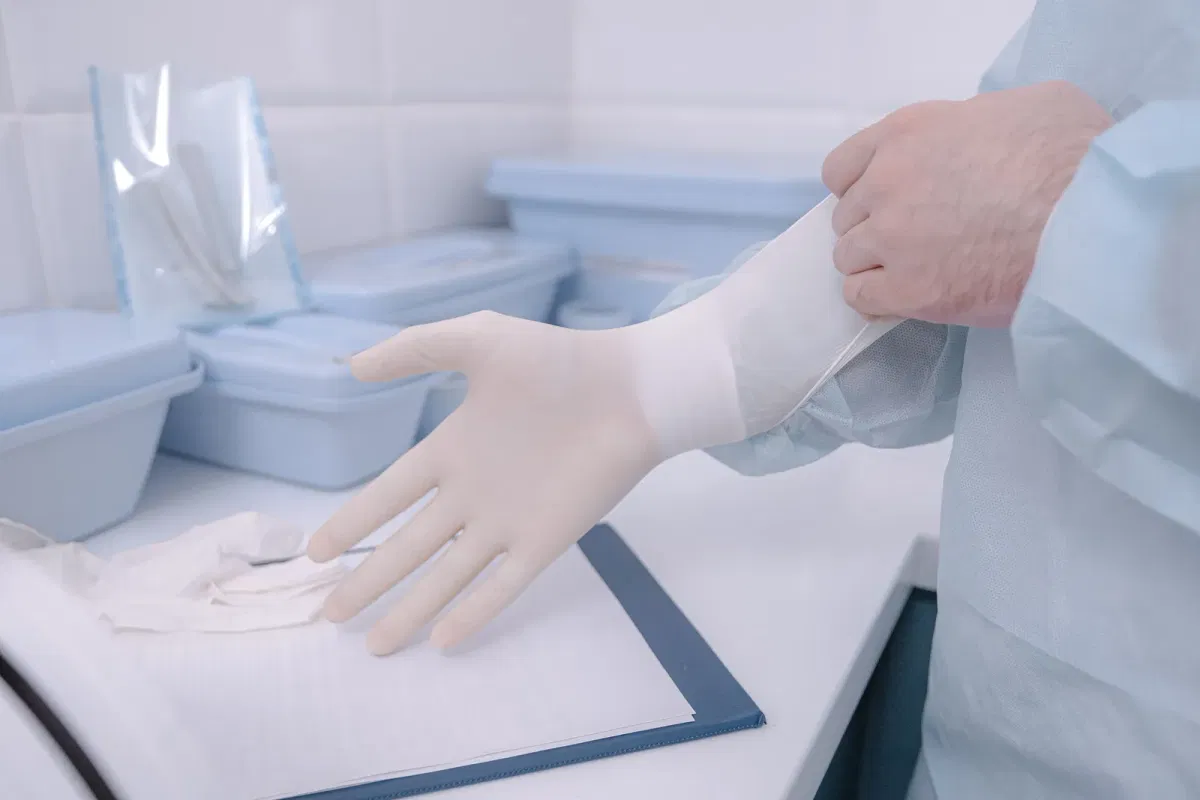
No, REACH does not ban DEHP in medical examination gloves. Point 4 of REACH Annex XVII entry 51 derogates medical devices, so the rule that removes DEHP from a CE-marked exam glove is the EU MDR rather than entry 51, and a technical file has to cite whichever clause actually binds it.
Regulation (EU) 2018/2005 widened REACH Annex XVII entry 51 so that DEHP, DBP, BBP and DIBP above 0.1% of the plasticised material are barred from articles generally as of 7 July 2020, and point 4 of that entry carries the derogations, medical devices among them. A non-sterile examination glove sold in the EU is a Class I medical device under Regulation (EU) 2017/745, so entry 51 is not the operative rule.
The operative rule is MDR Annex I, GSPR 10.4, which requires that a device presenting a risk from CMR substances of category 1A or 1B, or endocrine disruptors, in a concentration above 0.1% by weight be justified, with DEHP classified CMR 1B and treated as an endocrine disruptor under CLP. The EU's SCHEER committee updated its benefit-risk guidance on phthalates in devices in April 2024, and the direction of travel is substitution wherever a technically adequate alternative exists. DOTP is not classified as a CMR substance and is not one of the restricted ortho-phthalates, so it removes the justification step. The practical outcome is identical to a ban: DEHP is not a viable plasticiser for a CE-marked exam glove, and phthalate screening is written into tender specifications regardless of which legal clause got you there. See our guide to replacing DEHP with DOTP and the wider global phthalate restriction map.
| Market | What governs a vinyl exam glove | Where DOTP stands |
|---|---|---|
| EU | MDR (EU) 2017/745, Class I self-certification for non-sterile exam gloves; Annex I GSPR 10.4 on CMR above 0.1%; EN 455-1 freedom from holes, EN 455-2 physical properties, EN 455-3 biological evaluation to ISO 10993, EN 455-4 accelerated ageing shelf life. REACH entry 51 derogates medical devices. | Not an ortho-phthalate, not CMR classified: no GSPR 10.4 justification needed |
| United States | FDA 21 CFR 880.6250 (non-powdered patient examination glove), Class I; vinyl is product code LYZ and premarket notification under 510(k) is still required in practice. ASTM D5250 is the consensus specification for PVC patient examination gloves. | Not listed under California Prop 65, unlike DEHP, DBP, BBP, DINP and DIDP |
| China | Single-use examination gloves are registered as Class I medical devices; the formulation dossier lists the paste resin, plasticiser and stabiliser system by name. | Non-phthalate alternative widely adopted since the mid-2010s export-driven quality upgrades |
| Japan / Korea | Import inspection plus buyer specifications; hospital tenders commonly require phthalate-free declarations with test reports. | Accepted; documentation package is what clears the file |

How DOTP Behaves on a Dip Line
On a vinyl examination glove dip line DOTP behaves like DINP, and the one adjustment a DOP conversion needs is loading: add 2 to 5 phr over the current level to hold hardness. A glove line is a sequence of thermal steps, and the plasticizer touches most of them.
Chinese process literature gives a typical window of pre-heating the hand-formers at 70 to 80 °C, dipping into plastisol held around 50 to 56 °C, draining, then gelling and fusing in an oven. That oven step is reported anywhere from 170 to 250 °C depending on line and resin grade, so treat it as a range you map rather than a number you copy. The remaining steps are cooling, curling the cuff at roughly 100 to 110 °C, doffing, and for powder-free gloves a polyurethane dip followed by drying at 110 to 130 °C. Pinhole rejects are counted against an AQL, and plasticizer quality shows up in that count.
- Plasticising efficiency. DOTP delivers roughly the efficiency of DINP and DINCH and slightly less than DEHP, which is why the standard conversion rule is to add 2 to 5 phr when replacing DOP one-for-one rather than expecting identical hardness at the same loading.
- Migration to skin. In ISO 177 plasticiser migration testing (40 °C, 72 h), DOTP-plasticised PVC typically loses 0.5 to 1.5 mg/cm² against 3.0 to 5.0 mg/cm² for DOP. These are representative laboratory figures, not a certificate; confirm against our Certificate of Analysis for your batch.
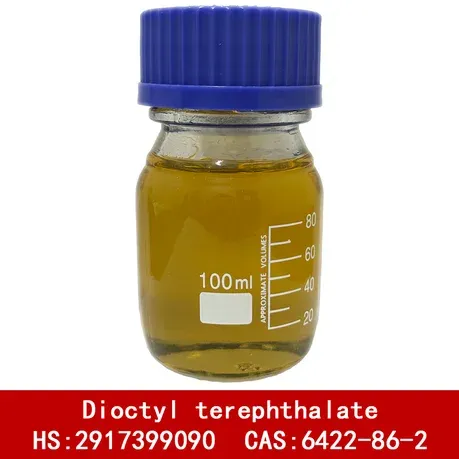
- Clarity and odour. Superior grade keeps APHA colour at ≤150, which is what allows a clear or pastel glove to look clean rather than yellow. Odour is low, and low odour is a real selling point in food-handling and long-wear vinyl.
- Heat and volatility. Flash point of at least 210 °C and low heating loss mean less material drives off in the fusion oven. Less volatilisation means less blooming on the glove surface and a stabler oven atmosphere, which shows up in tack and in the sticking-together complaints that arrive after the cartons ship.
- Low-temperature hand. DOTP-plasticised PVC keeps flexibility at sub-zero storage, relevant for gloves shipped or warehoused in cold climates and for the freezer-chain food plants that buy vinyl.
- Stable dosing. Because a dip line is tuned to one plastisol window, batch-to-batch consistency is worth more than a headline spec. Our Certificate of Analysis reports the same eight specification figures on every batch, and a drifting colour number is the fastest way to lose a formulation you spent four months qualifying.
| What the line is built for | Typical DOTP window (phr) | What it buys you |
|---|---|---|
| Stiffer food-handling and utility vinyl | 45–55 phr | Lower plasticiser cost, firmer grip, faster gelation |
| Standard powder-free examination glove | 55–62 phr | Soft hand with adequate tensile margin for donning |
| High-elasticity exam glove, long cuff, larger sizes | 62–70 phr | Stretch and tear resistance at thin film gauge |
These are starting windows, not a recipe. Treat them as the entry point to a lab trial on your own resin grade, and always run a pre-production batch before committing a shift to a new plasticiser. The same 45 to 70 phr envelope applies to household and industrial vinyl gloves, which we cover separately in DOTP for household gloves; the difference for medical product is the file that has to travel with it.

Superior-Grade Specification for Medical Glove Use
For a transparent examination glove the right tier is Superior grade, and the reason is colour, acid value and moisture rather than any difference in chemistry. China's chemical industry standard for industrial DOTP, HG/T 2423, organises the product into graded tiers, and we use the same three-tier structure across our own line: Superior (优等品), First-Grade (一等品) and Qualified (合格品). The grades share identical terephthalate chemistry and identical REACH status; the difference is tightness of specification, above all colour. Read our comparison of the First-Grade and Superior dual-grade line for where the middle tier fits.
| Property | Our Superior grade | Why a glove plant should care |
|---|---|---|
| Content / purity (%) | ≥ 98 | Ester content sets plasticising power per unit; short-chain and unreacted impurities migrate faster |
| Colour (APHA) | ≤ 150 | Clear and pastel exam gloves are bought on looks; First-Grade runs ≤200 and Qualified ≤450 |
| Acid value (mg KOH/g) | ≤ 0.035 | Free acid attacks the stabiliser package and accelerates degradation during oven fusion |
| Moisture (%) | ≤ 0.1 | Water in the plastisol is a direct route to pinholes and to foam in the dip tank |
| Volume resistance (Ω·cm) | ≥ 2 × 10¹² | Not a glove requirement, but the cleanest single signal of how few ionic impurities are left in the ester |
| Flash point (°C) | ≥ 210 | Low volatility in the fusion oven, less surface bloom, stabler line atmosphere |
| Density (g/cm³) | 0.980–0.985 | Lets your compound room verify a delivered lot against its own metering without a lab in the way |
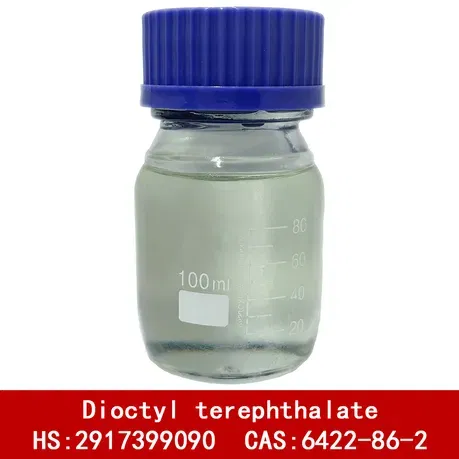
| Appearance | Transparent liquid | No haze, no suspended matter; filterable straight from the drum or flexitank |
The medical-glove specification is not a different molecule. It is the same DOTP with a colour, acid and moisture number that holds still, plus the paperwork to prove it. That is also why we do not recommend Qualified grade (DOTP Qualified) for transparent examination gloves: at ≤450 APHA it is a fine product for household gloves, film and synthetic leather, and a poor fit for a glove that a nurse inspects visually before putting it on.
Where Our DOTP Goes: China's Three PVC Glove Clusters
PVC glove manufacturing in China is not spread evenly. It sits in three clusters, and our Superior-grade DOTP supplies producers in all of them: Hebei (the Tangshan and Luanan concentration plus Shijiazhuang), Shandong (the province that has been home to the world's largest PVC glove producer by capacity, and where our own plants are), and Jiangsu. According to Longzhong Info, as of July 2023 China counted roughly 1,976 PVC glove lines with about 470 in operation, so the plants still running are the ones worth selling to, and their purchasing teams compare suppliers on consistency rather than on brochures.
| Cluster | What is there | Our position |
|---|---|---|
| Hebei: Tangshan / Luanan and Shijiazhuang | A dense PVC glove base around Tangshan's Luanan economic development zone, where 唐山鸿蕴医疗用品有限公司 (Tangshan Hongyun Medical Products, established 2005) runs six PVC glove workshops and 36 lines with about 5.5 billion pieces of annual capacity per a 2024 State Grid report, and where 中红普林 (Zhonghong Pulin Medical, SZ: 300981) operates from the same zone. The province's second pole is Shijiazhuang: 石家庄鸿锐集团 (Hongray Group), a major PVC glove producer tracked by Longzhong Info, with lines across Hebei, Shanxi and Yunnan. | Long-standing supply, with 唐山鸿蕴 among the glove makers we serve directly |
| Shandong | Home of 蓝帆医疗 (Bluesail Medical, SZ: 002382), historically the world's largest PVC glove maker by capacity, which disclosed in May 2026 an annual capacity of roughly 25 billion PVC and 25 billion nitrile gloves running at full utilisation, with plants in Zibo and Weifang plus a partner plant in Vietnam; 英科医疗 (Intco Medical, SZ: 300677) reported an annualised capacity of about 107 billion non-latex disposable gloves for H1 2026, around 74 billion nitrile and 33 billion PVC, across more than ten bases including Vietnam. | Our home province: both groups are customers, and freight and service are shortest here |
| Jiangsu | Single-use glove producers around Suqian and the Yangtze delta, exporting nitrile and PVC examination gloves to Europe, the United States and Japan. 江苏尤佳手套有限公司 (Jiangsu Youjia Gloves, established 2006 in the Suqian economic development zone, part of the Youjia medical group) is among them. | Established supply into the export-oriented Jiangsu plants |
Across these three clusters we work with more than 90% of the PVC medical glove producers whose grade requirements our product was written for. Our customers include 英科医疗 (Intco Medical), 蓝帆医疗 (Bluesail Medical), Topglove, 唐山鸿蕴 (Tangshan Hongyun) and 江苏尤佳 (Jiangsu Youjia). The demand is not theoretical either: Chinese market reporting (金联创, January 2021) put DOTP at 41% of national octanol downstream consumption in 2019 and 49% in 2020, the jump driven by PVC glove exports during the pandemic years, and industry literature has since described DOTP as the main plasticiser of the PVC glove sector.
Cost Performance: About 10% Below Comparable Domestic Supply
Our price for Superior-grade DOTP runs about 10% below comparable domestic producers for the same grade and the same documentation set, and the gap widens on volume: full-container and flexitank quantities price better than drums, and annual contracts better than spot. That is the commercial half of why glove plants switch to us, and it is worth explaining where the difference comes from rather than presenting it as a discount.
- Feedstock route. We make DOTP by transesterification of recycled PET with 2-octanol rather than by direct esterification of purified terephthalic acid with alcohol. The bottle-flake feed carries a lower and less volatile cost base than PTA, and the route is what our process was designed around.
- Byproduct credit. The same reaction releases ethylene glycol, which we purify to commercial MEG and sell. A producer without that recovery carries it as a loss.
- Integrated octanol. 2-octanol is the other half of the cost. The group produces and sells it, so the alcohol leg of our DOTP is not bought at whatever the spot market asks on the day. See our PET-and-octanol synthesis route.
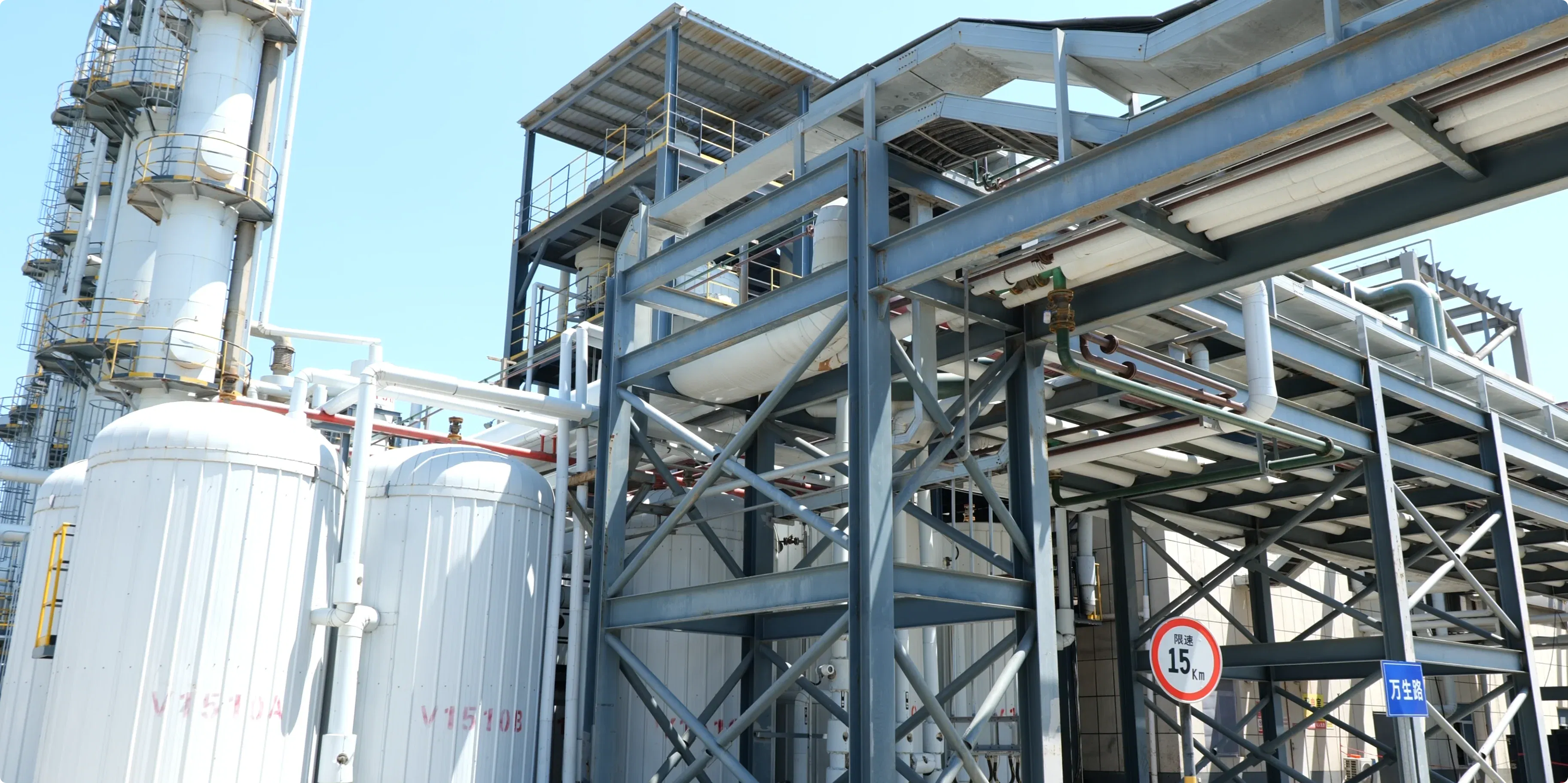
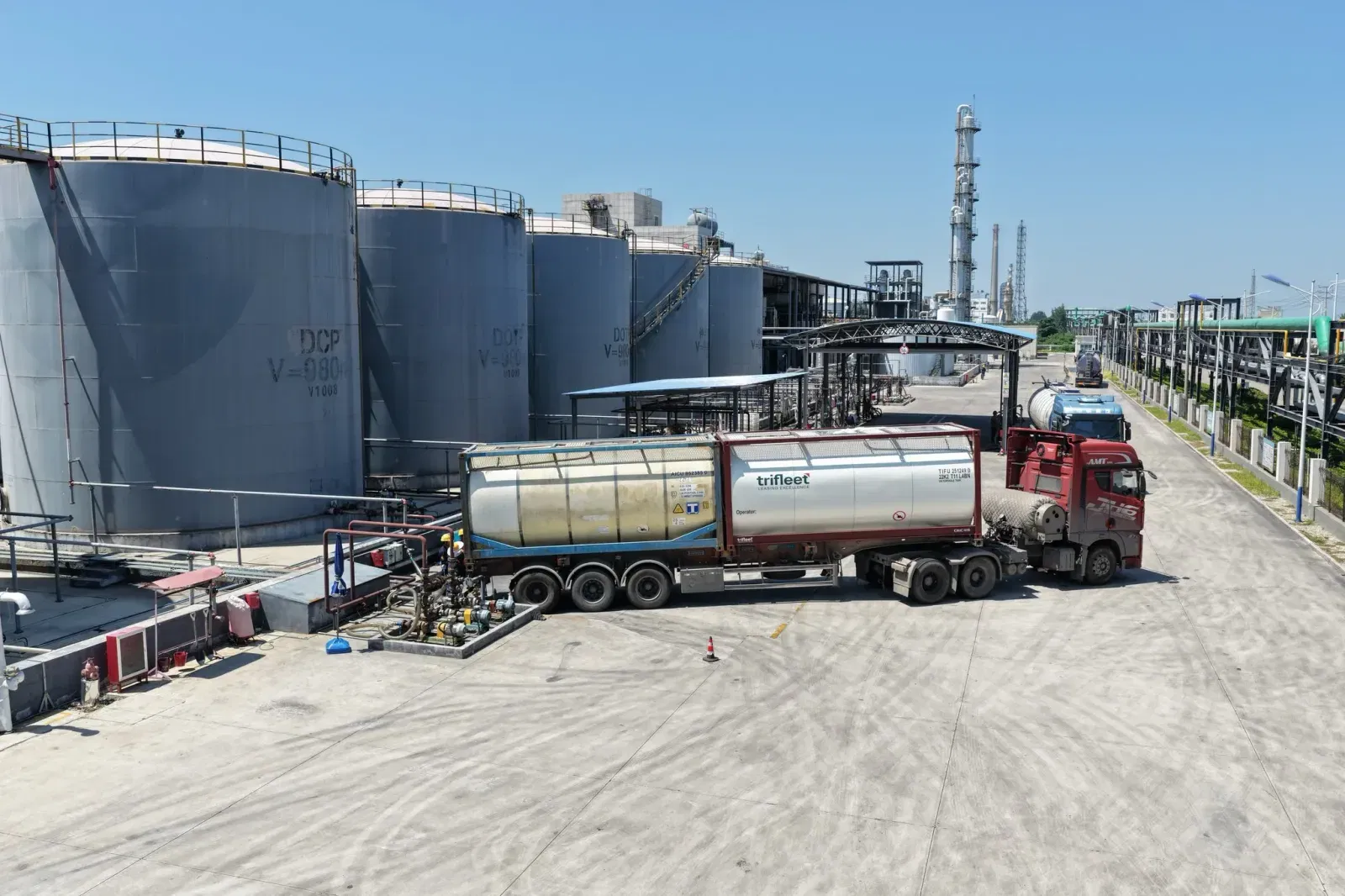
- Scale and site. Annual DOTP capacity of 300,000 tons, expanding toward 450,000, with a 150,000-ton line at our Wansheng subsidiary in Jining and an 80,000-ton Phase II under construction for 2027. Fixed cost per ton falls with run-rate, and we are running at one.
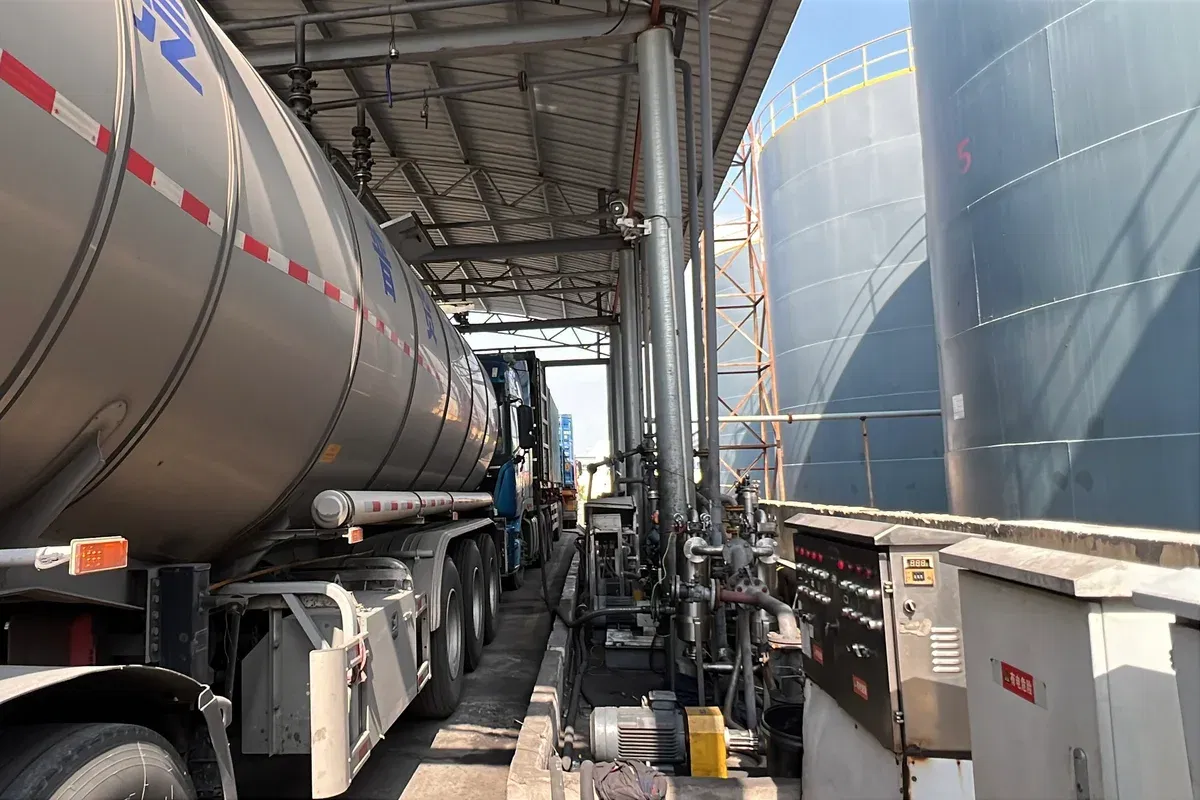
- Logistics. Both plants sit in Shandong, within road range of Qingdao, so a domestic glove plant pays inland freight once instead of crossing a province and a port.
One caution on how to use that 10%. It only holds when the comparison is honest: same grade tier, same colour and acid limits, same certificates, same Incoterms and same packaging. A quote for a ≤450 APHA product at FOB against our ≤150 APHA at CIF is not a price gap, it is a different product. Compare our specification table above against the competitor's certificate, then compare the numbers. Buyers who do that are the buyers who stay.
What Ships With the Container
A glove maker's real cost in changing plasticiser is the technical file, not the drum. This is what we supply with each shipment, and it is the reason qualification takes weeks rather than months:
- SGS report covering 17 restricted phthalates, zero detection, which is the document hospital tenders and brand audits ask for first.
- EN 71-3 element migration across 19 elements, and a PFAS total fluorine screen reporting non-detect below 20 mg/kg for buyers writing PFAS-free declarations.
- California Prop 65 non-listing statement, since DEHP, DBP, BBP, DINP and DIDP all carry warning obligations that DOTP does not.
- Certificate of Analysis per batch against the eight specification figures above, with batch traceability from reactor to container number.
- Declaration of Compliance naming the framework and the intended use, plus a GHS-classified Safety Data Sheet.
- Management-system certificates: ISO 9001, 14001, 45001 and 50001 across quality, environment, occupational health and safety, and energy.
To be explicit about one point that gets confused: we are a raw-material producer, not a device manufacturer, so we do not hold ISO 13485 and we do not sign a device declaration on your glove. Our documentation is written to slot into your technical file under MDR or your 510(k) submission, where the plasticiser appears as a component of the formulation and the manufacturer of record stays you. More detail in our REACH compliance guide, what our SGS testing covers, and how the quality system runs.
Qualifying Our DOTP on Your Glove Line
Qualifying our Superior-grade DOTP on a PVC examination glove line takes five steps, from a lab plastisol trial to a pilot batch counted against your own AQL, and the specification lock in step five is what keeps the product you qualified the product you keep receiving.
- Send us your current formulation target (resin grade, plasticiser in use, phr, gelation and oven profile, film thickness, AQL). We return a matching DOTP spec sheet plus CoA, DoC and SDS before any sample moves.
- Lab-scale plastisol trial at your existing phr, then +2 and +5 phr. Measure hardness, tensile, elongation, gelation time and viscosity stability, not just hand feel.
- Dip-tank confirmation on your own formers: check that the gelled film releases, that the curl step still holds at 100 to 110 °C, and that the polyurethane or powder-free finish bonds to the surface.
- Pilot production batch with pinhole count against your AQL and a finished-glove test to EN 455-1/-2 or ASTM D5250, plus a phthalate and migration test on the glove rather than on the plasticiser. This is the step that satisfies an auditor.
- Commercial terms: trial order in drums or IBC totes, then full-container or flexitank supply with tiered volume pricing and a specification lock so the product you qualified is the product you keep receiving.

Frequently Asked Questions
Is DOTP allowed in medical examination gloves?
Yes. DOTP is a standard non-phthalate plasticiser for vinyl examination gloves. Being a terephthalate ester rather than an ortho-phthalate, it is outside REACH Annex XVII entry 51, is not classified as a CMR substance, and is not listed under California Prop 65. The controlling EU requirement is MDR Annex I GSPR 10.4 on CMR substances above 0.1%; in the US the glove is a Class I device under 21 CFR 880.6250 (vinyl product code LYZ) tested to ASTM D5250. The plasticiser settles the substance question; EN 455 and ASTM testing of the finished glove still apply.
Why Superior grade rather than Qualified grade for exam gloves?
Because of colour, acid and moisture, and because of stability between batches. Superior grade holds APHA colour at 150 or below, acid value at 0.035 mg KOH/g or below and moisture at 0.1% or below; Qualified grade allows up to 450 APHA. A transparent examination glove is judged visually, water in the plastisol shows up as pinholes against your AQL, and free acid consumes stabiliser during oven fusion. Qualified grade remains a sensible choice for household gloves, film and synthetic leather, where we recommend it.
How much DOTP does a PVC examination glove formulation use?
Across the 45 to 70 phr range, with examination gloves sitting at the soft end, typically 55 to 70 phr depending on gauge, size and the hand feel the buyer specified. When converting from DOP or DINP, start at your current loading and add 2 to 5 phr, because DOTP's plasticising efficiency is marginally lower than DEHP's and roughly level with DINP. Confirm hardness, tensile, elongation and pinhole rate in a lab trial and a pilot batch before switching a production shift.
How does DOTP compare with DEHP and DINP in glove plastisol?
Against DEHP: similar molecular weight and formula, slightly lower plasticising efficiency, and markedly lower migration in ISO 177 testing (0.5 to 1.5 mg/cm² versus 3.0 to 5.0 mg/cm² as representative figures), with none of the CMR or Prop 65 baggage. Against DINP: comparable efficiency and comparable drying behaviour, and DOTP is not the ortho-phthalate that entry 52 restricts in toys and childcare articles, nor one that an increasing number of hospital and brand specifications screen for.
What is the price advantage and how do you supply glove factories?
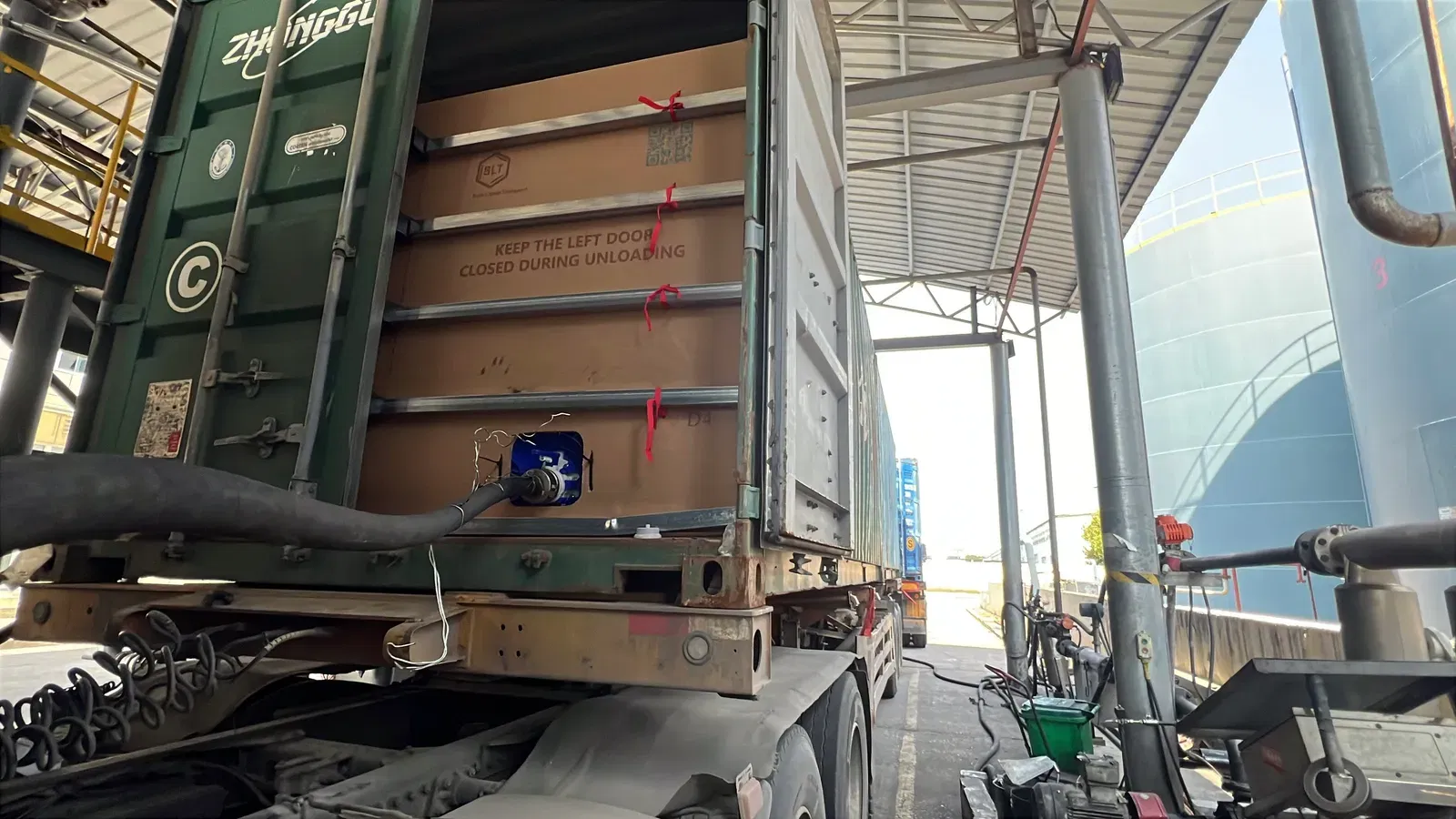
Our Superior-grade DOTP is quoted about 10% below comparable domestic producers at the same grade and documentation level, with better terms on volume, and we work with more than 90% of the PVC medical glove producers across China's three clusters: Hebei (Tangshan, Shijiazhuang), Shandong and Jiangsu. Supply runs from 200-litre drums and 1000-litre IBC totes for trial orders to flexitanks and ISO tanks at 23 tons per container for production volumes, out of Qingdao, on 300,000 tons of annual capacity that is expanding toward 450,000. Packaging choices are compared in our DOTP packaging guide.
Sources: Regulation (EC) No 1907/2006 (REACH) Annex XVII entries 51 and 52, as amended by Regulation (EU) 2018/2005, with ECHA and Intertek compliance summaries; Regulation (EU) 2017/745 (EU MDR) Annex I General Safety and Performance Requirement 10.4 and SCHEER guidance on phthalates in medical devices (April 2024); US FDA product classification under 21 CFR 880.6250, product code LYZ (vinyl patient examination glove); ASTM D5250 (PVC patient examination gloves); EN 455-1 to 455-4; ISO 177 plasticiser migration method; California Proposition 65 listed substances; Mordor Intelligence medical gloves market report (2025) and IMARC disposable gloves market estimate (2023); Longzhong Info (July 2023 count of Chinese PVC glove lines and utilisation) and its continuing PVC glove price coverage; JinLianChuang reporting (January 2021) on DOTP's share of Chinese octanol downstream demand; HG/T 2423, China's chemical industry standard for industrial DOTP; company disclosures and filings for Intco Medical, Bluesail Medical, Zhonghong Pulin Medical and Topglove (registered as Top Glove Corporation Bhd), plus business-registration records and a State Grid Jibei report (April 2024) for Tangshan Hongyun Medical Products and registration records for Jiangsu Youjia Gloves. Capacity and market figures are as reported by those third parties at the time of writing and are not audited by us; verify current numbers before relying on them commercially.
Ready to Source Superior-Grade DOTP for Your Glove Line?
Shandong Changxing Plastic Additives Co., Ltd. produces Superior-grade DOTP from recycled PET and 2-octanol at 300,000 tons a year, and supplies it to disposable PVC examination glove producers across China's Hebei, Shandong and Jiangsu clusters and to international glove brands. Every lot ships with a Certificate of Analysis plus SGS testing for 17 restricted phthalates, EN 71-3 and PFAS screening. Ask for a sample and a quote at roughly 10% below comparable domestic supply for the same grade, with tiered pricing on container and flexitank volumes.
Request a Sample and Quote- ✓ DOTP from recycled PET and 2-octanol, the route our process was designed around
- ✓ SGS 17-phthalate zero-detection, EN 71-3 and PFAS-free reports with every lot
- ✓ ISO 9001 / 14001 / 45001 / 50001 certified
- ✓ National "Little Giant" enterprise, trusted by PVC glove producers across China's three clusters
- ✓ 300,000 tons annual capacity, stable supply guaranteed